1 week ago
Arvind and Welspun Shift Textile Businesses From Volume to Value
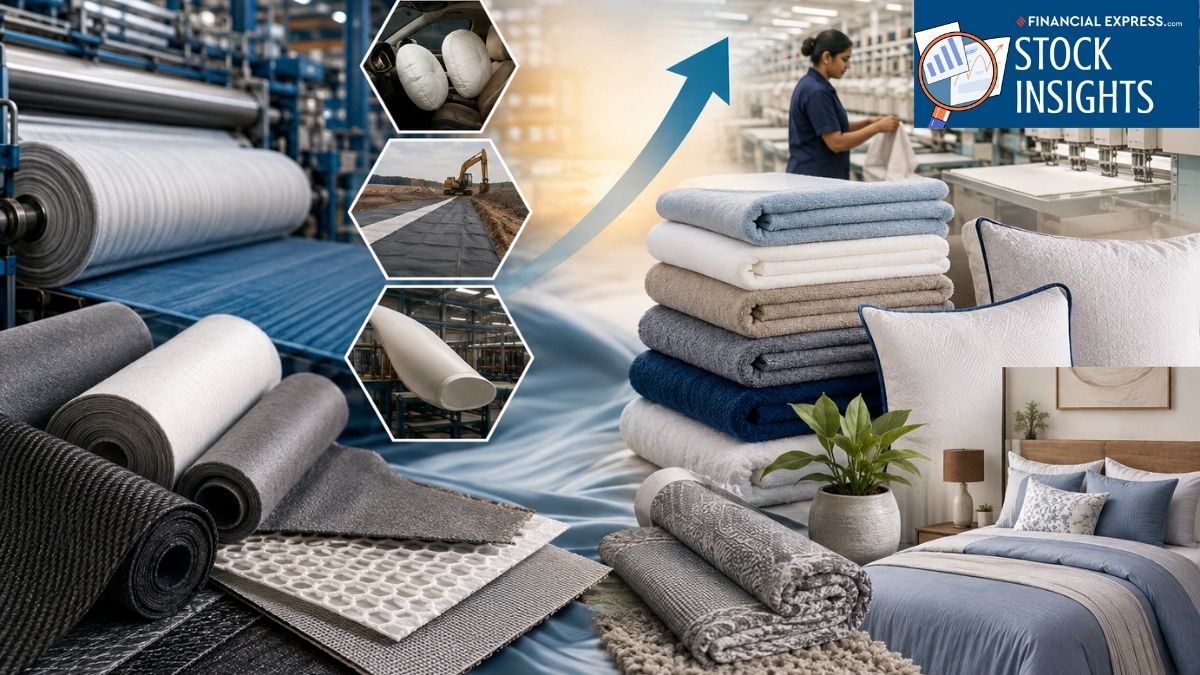
Textile companies used to mainly compete by making large amounts of products cheaply.
Competition and rising costs have made that strategy less profitable.
Arvind is trying to make specialised materials that are harder for competitors to copy.
It bought a majority stake in a United States company that makes materials for cars and construction projects.
Welspun Living is taking a different approach by building brands and making more products near its customers.
Its United States pillow business grew quickly and gained new production capacity.
Both companies reported stronger results in the latest quarter.
Their share prices have risen, so both now need to keep delivering strong growth.

Arvind is expanding its Advanced Materials Business to reduce reliance on lower-margin traditional textiles.
Arvind’s Q1FY27 revenue rose 24.7% year over year to ₹2,501 crore, while AMB revenue grew nearly 85%.
Welspun Living is focusing on brands, proprietary products and manufacturing closer to customers, especially in the United States.
Welspun’s Q1FY27 revenue increased 23.5% to ₹2,828 crore, and its EBITDA margin improved to 12.5%.
Investors have rewarded both strategies, but elevated valuations increase the need for sustained execution.
- Who
- Indian textile companies Arvind Ltd. and Welspun Living Limited.
- What
- The companies are changing their business models from high-volume textile manufacturing toward specialised materials, brands, proprietary products and localised production.
- Where
- The businesses operate in India and international markets, including the United States; Arvind’s acquired operations are in North and South Carolina, while Welspun has facilities in Ohio and Nevada.
- When
- The strategies are being assessed through Q1FY27 results, with stock movements also reported over the past year.
- Why
- Intense international competition, volatile cotton prices and rising labour and energy costs have reduced the advantages of competing mainly on volume.
Specialisation and Scale-Up
Brands and Consumer Proximity
Route to higher value
Specialisation and Scale-Up
Arvind is moving up the value chain through technical textiles and specialised materials, where engineering expertise and intellectual property may support better margins.
Brands and Consumer Proximity
Welspun is moving away from commoditised home textiles by developing brands, proprietary products and categories closer to end consumers.
Growth evidence
Specialisation and Scale-Up
Arvind’s Advanced Materials Business grew nearly 85% year over year in Q1FY27 and posted a 15% EBITDA margin.
Brands and Consumer Proximity
Welspun’s branded portfolio grew 25% year over year, while innovation-led products grew 16% and contributed about 25% of consolidated revenue.
Execution and valuation risk
Specialisation and Scale-Up
Arvind trades at 33.4 times trailing earnings versus a five-year median P/E of 22, so it must demonstrate that AMB growth can scale.
Brands and Consumer Proximity
Welspun trades at 64.1 times trailing earnings versus a five-year median P/E of 22.7, leaving less room for disappointing execution or weaker earnings momentum.
Key facts
- Arvind Q1FY27 revenue
- ₹2,501 crore, up 24.7% year over year
- Arvind Advanced Materials revenue
- ₹650 crore in Q1FY27, up nearly 85% year over year
- Arvind AMB EBITDA margin
- 15% in Q1FY27, compared with 8% for its textiles segment
- Welspun Q1FY27 revenue
- ₹2,828 crore, up 23.5% year over year
- Welspun US pillow target
- $60 million in FY27, compared with $27.5 million in FY26
- Trailing P/E
- Arvind: 33.4; Welspun Living: 64.1
- Expected Welspun ROCE
- Management expects ROCE to exceed 15% within three years
Sources
Related news

Indian textile makers face rising labour and material costs

Welspun Living Q1 Profit Jumps 82%, Revenue Rises 24%
Garware Technical Fibres CEO sees positive Q2 outlook, value-added focus
Aastha Spintex Expands From Yarn Into Fabric Manufacturing

Textile Firms Mount Smart Comeback as FY27 Outlook Strengthens
Indian Designers Turn Heritage Weaves Into Contemporary Luxury

Bangladesh Recall Shanto, Mahmud for Asian Games T20 Squad

Sharma and Malik Share Halfway Lead at Golconda Masters

India Replaces Sri Lanka as 2027 Women’s Champions Trophy Host

Centre Assures JDU Bihar’s Interests In Farakka Treaty Decision

India’s Record Wheat Harvest Opens $1.5 Billion Export Window