2 weeks ago
India's Ken-Betwa River Link Project Brings Water Hope to Bundelkhand
India has many rivers.
Some rivers have too much water, and other places do not have enough.
The Ken-Betwa project wants to move extra water from the Ken River to the Betwa River.
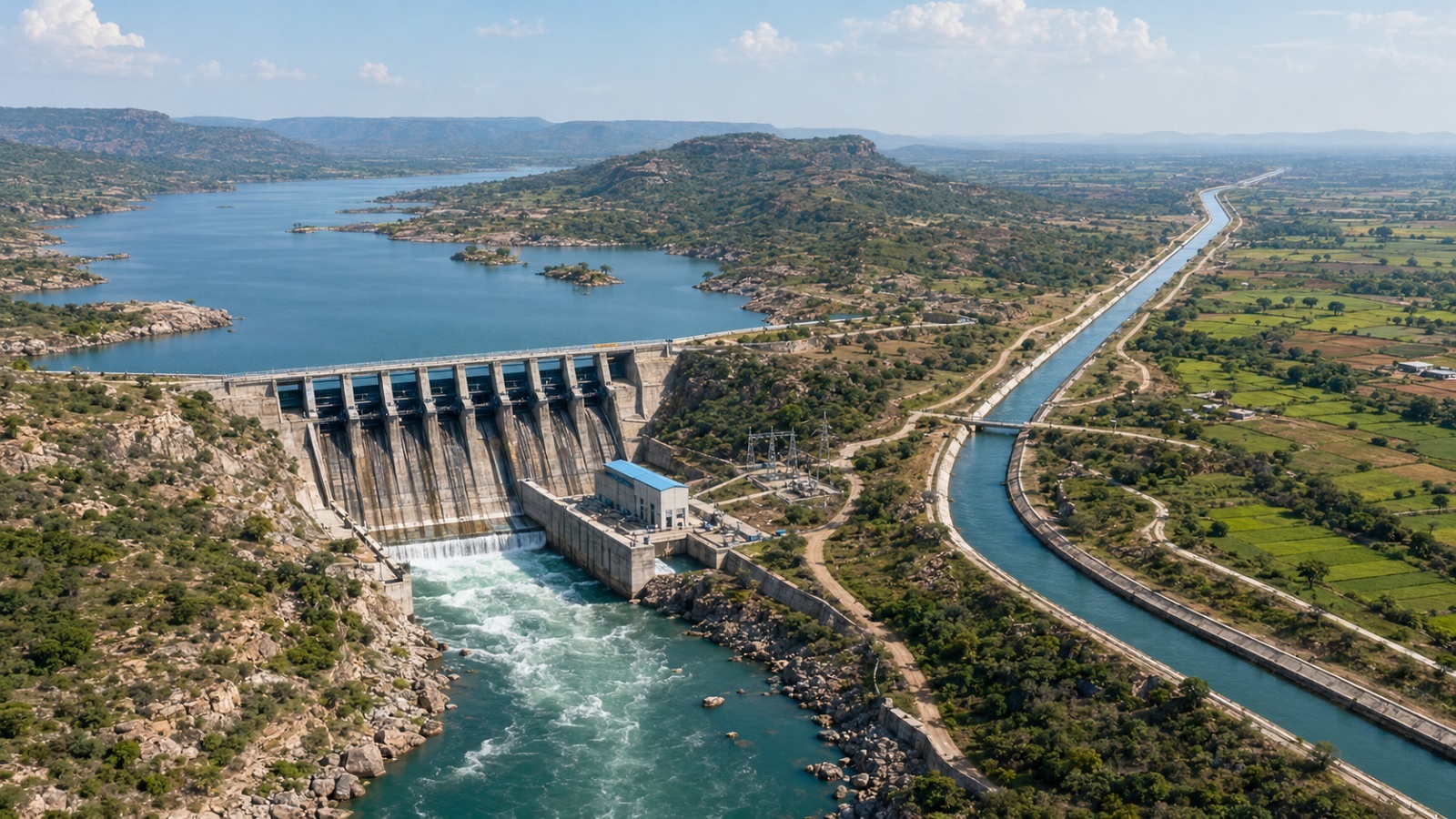
To do this, workers will build a huge wall called a dam and a very long water road called a canal.
The water will help farmers in a dry area called Bundelkhand grow more food.
It will also give millions of people clean water to drink.
But building the dam will flood part of a forest where tigers live, and some people are sad about that.
People who live on the land will have to move to new homes.
Some people think the water plan is a really good idea, and some people think it could hurt nature.
The government says the project will be finished by the year 2030.

The Ken-Betwa Link Project, India's flagship river-linking project approved by the Union Cabinet in December 2021 at ₹44,605 crore, aims to end drought in Bundelkhand.
A 221-kilometer canal will divert surplus Ken River water to the Betwa River, irrigating 10.62 lakh hectares and providing drinking water to 6.2 million people.
The centerpiece Daudhan Dam on the Ken River will be about 77 meters high with roughly 2,853 MCM storage and 130 MW of hydro and solar power capacity.
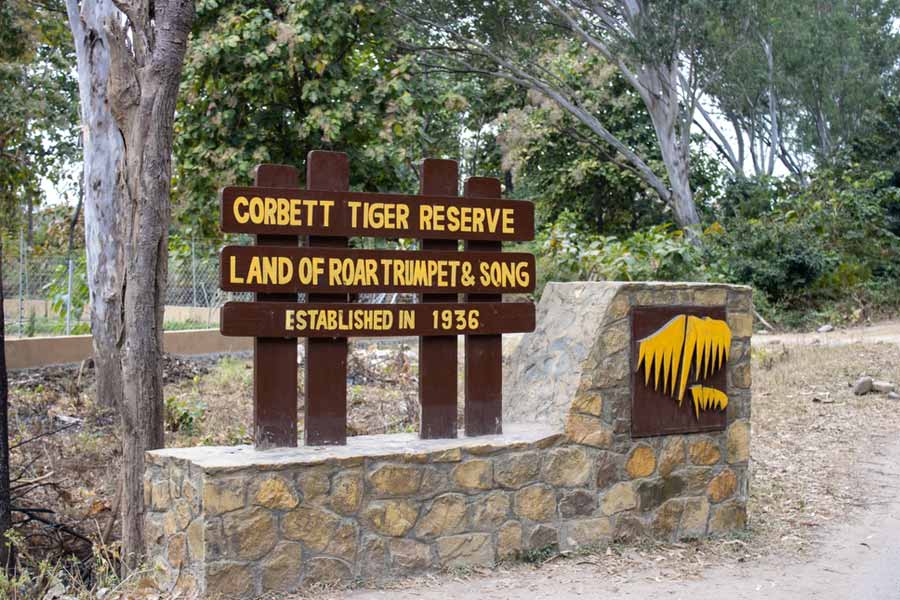
The project will submerge 5,803 hectares of Panna Tiger Reserve, including 4,141 hectares of core tiger habitat, despite a ₹1,000 crore-plus Greater Panna Landscape plan.
Critics, environmentalists and the Waterman of India, Rajendra Singh, oppose the scheme, while reports allege tribal displacement and compensation irregularities.
- Who
- The Government of India (Union Cabinet chaired by Prime Minister Narendra Modi), the governments of Madhya Pradesh and Uttar Pradesh, and the Ken-Betwa Link Project Authority (KBLPA); the project directly affects Gond and Baiga tribal communities in Bundelkhand.
- What
- The Ken-Betwa River Link Project, which builds the Daudhan Dam and a 221-km canal to transfer surplus Ken River water to the Betwa River for irrigation, drinking water, industry, and power generation.
- Where
- The Bundelkhand region spanning Madhya Pradesh and Uttar Pradesh, with the Daudhan Dam at the Chhatarpur-Panna border in Madhya Pradesh.
- When
- Approved on December 8, 2021; its status was reported in the Rajya Sabha on August 10, 2026; completion is targeted for 2029-2030.
- Why
- To end Bundelkhand's chronic drought by balancing the water-surplus Ken basin with the deficit Betwa basin, irrigating 10.62 lakh hectares, and providing drinking water to 6.2 million people.
Critics and Environmentalists
Project Proponents
Claim of surplus Ken River water
Critics and Environmentalists
Critics say calling the Ken 'surplus' is scientifically incorrect; the monsoon surge keeps Bundelkhand's ecosystem and the Yamuna alive, and diverting water could dry up the river. Rajendra Singh cites a PSI-Dehradun study that did not consider Ken water as surplus, and notes the project was earlier approved under the Manmohan Singh government but halted after protests.
Project Proponents
The government, citing hydrological studies by the Central Water Commission (CWC) and National Water Development Agency (NWDA), says a huge volume of surplus monsoon water in the Ken currently flows wastefully into the Yamuna and the sea, and should be diverted to the deficit Betwa basin.
Environmental cost vs. development need
Critics and Environmentalists
The dam will submerge 5,803 hectares of Panna Tiger Reserve, including core tiger habitat, the globally largest natural vulture nesting site, and gharial habitats. Critics argue that restoring traditional Chandela-era ponds, stepwells, and check dams could solve Bundelkhand's water crisis at a fraction of the cost without environmental damage.
Project Proponents
Proponents argue that quenching the thirst of 6.2 million people and irrigating barren fields is a greater humanitarian duty, and that no major alternative exists. The government and the Wildlife Institute of India (WII) have prepared a ₹1,000 crore-plus plan creating a 'Greater Panna Landscape' linking Ranipur and Nauradehi so tigers can roam freely.
Displacement and compensation
Critics and Environmentalists
Reports say Gond and Baiga tribal villages will be submerged, that resettlement areas outside Panna's forests lack cultivable land, and that compensation is marred by corruption — fake survey reports, land mafia involvement, and bribes demanded from displaced villagers.
Project Proponents
The government says displaced families will receive compensation and rehabilitation under its rehabilitation policy, and views the administrative, political, and corruption allegations as problems that must be solved for a project of national importance.
Key facts
- Approved cost
- ₹44,605 crore (90% central share, approx. ₹39,317 crore; 10% borne by MP and UP)
- Annual irrigation
- 10.62 lakh hectares (6.35 lakh ha in MP, 2.51 lakh ha in UP, 1.76 lakh ha via canal strengthening)
- Drinking water
- 6.2 million (62 lakh) people — 4.1 million in MP and 2.1 million in UP
- Daudhan Dam
- 77 m high, 2,031 m long, approximately 2,853 MCM storage capacity on the Ken River
- Link canal
- 221 km long, with about 21 km in Uttar Pradesh and the rest in Madhya Pradesh
- Power generation
- 130 MW total (103 MW hydropower and 27 MW solar)
- Completion target
- 2029-2030, within the government's 8-year timeline
- Panna Tiger Reserve impact
- 5,803 hectares submerged, including 4,141 hectares of core tiger habitat
Quotes
Rajendra Singh
Indian irrigation expert known as the ‘Waterman of India’, opposing the Ken‑Betwa project.
“"The river-linking scheme is a terrible plan. It is an attempt to constitutionally break the triple rights over India’s rivers (the rights of the Center, States, and Panchayats/Municipal Corporations)."”
 opindia.com
Sources
Related news
India’s River-Linking Ambitions Face Engineering and Ecological Challenges

Yadav Orders Fair Rehabilitation for Ken-Betwa Project Families
Ken-Betwa River Link Faces Development and Displacement Concerns
Rahul Gandhi Backs Tribal Satyagraha Against Ken-Betwa Project

MP BJP Criticises Congress Opposition to Ken-Betwa Project

India Builds Vulture Restaurants to Aid Vanishing Scavengers
Great Nicobar Lighthouse Study Accused Of Listing Fake Species
Barrukhar Village Challenges India’s Protected Vulture Conservation Model

Environmentalists Seek Fast Conservation Status for Navi Mumbai’s DPS Lake
Madhya Pradesh Maps Snake Diversity Amid Rising Bite Concerns