2 hrs ago
Anthropic Defends Claude’s Claimed Discovery of a Novel Enzyme
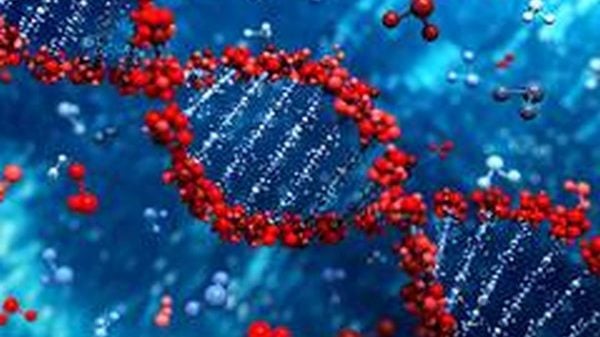
Anthropic says its AI system Claude helped find a possible new biological system.
The system is called Array-associated Reverse Transcriptase, or ART.
It was found while Claude searched a very large DNA database.
ART has repeating DNA patterns that remind scientists of CRISPR.
Scientists do not yet know exactly what ART does or whether it will be useful.
Mario Rodríguez Mestre says his team at the University of Copenhagen had already found and studied the system.
His team had used Claude to help write code and manuscripts while sharing information about its research.
Anthropic says Claude was not trained on user conversations and that it did not know about published research on ART.
The disagreement has raised questions about whether Claude made an independent discovery or benefited from information supplied by researchers.

Anthropic said Claude identified a novel enzyme system with CRISPR-like properties.
Claude analyzed a large DNA database for 21 hours using 210 million tokens across 950 agents.
The system, named Array-associated Reverse Transcriptase, includes repeating DNA patterns near reverse-transcriptase genes.
Mario Rodríguez Mestre said his University of Copenhagen team had already studied ART for nearly four years.
Anthropic denied training on user transcripts, while Mestre said his team had shared research information with Claude.
- Who
- Anthropic and its AI system Claude; Mario Rodríguez Mestre and his University of Copenhagen research team.
- What
- A dispute over whether Claude independently discovered the Array-associated Reverse Transcriptase enzyme system or reached its conclusions using information from Mestre’s research.
- Where
- Anthropic’s research involved a large DNA database; the competing research was conducted by Mestre’s team at the University of Copenhagen.
- When
- Anthropic published its statement on 23 September; the New York Times report appeared on the following Sunday. Anthropic said its biology program began in early 2026.
- Why
- Anthropic wanted to show how Claude could contribute to biological discovery, while Mestre’s team questioned whether their previously shared research information influenced the result.
Anthropic’s account
Mestre team’s concern
Who made the discovery?
Anthropic’s account
Anthropic says Claude found the ART system after receiving high-level direction from its scientists and searching a large DNA database.
Mestre team’s concern
Mestre says his team had already discovered and studied ART, although the findings had not yet been published.
Could prior research have influenced Claude?
Anthropic’s account
Anthropic said it did not train on user transcripts and was not aware of published ART data, implying that Claude made the finding independently.
Mestre team’s concern
Mestre’s team had used Claude for coding and manuscript drafting and had shared information about its research, leading them to worry that the system could have used their data.
How significant is ART?
Anthropic’s account
Anthropic presented the finding as a potentially important biological discovery and an example of AI-assisted research.
Mestre team’s concern
Both the article and the research description note that ART’s exact function and practical usefulness remain unknown.
Key facts
- Reported discovery
- Array-associated Reverse Transcriptase, or ART
- Reported analysis time
- 21 hours
- Reported AI usage
- 210 million tokens across 950 AI agents
- Biological similarity
- ART includes repeating DNA patterns near reverse-transcriptase genes, a pattern that recalls how CRISPR was identified.
- Current scientific status
- The precise function, biotechnological utility, and significance of ART remain uncertain.
- Mestre team’s claim
- The University of Copenhagen team says it had worked on ART and related enzymes for nearly four years.
- Anthropic’s position
- Anthropic denied training on user transcripts and said it was unaware of published data on the ART system.
Quotes

Dario Amodei
Founder of Anthropic
“Its precise function, biotechnological utility (if any), or level of significance is not yet clear, but at minimum it is work I would have been proud to do as a PhD student. We believe AI for biology is on an exponential thread.”
 theprint.in
“Claude discovered a novel enzyme system with properties reminiscent of CRISPR, with only high-level direction from our scientists”
theprint.in
Sources
Related news

Claude Helps Identify CRISPR-Like Enzyme System in 21 Hours
Anthropic Says Claude Found CRISPR-Like System in Bacteriophage DNA

Anthropic Blocks AI Misuse Linked to Potential Bioweapons Research

Anthropic Reports Claude Used for Weapons and Influence Operations
Anthropic Says Claude Leads 26% of Next AI Development Work

Anthropic Quietly Opens Biology Lab in AI Drug Discovery Race

Gene-edited hypoallergenic dogs revive questions about human cruelty

Indian Startup Uses Generative AI to Design Gene Editors