

3 weeks ago
Chip Stocks Lose $1.3 Trillion While AI Demand Remains Strong
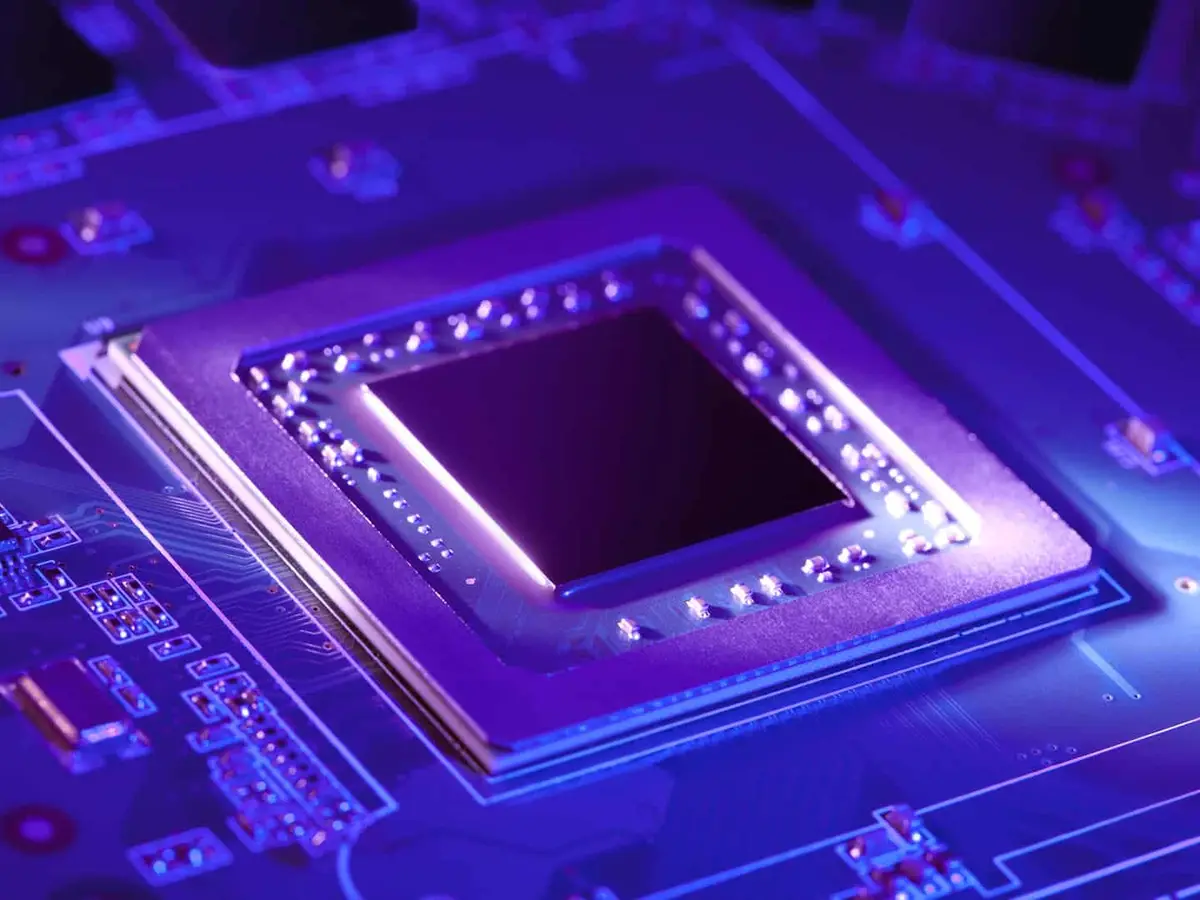
Chip makers are the companies that build the tiny computer 'brains' inside phones, computers, and robots.
Recently, the biggest chip companies in the world suddenly lost more than $1.3 trillion of their value in just a few days.
That sounds scary, but the companies say nothing changed about how many people want their chips — people still want them very badly.
In fact, there are not enough chips to go around, and Samsung says this shortage could last until 2028.
So why did their value go down?
Because investors — the people who give companies money to grow — started to worry that tech companies are spending too much money building giant computers for AI, which is how computers learn to do smart things.
Some of those companies are spending money faster than they make it, and some are even borrowing money or getting help from chip makers to pay for their projects.
Investors are also worried about new kinds of chips that big companies are designing themselves, which could compete with Nvidia, the company that makes many of the most popular AI chips.
This shows that even when a product is super popular, people can still worry about whether the companies will ever get their giant spending back.

The world's largest semiconductor companies lost more than $1.3 trillion in market value within just a few trading sessions.
Nvidia shed roughly $238 billion, SK Hynix about $176 billion, Samsung Electronics around $173 billion, TSMC approximately $119 billion, and Micron some $113 billion.
No chipmaker reported falling demand — Samsung's semiconductor profits grew more than 250-fold, and it warned that a severe global AI chip shortage could persist into 2028.
The selloff was driven by investor doubts about returns on massive AI spending, as Meta's free cash flow collapsed 91% to $784 million and Alphabet posted negative $5.9 billion in free cash flow.
A wave of custom AI chips, a Cerebras-OpenAI partnership, and Qualcomm's $3.92 billion acquisition of Modular threaten Nvidia's near-monopoly on AI compute.
- Who
- The world's largest semiconductor companies, including Nvidia, SK Hynix, Samsung Electronics, TSMC, and Micron, along with investors in AI-focused technology stocks.
- What
- More than $1.3 trillion in market value was erased from chip stocks within days, even though no company reported falling demand.
- Where
- Global financial markets, with Nvidia reportedly in talks to guarantee financing for OpenAI's campus in Ohio.
- When
- Within a matter of trading sessions, as custom AI chips began shipping in late June and early July and the Cerebras-OpenAI partnership was announced on July 8.
- Why
- Investors began questioning whether massive AI capital spending will ever produce returns, while new custom silicon threatened Nvidia's near-monopoly on AI compute.
AI Spending Skeptics
Demand-Focused Optimists
Are AI chip sales built on fragile financing?
AI Spending Skeptics
Investors worry that AI chip purchases are funded by debt, vendor guarantees, and asset managers rather than profits — OpenAI is unprofitable, Meta's free cash flow fell 91%, and Alphabet's turned negative — so chip revenue could drop if financing tightens.
Demand-Focused Optimists
Demand has never fallen: Samsung's semiconductor profits grew more than 250-fold, TSMC and SK Hynix run near capacity, prices are rising, and an AI chip shortage is forecast to last into 2028.
Is Nvidia's near-monopoly in danger?
AI Spending Skeptics
Custom chips from hyperscalers, the Cerebras-OpenAI partnership, and Qualcomm's Modular acquisition attack Nvidia's CUDA software lock-in, making its position more contested than at any point in three years.
Demand-Focused Optimists
The selloff is not evidence that AI demand is weakening or a verdict that AI will fail to produce value — every available supply indicator points the other way.
Key facts
- Total market value erased
- Over $1.3 trillion
- Nvidia loss
- ~$238 billion
- SK Hynix loss
- ~$176 billion
- Samsung Electronics loss
- ~$173 billion
- TSMC loss
- ~$119 billion
- Micron loss
- ~$113 billion
- OpenAI projected compute spending
- ~$750 billion through 2030
- Qualcomm-Modular deal
- $3.92 billion acquisition
Sources
Related news

AI Stocks Rebound as Memory Chip Demand Drives Global Rally

South Korean Chips Plunge as Bond Yields Rattle AI Trade

RAMageddon: AI-driven memory crunch squeezes global and Indian technology firms

Why Custom AI Chips Have Not Dethroned Nvidia Yet

Nvidia Shares Surge 9% After Forecasting 70% Sales Growth

Jensen Huang Defends Nvidia Against OpenAI Chip Competition

AI Week: Chip Breakthroughs, Brain Surgery and Quantum Campus

South Korean Investors Shift $7 Billion Into U.S. Stocks

Sensex, Nifty Face Cautious Monday Outlook Amid Global Cues

Mock-Trading Rules Cool South Korea’s Leveraged Chip ETF Frenzy

Netlist Stock Surges 650% as AI Demand Boosts Memory Business
