

2 weeks ago
South Korean Chips Plunge as Bond Yields Rattle AI Trade
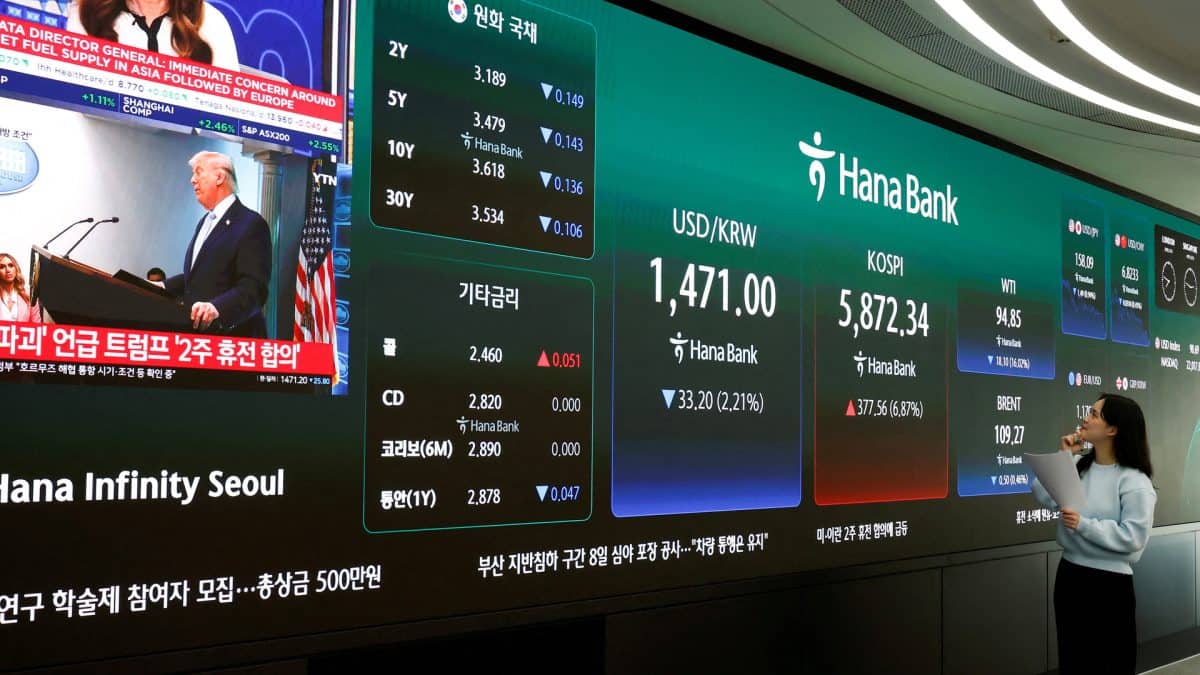
Chip companies in South Korea lost a lot of value on Wednesday.
Their shares fell after technology stocks in the United States also declined.
Investors are worried because interest rates and government bond yields have risen.
Higher rates make it more expensive for technology companies to borrow money.
Many large technology companies are borrowing or spending huge amounts to build AI data centers and buy chips.
Investors are now asking whether those projects will earn enough money to justify their cost.
Higher oil prices and uncertainty involving Iran could keep inflation high.
South Korean chipmakers were especially affected because they make up a large part of the country’s stock market.
The long-term demand for AI chips may still be strong, but investors are currently less willing to pay very high prices for those shares.

South Korea’s Kospi fell as much as 6.8% before recovering some losses, while Samsung Electronics and SK Hynix each dropped more than 8%.
A Bloomberg gauge of Asian semiconductor stocks declined 3.2%, with Kioxia Holdings falling as much as 11% and Taiwan Semiconductor Manufacturing Company nearly 2%.
Higher bond yields are raising concerns about the cost, financing and potential returns of Big Tech’s massive AI infrastructure investments.
The selloff followed sharp losses in United States semiconductor and technology shares, including a roughly 5% decline in the Philadelphia Semiconductor Index.
Oil prices and uncertainty surrounding the United States-Iran conflict added to inflation and interest-rate concerns, while investors also took profits after a powerful AI-related rally.
- Who
- South Korean semiconductor companies, especially Samsung Electronics and SK Hynix, were at the center of the selloff, alongside other Asian chipmakers and Big Tech investors.
- What
- Asian semiconductor stocks fell sharply as rising bond yields increased concerns about the cost and returns of large AI infrastructure investments.
- Where
- South Korea led the decline, with losses spreading across Asian markets including Japan and Taiwan.
- When
- Wednesday, following a sharp decline in United States technology and semiconductor shares on Tuesday.
- Why
- Higher long-term bond yields, concerns about debt-funded AI spending, elevated oil prices, inflation risks, geopolitical uncertainty and profit-taking pressured chip stocks.
AI Growth Case
Cost and Valuation Concerns
Long-term AI demand
AI Growth Case
Recent earnings reports indicated continued strong capital expenditure, and the long-term AI growth story remains intact.
Cost and Valuation Concerns
Investors are questioning whether the enormous spending on data centers, chips and computing capacity will produce sufficient returns.
Corporate borrowing
AI Growth Case
Large technology companies are investing heavily to expand AI capabilities and meet expected demand for infrastructure.
Cost and Valuation Concerns
Some AI infrastructure spending is increasingly financed through debt, making companies more vulnerable to higher borrowing costs and elevated bond yields.
Share-price declines
AI Growth Case
The selloff may create opportunities after a powerful rally and does not necessarily invalidate the underlying AI investment trend.
Cost and Valuation Concerns
High valuations, overcrowded trades, rising yields and geopolitical risks are prompting investors to take profits and pay less for future growth.
Key facts
- Kospi decline
- South Korea’s benchmark Kospi fell as much as 6.8% before paring losses.
- Major Korean chip stocks
- Samsung Electronics and SK Hynix each fell more than 8% at one point.
- Asian semiconductor gauge
- The Bloomberg gauge of Asian semiconductor stocks declined about 3.2%.
- United States 30-year Treasury yield
- The yield reached 5.34%, its highest level since 2007, before easing.
- United States 10-year Treasury yield
- The 10-year yield rose above 4.7%.
- AI infrastructure commitments
- A Wall Street Journal analysis estimated that nine major technology companies had about $3 trillion in off-balance-sheet commitments, much of it connected to AI infrastructure.
- Oil prices
- Brent crude traded above $91 per barrel, while West Texas Intermediate was around $85 per barrel.
Quotes
Jung In Yun
CEO at Fibonacci Asset Management Global
“"higher rates and geopolitical risk are making investors less willing to pay a premium for that growth,"”
 livemint.com

Andrew Jackson
Head of Japan equity strategy at Ortus Advisors
“"Persistently high longer-term borrowing costs are causing many to question the ginormous debt a lot of these hyperscalers are taking on."”
livemint.com
Sources

Related news

Korean Stocks Rise 22% as Chip Rally Regains Steam
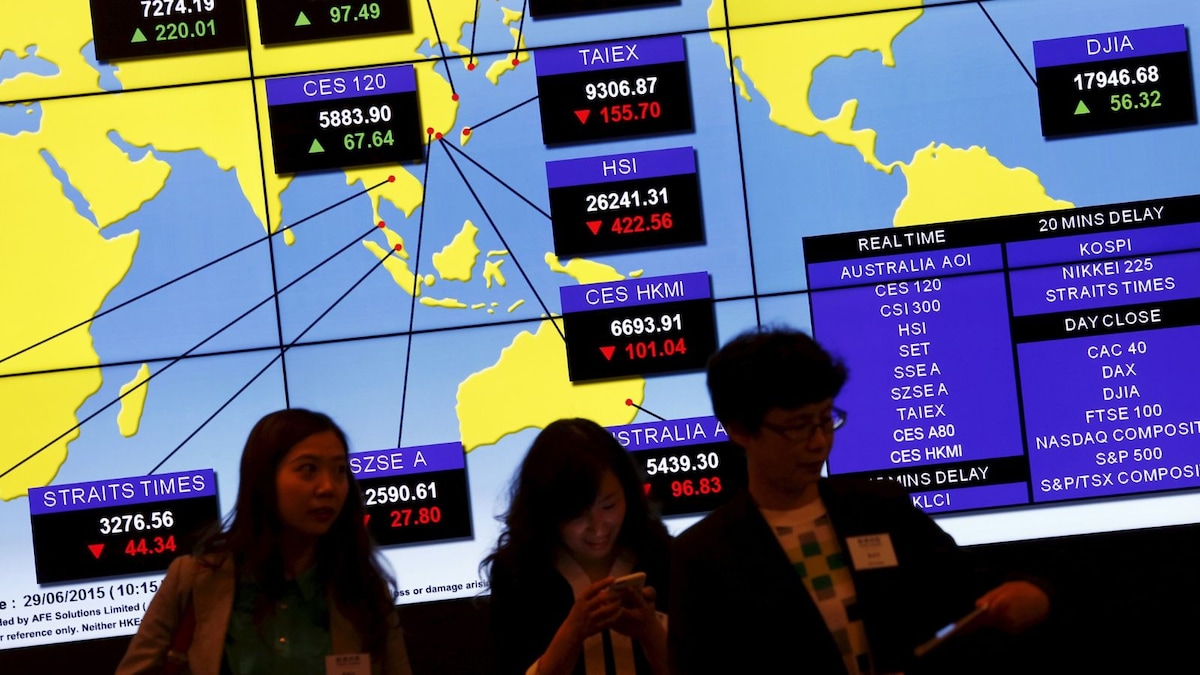
Asian stocks slide as technology sell-off deepens before Nvidia earnings

Seoul Stocks Extend Losses as Investors Take Chip Profits

Global Shares Mixed as Tech Giants Slump on Wall Street

Seoul markets fall over 4% as tech shares drag

AI Stocks Rebound as Memory Chip Demand Drives Global Rally

AI Week: Chip Breakthroughs, Brain Surgery and Quantum Campus
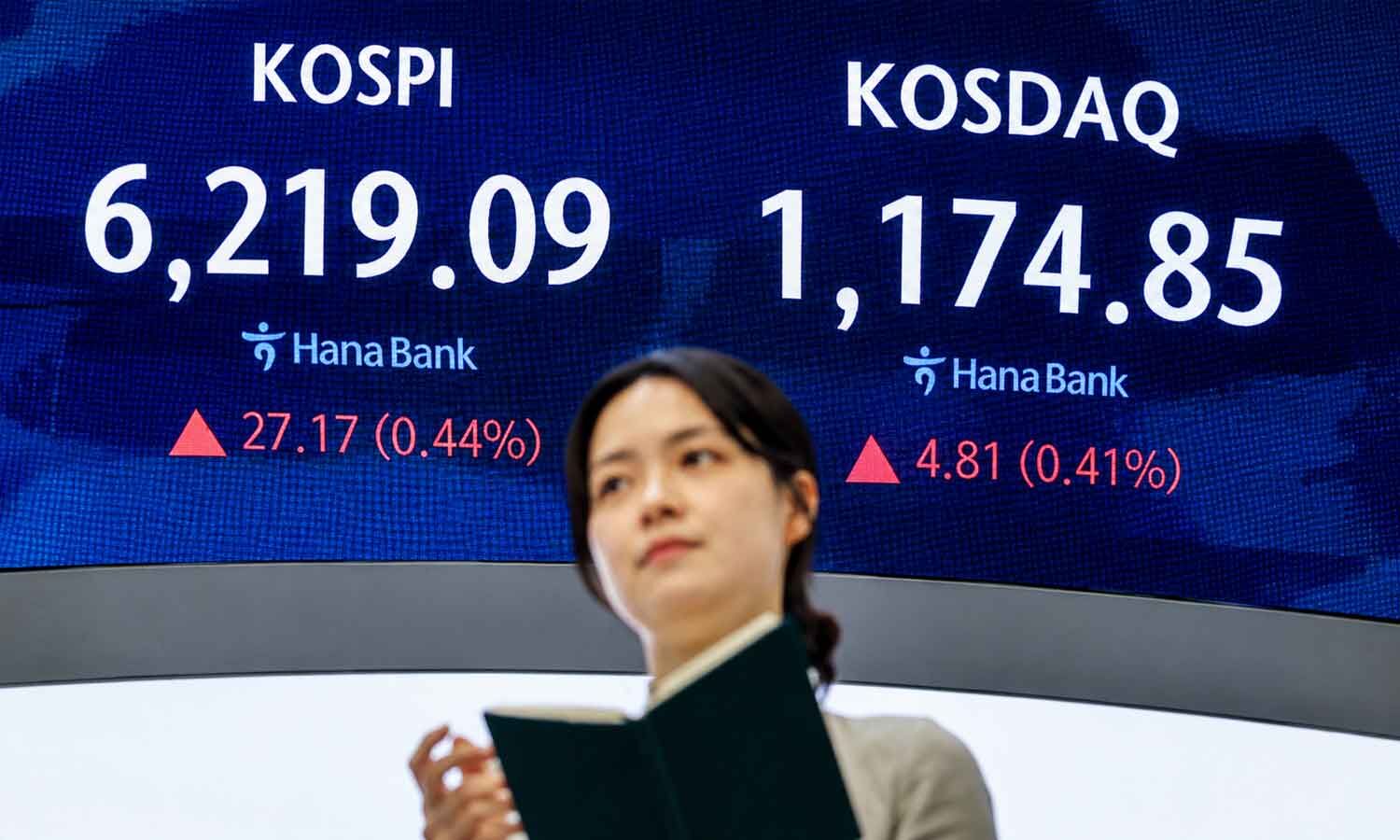
South Korean Investors Shift $7 Billion Into U.S. Stocks

Sensex, Nifty Face Cautious Monday Outlook Amid Global Cues
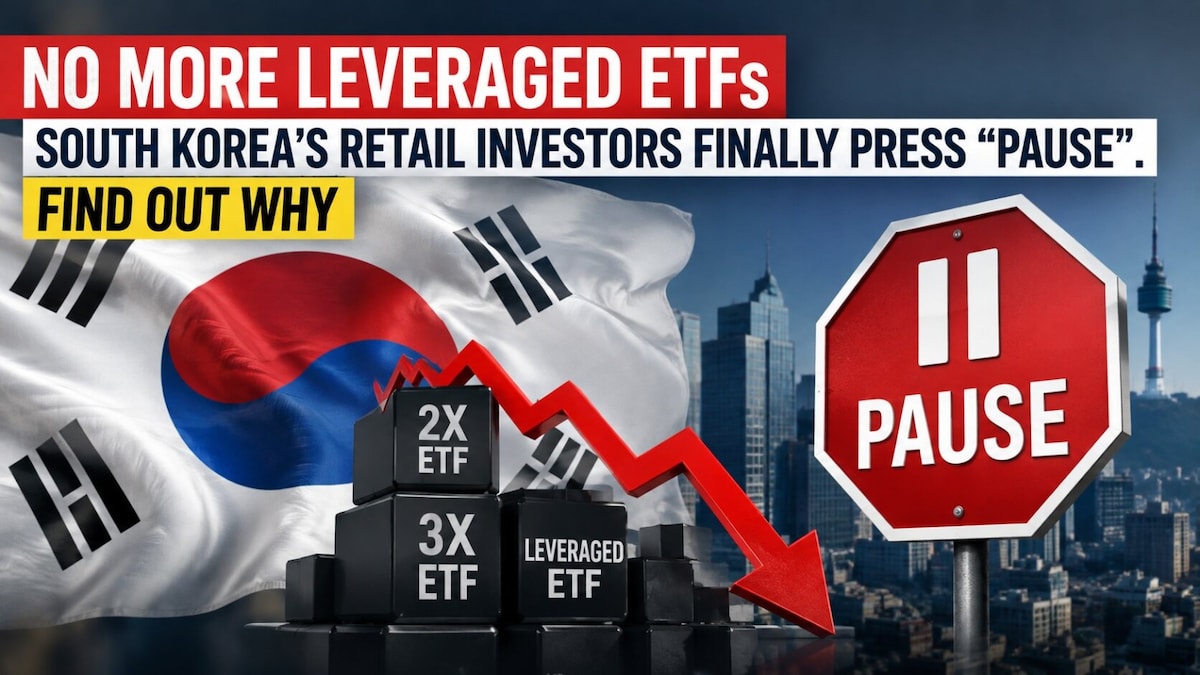
Mock-Trading Rules Cool South Korea’s Leveraged Chip ETF Frenzy

Netlist Stock Surges 650% as AI Demand Boosts Memory Business
