

0 months ago
How to Spot Perseid Meteor Shower Amid Solar Eclipse Parade
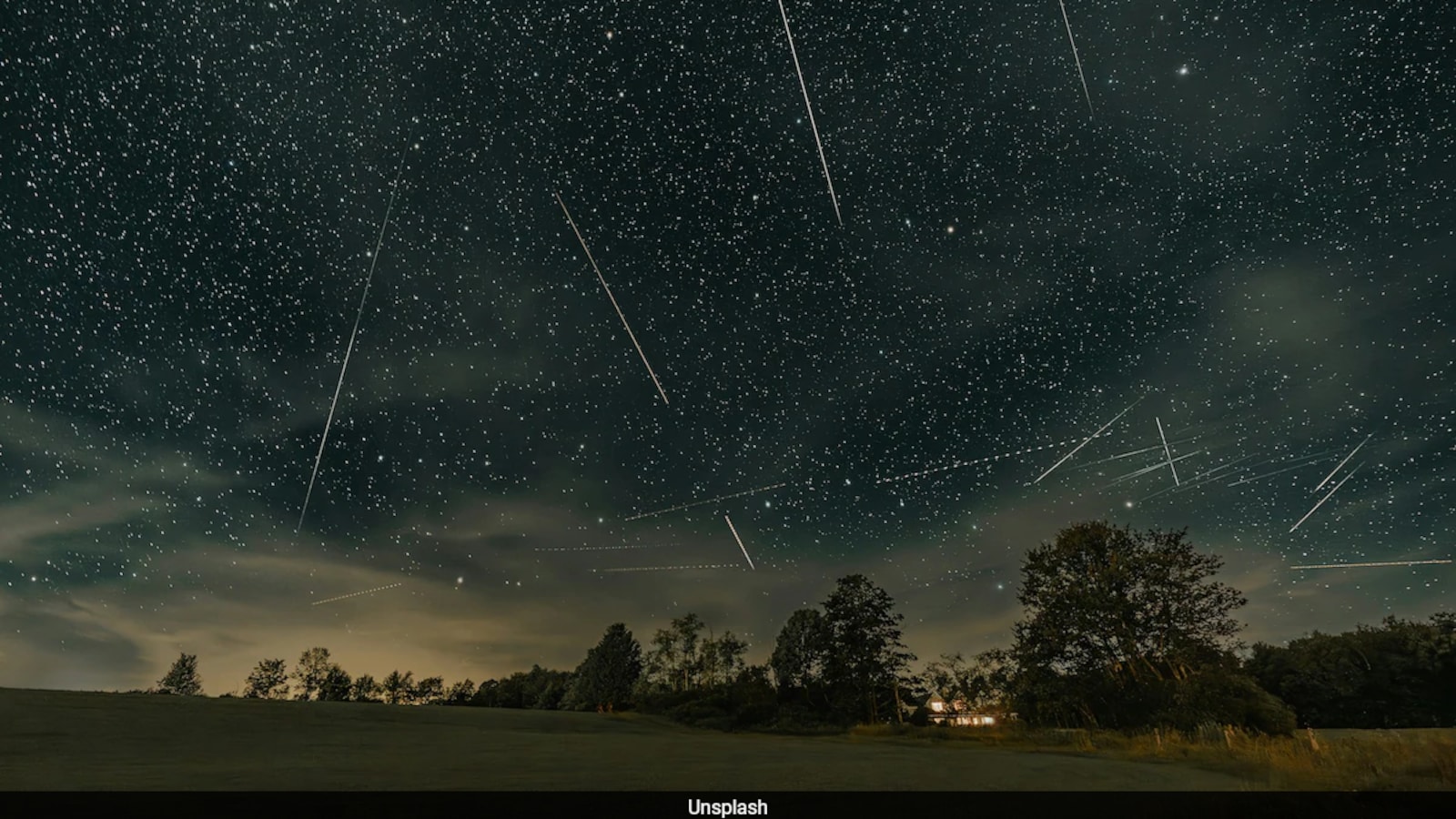
Sometimes at night you can see quick streaks of light in the sky.
People call them shooting stars, but they are not stars at all.
They are tiny bits of dust and rock from comets.
When Earth travels through a comet's leftover trail, those bits hit our air very fast.
They get hot from the speed and glow like bright lights.
One famous show is called the Perseid meteor shower.
Its peak is Wednesday night into Thursday morning.
You might spot dozens of shooting stars every hour.
The best view is after midnight, away from city lights, and this year it is extra good because the moon is very dim.
Give your eyes about half an hour to adjust, look up at the sky, and enjoy the magical show.

The Perseid meteor shower peaks Wednesday night into Thursday morning, coinciding with a total solar eclipse across Spain, Iceland and Greenland and a six-planet parade.
NASA estimates 50 to 100 meteors per hour could be visible under ideal conditions.
The American Meteor Society estimates 30 to 50 meteors per hour from rural regions.
The Perseids are debris from comet 109P/Swift-Tuttle, which orbits the sun every 133 years and won't return until 2125.
A new moon and dark skies away from city lights make prime viewing possible, with best views between midnight and dawn from the constellation Perseus.
- Who
- Stargazers in the Northern Hemisphere, with NASA and astronomers from McDonald Observatory and the University of San Francisco offering viewing guidance.
- What
- The Perseid meteor shower reaches its peak, with up to 50-100 meteors per hour visible under ideal conditions.
- Where
- Northern Hemisphere skies away from clouds and city lights; the event coincides with a total solar eclipse across Spain, Iceland and Greenland.
- When
- Wednesday night into Thursday morning; best viewing between midnight and dawn.
- Why
- Earth plows through debris left by comet 109P/Swift-Tuttle, whose remnants collide with the atmosphere to produce shooting stars.
Key facts
- Peak viewing
- Wednesday night into Thursday morning
- Meteors per hour (NASA)
- 50-100 under ideal conditions
- Meteors per hour (American Meteor Society)
- 30-50 from rural regions
- Source of meteors
- Debris from comet 109P/Swift-Tuttle
- Comet's orbit
- Orbits the sun every 133 years; next return in 2125
- Moon phase
- New moon, improving viewing conditions
- Best time to watch
- Between midnight and dawn
- Where to look
- Radiating from the constellation Perseus in the northern sky
Quotes
Astronomer Aparna Venkatesan
Astronomer at the University of San Francisco
“"New moon means we don't have moonlight flooding the sky, and you tend to see way more meteors as a result."”
 NDTV
NDTV
“"Look up and give your eyes a half hour to adjust to the darkness."”
NDTV
Sources
Related news

Perseid Meteor Shower 2026 Peaks Under New Moon Skies

Where to Watch Thursday’s Partial Lunar Eclipse Online
Partial Lunar Eclipse Will Darken 96% of Sturgeon Moon

August 2026 Lunar Eclipse Will Peak In Early UTC Hours
Deep Partial Lunar Eclipse To Cover 96% Of Moon

Iceland Rejects Renewed EU Membership Talks Over Sovereignty

Bhavana Reddy Brings Kuchipudi Performances to Iceland, Germany

Iceland Rejects EU Talks, Putting Membership Debate On Ice

Iceland Rejects Restarting EU Talks in Close-Fought Referendum

Iceland Votes in Tight Referendum on Reopening EU Membership Talks