1 week ago
OpenAI Forms Mathematics Panel Amid AI Proof Debate
OpenAI is creating a group of mathematicians to advise it about mathematical work produced by artificial intelligence.
The group will be based at the Institute for Advanced Study in Princeton, New Jersey.
Nine mathematicians will be founding members.
They will help judge how important results are and how they should be explained to the public.
They can give advice even when OpenAI does not ask for it.
They can also publicly share their opinions.
However, they cannot tell OpenAI which projects to pursue or how quickly to work.
The group was formed after attention around an alleged AI solution to a famous unsolved math problem.
Mathematicians are still debating how such computer-generated results should be checked and credited.

OpenAI is creating an independent mathematics advisory group at the Institute for Advanced Study in Princeton, New Jersey.
The panel will include nine mathematicians who will advise on the significance and communication of mathematical results.
Members can offer unsolicited advice and publicly express their views, but they will not control OpenAI’s research direction or pace.
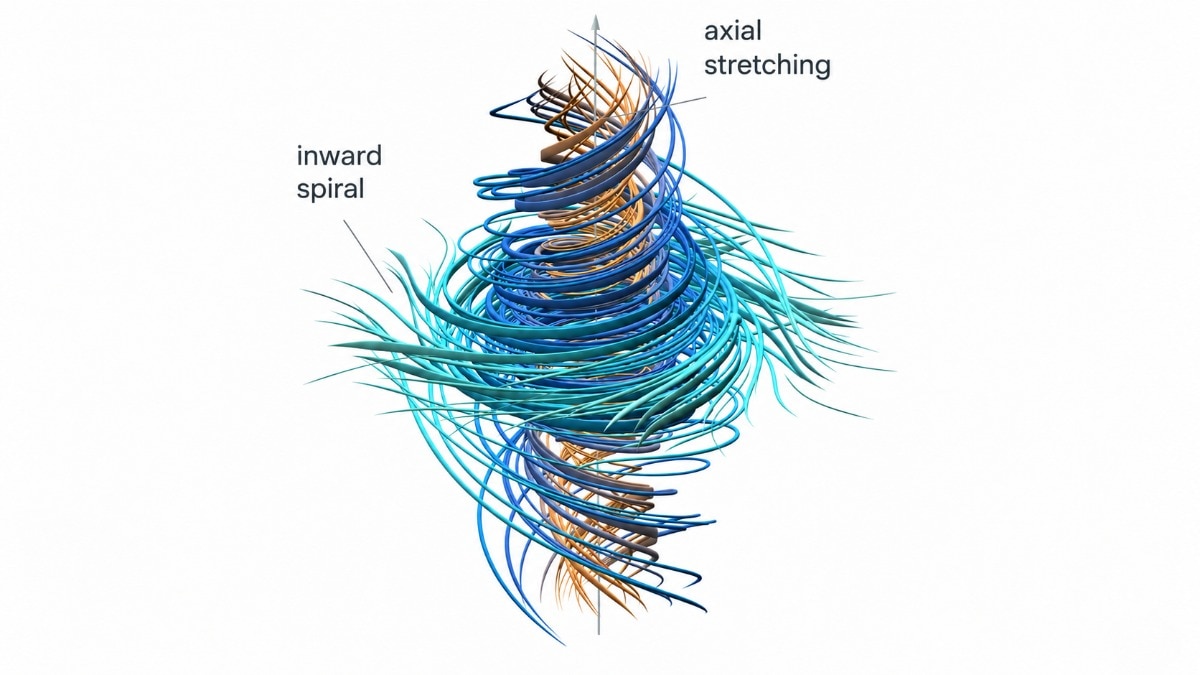
The group follows attention to an alleged AI-generated solution to the Navier-Stokes Millennium Prize problem and claims involving more than 100 other open problems.
The initiative comes amid debate over how AI-generated proofs should be verified, assessed, released and attributed.
- Who
- OpenAI, the Institute for Advanced Study, and a nine-member group of mathematicians.
- What
- OpenAI is establishing an independent advisory group on mathematics and artificial intelligence.
- Where
- The Institute for Advanced Study in Princeton, New Jersey.
- When
- The group is being formed amid recent attention to OpenAI’s claims about AI-generated mathematical results.
- Why
- To connect OpenAI’s mathematical research with the wider mathematical community and advise on the significance and communication of results.
AI research and engagement
Verification and caution
Role of mathematicians
AI research and engagement
The advisory group offers a formal way for mathematicians to engage with increasingly capable AI systems and advise on the importance and public communication of results.
Verification and caution
Because the group has no authority over OpenAI’s research agenda, its ability to prevent premature or inadequately checked announcements may be limited.
Speed of announcing results
AI research and engagement
OpenAI can continue pursuing and presenting mathematical research while consulting experts through the new panel.
Verification and caution
Some mathematicians are concerned that competition between AI companies could encourage laboratories to publicize purported breakthroughs too quickly.
Status of AI-generated proofs
AI research and engagement
AI systems may help produce solutions to difficult and previously open mathematical problems, including the results OpenAI says its internal model generated.
Verification and caution
Mathematicians continue to debate the verification, originality and attribution standards needed before AI-generated work is treated as a genuine mathematical advance.
Key facts
- Group name
- Advisory Group on Mathematics and Artificial Intelligence
- Host institution
- Institute for Advanced Study
- Location
- Princeton, New Jersey
- Founding membership
- Nine mathematicians
- Authority
- Advisory only; it cannot direct OpenAI’s research or set its pace
- Payment
- Members will not receive payment from OpenAI
- Triggering debate
- An alleged AI-generated solution to the Navier-Stokes Millennium Prize problem and claims involving more than 100 other open problems
Quotes

Institute for Advanced Study (IAS)
The Princeton research institute hosting OpenAI’s mathematics advisory group
“the responsibility for the decisions made by any company will rest with that company.”
 firstpost.com
Sources
Related news

OpenAI Says Unreleased AI Model Solved 100 Math Problems
OpenAI Claims Navier-Stokes Breakthrough After 88-Hour AI Effort

OpenAI Navier-Stokes Proof Claim Faces Questions From Mathematicians
OpenAI Navier-Stokes Claim Raises Questions About AI Research

OpenAI Says AI Agents Solved Decades-Old Maths Problem