4 hrs ago
Indian Scientist’s 2017 Paper Cited in OpenAI Math Claim
OpenAI says one of its secret computer models found an answer to a very difficult fluid-movement problem.
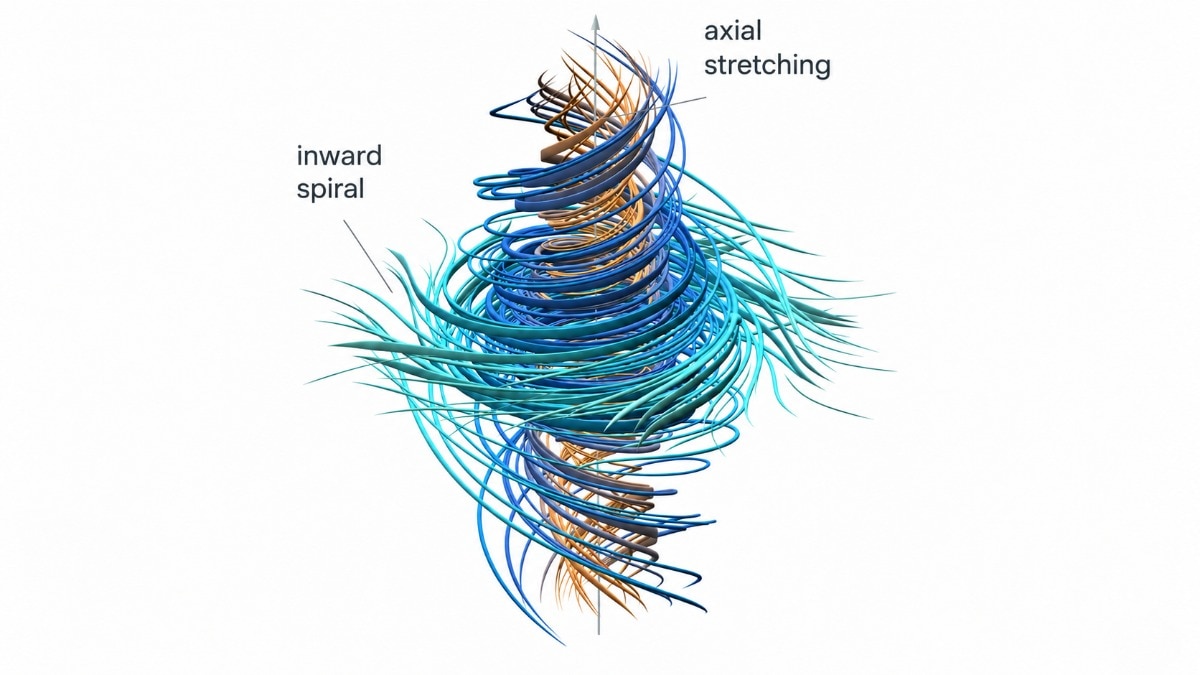
The problem is called the Navier-Stokes existence and smoothness problem.
It is one of seven famous problems with a $1 million prize.
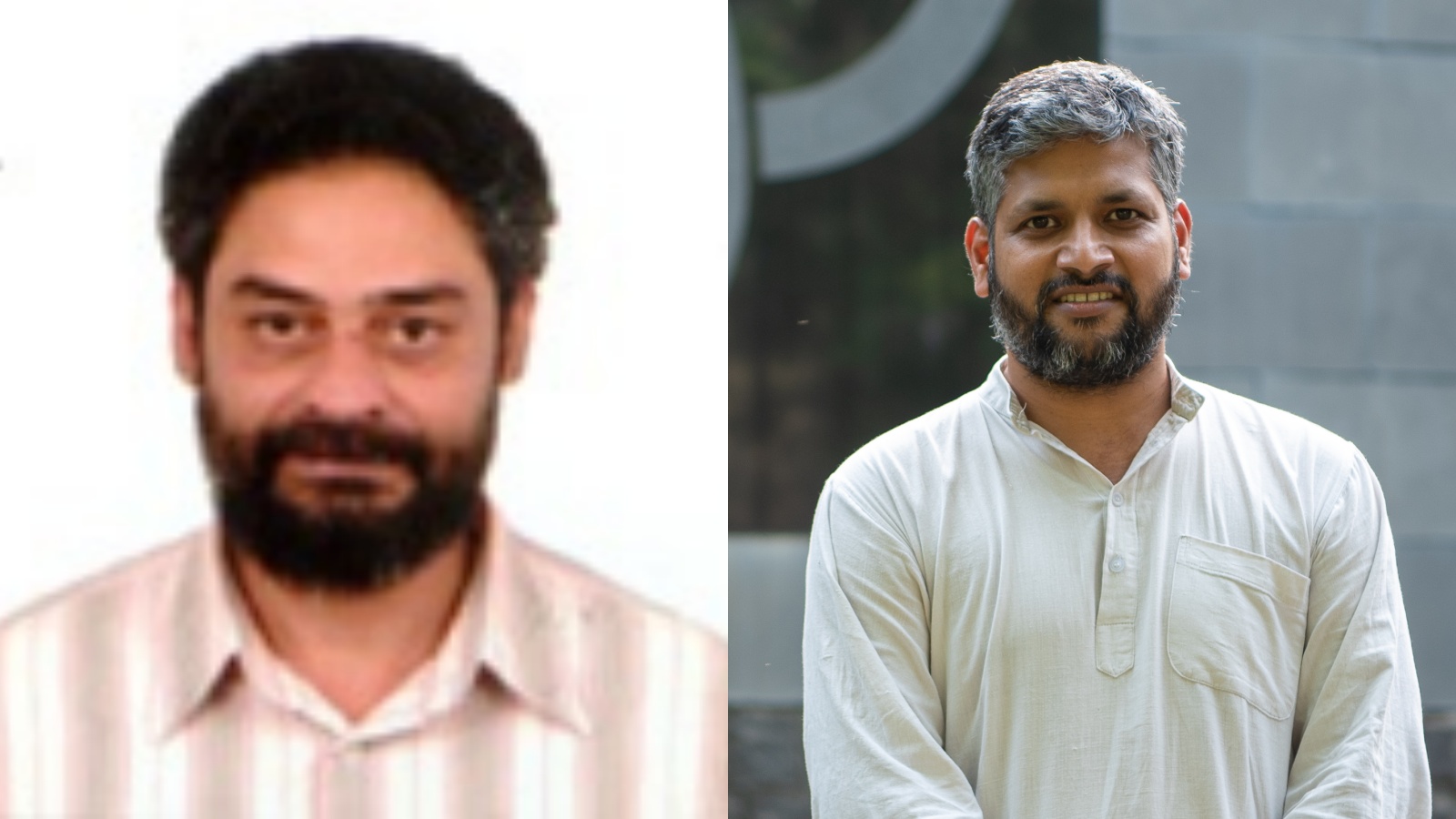
OpenAI’s paper referred to a 2017 paper by Indian scientists Nishant Singh and S Sridhar.
They had first thought about not publishing their work, but later published it after encouragement.
Singh said OpenAI studied the problem more broadly than his own paper did.
Many mathematicians are still checking whether OpenAI’s claimed solution is correct.
Some scientists worry that computers may produce answers without helping people understand them.
There is also a dispute about whether OpenAI’s model may have learned from data connected to rival researchers.

OpenAI said an unreleased internal model solved the Navier-Stokes Millennium Prize Problem, though mathematicians are still checking the claim.
OpenAI’s 166-page paper cites a 2017 proof by Indian scientists Nishant Singh and S Sridhar.
Singh and Sridhar initially did not plan to publish their exact solution, but published it in 2017 after encouragement from Ethan Vishniac.
Singh said OpenAI conducted a more comprehensive analysis than his paper, which described an exact smooth flow solution.
Scientists have criticized AI-generated solutions for potentially weakening human understanding, while an additional dispute concerns possible use of rival researchers’ data.
- Who
- OpenAI, Indian scientists Nishant Singh and S Sridhar, and mathematicians reviewing the claimed solution.
- What
- OpenAI announced that an unreleased internal model had derived a solution to the Navier-Stokes Millennium Prize Problem and cited Singh and Sridhar’s 2017 paper.
- Where
- The cited research was published in The European Physical Journal Plus; Singh is associated with IUCAA and Sridhar with the Raman Research Institute in Bangalore.
- When
- OpenAI made the announcement on September 8; Singh and Sridhar’s paper was published in 2017.
- Why
- OpenAI sought to address a long-standing mathematics problem, while scientists are debating the value, verification, and possible data sources behind the AI-generated result.
Critics and Skeptics
Potential Benefits and OpenAI’s Position
Understanding versus obtaining answers
Critics and Skeptics
Nishant Singh and Terrance Tao warned that machine-generated answers may provide limited insight and could weaken the ecosystem supporting future mathematical progress.
Potential Benefits and OpenAI’s Position
Supporters of applying AI could argue that solving the problem may enable practical advances, such as improved weather-prediction tools.
Human research versus machine solutions
Critics and Skeptics
Singh said it was depressing that a machine might solve a problem that scientists had pursued for centuries, because failed human attempts can teach something unique.
Potential Benefits and OpenAI’s Position
OpenAI presented its model’s result as a solution attempt, while Singh acknowledged that an optimist could favor using such results to develop practical applications.
Possible training-data overlap
Critics and Skeptics
Levent Alpöge and Tristan Buckmaster said they had worked on part of the problem using OpenAI’s Codex, raising the possibility that their data influenced the company’s model.
Potential Benefits and OpenAI’s Position
OpenAI said such an outcome was unlikely, but acknowledged that it could not rule out de-identified data from their product usage helping improve its models.
Key facts
- Problem
- Navier-Stokes existence and smoothness problem
- Prize
- $1 million, awarded through the Clay Mathematics Institute’s Millennium Prize Problems
- OpenAI paper
- 166 pages and 22 references
- Cited paper
- “Plane shearing waves of arbitrary form: Exact solutions of the Navier-Stokes equations”
- Publication year
- 2017
- Verification status
- Mathematicians are reviewing OpenAI’s claim
- Related controversy
- OpenAI said it could not rule out that de-identified data from rival researchers’ use of its products helped improve its models
Quotes
Nishant Singh
Indian astrophysicist and co-author of the 2017 Navier-Stokes paper
“It is depressing that a machine has managed to solve this whereas so many scientists for centuries have been trying to do this. When a human makes an attempt and it fails, each of those attempts teaches something unique. But if suddenly somebody gives you a dry solution, I don’t know how useful it becomes.”
 indianexpress.com
“I was a PhD student and Sridhar was my guide. He did not even want to publish this as a separate paper. He just wanted to keep this as a paragraph in a separate paper. Both of us are against this proliferation of publishing, which we believe leads to deterioration of science in general.”
indianexpress.com
Terrance Tao
UCLA mathematician commenting on automated mathematical problem-solving
“the indiscriminate use of powerful solution-extraction tools can achieve the immediate short-term goal of solving problems at hand, but at the cost of sustaining the ecosystem for the next wave of progress, or in understanding the progress already obtained.”
indianexpress.com
Sources
Related news
OpenAI Navier-Stokes Proof Claim Faces Questions From Mathematicians
OpenAI Claims Navier-Stokes Breakthrough After 88-Hour AI Effort

OpenAI Says AI Agents Solved Decades-Old Maths Problem
Anima Anandkumar Named Among TIME’s Most Influential AI Leaders
Sridhar Vembu Warns Software Engineers AI May Reduce Human Roles
E.C.G. Sudarshan’s Physics Legacy Outshone by Nobel Recognition Gaps

BusinessNext Raises $40M for SEA and Australia Expansion

Nishant Singh Malkani Denies Abhishek Bajaj and Ashnoor Kaur Pre-Existing Friendship