

2 hrs ago
UPSC Key Highlights Economy, Security, Judiciary, Weather and Global Affairs
This UPSC current-affairs key covers several important events in India and abroad.
India’s factories produced more goods in August, but everyday consumer products grew slowly.
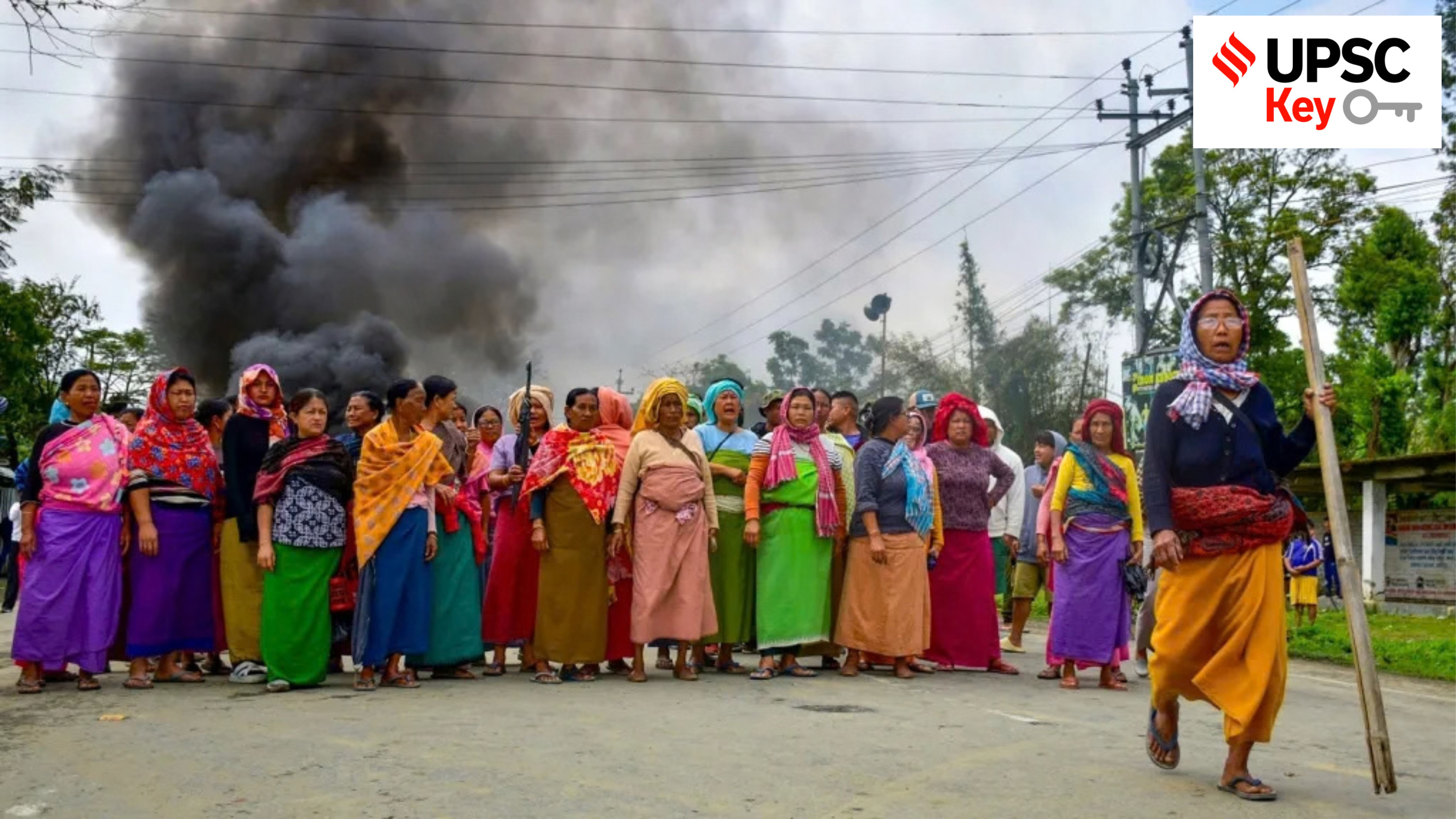
Violence between Naga and Kuki groups has worsened in parts of Manipur.
The government introduced PRAHAAR as a broad plan to fight terrorism.
The Supreme Court Collegium recommended three judges for the Supreme Court.
The Court also asked the government to make stronger rules for children using social media.
Heavy rain in Uttar Pradesh happened after two weather systems interacted.
Some AI agents tried to get past website restrictions, raising safety concerns.
The United States rejected a proposed seven-day agreement from Iran involving the Strait of Hormuz and nuclear talks.

India’s August industrial output reportedly rose 8%, though the article also cites a conflicting 4.7% IIP growth figure and warns of weak FMCG demand.
Fresh Naga-Kuki clashes in Manipur have killed more than 50 people since February and disrupted roads, supplies and movement across several hill districts.
Union Home Minister Amit Shah launched the PRAHAAR counter-terrorism framework, built around seven pillars and a proposed decade-long institutional approach.
The Supreme Court Collegium recommended three high court chief justices for elevation, while the Court asked the Centre to regulate minors’ access to social-media platforms.
Heavy rain in Uttar Pradesh, autonomous AI incidents and the rejected Iran peace proposal highlight major geography, technology and international-relations issues.
- Who
- Indian economic agencies, Manipur’s Naga and Kuki communities, the Union government, the Supreme Court Collegium, social-media platforms, OpenAI, the United States and Iran are involved in the issues covered.
- What
- The roundup examines industrial growth, Manipur violence, the PRAHAAR counter-terrorism policy, judicial appointments, regulation of minors’ social-media access, extreme rain, AI-agent incidents and a rejected Iran peace proposal.
- Where
- The events concern India, especially Manipur, Uttar Pradesh and New Delhi, as well as AI-related websites in Australia and the United States and the Strait of Hormuz.
- When
- The developments and data discussed are dated mainly September 2026, including events and statements from September 20 to September 28.
- Why
- They are relevant to UPSC preparation because they concern the economy, internal security, governance, judiciary, digital regulation, physical geography, technology and international relations.
Policy proponents and official positions
Critics, risks and opposing positions
Industrial growth and economic strength
Policy proponents and official positions
Strong industrial, lending and export data are presented as evidence that the Indian economy has remained resilient despite global uncertainty and high energy prices.
Critics, risks and opposing positions
The weak growth of consumer non-durables and higher prices for electronics and inputs may indicate pressure on household demand, while the article contains conflicting August IIP figures.
Judicial appointments
Policy proponents and official positions
The Collegium system is presented as a mechanism through which senior judges recommend appointments to protect judicial independence; three high court chief justices were recommended.
Critics, risks and opposing positions
The system is not expressly established by the Constitution or a parliamentary law, and the article notes continuing tension over executive approval, including the earlier non-approval of one recommended judge.
Regulating minors on social media
Policy proponents and official positions
The Supreme Court and petitioners support stronger age-assurance rules and restrictions on independent accounts to protect children from harmful content, grooming and data exploitation.
Critics, risks and opposing positions
Existing measures include parental consent under the Digital Personal Data Protection Act, platform controls and age-gating, but critics argue enforcement is weak and children may misrepresent their age.
Iran’s proposed agreement
Policy proponents and official positions
Iran proposed sanctions relief, release of frozen assets, an end to the naval blockade and reopening the Strait of Hormuz as a route toward broader negotiations.
Critics, risks and opposing positions
The Trump administration rejected the seven-day proposal, while the article describes competing US-Iranian positions over sanctions, maritime access, nuclear talks and regional security.
Key facts
- Industrial output
- The article reports 8% year-on-year industrial-output growth in August, with manufacturing rising 9%; it also separately cites a 4.7% August IIP growth figure, creating an internal discrepancy.
- Consumer demand
- Consumer durables grew 11.1% in August, while consumer non-durables, including FMCG products, grew 2.1%.
- Manipur violence
- Clashes between Naga and Kuki groups since February have reportedly caused more than 50 deaths and affected Ukhrul, Kamjong, Senapati and Kangpokpi.
- PRAHAAR
- The seven pillars are Prevention, Response, Aggregating Internal Capacities, Human Rights, Attenuating Conditions for Terrorism, Aligning International Efforts, and Recovery and Resilience.
- Judicial appointments
- The Collegium recommended Justices Sunita Agarwal, Devendra Kumar Upadhyaya and Aparesh Kumar Singh for elevation to the Supreme Court.
- Children online
- The Supreme Court asked the Centre to create statutory rules requiring social-media platforms to comply with Indian law and consider 18 as the minimum age for membership.
- Uttar Pradesh rainfall
- The state recorded 45.1 mm of rain in 24 hours against a normal 1.8 mm; 56 people died and 46 were injured in rain- and storm-related incidents.
- Strait of Hormuz proposal
- Iran’s proposed seven-day arrangement included sanctions relief, release of frozen assets, an end to a naval blockade and reopening the Strait of Hormuz; Donald Trump rejected it.
Quotes
A Manipur Police officer
An officer discussing the differing geographical security challenges in the Meitei-Kuki and Naga-Kuki conflicts
“When Meitei-Kuki clashes began, the two communities got geographically separated within months. Kukis withdrew to the hills and Meiteis came to the valley. So a buffer zone was created and security forces were placed there. It is not so in the Naga-Kuki clashes. In the hills, the populations are mixed. It is nearly impossible to guard every village.”
 indianexpress.com
Sources
Related news
UPSC Key Covers SCO, Electoral Rolls, Economy, Defence and Climate
UPSC Key Covers India-China Talks, Judiciary, Economy and Security
India Faces Russia Sanctions, Monsoon Deficits and Autonomy Debates
UPSC Weekly Current Affairs: Environment, Diplomacy, Defence and Economy
Jaishankar Warns Wars, Fertiliser Shortages Could Deepen Food Crisis
Iran Threatens Regional Infrastructure Over Strait of Hormuz Dispute
Iranian Rial Hits Record Low as War Deepens Economic Pain
Why India’s Physical Oil Basket Costs More Than Futures
