2 hrs ago
Rupee Weakness Raises Mixed Risks for Indian Stock Market

The Indian rupee became weaker compared with the U.S. dollar.
This happened partly because oil became more expensive and India imports much of its energy.
Foreign investors also sold Indian stocks and bonds, putting more pressure on the rupee.
The Reserve Bank of India is trying to slow the decline.
Some experts think the rupee may stay below ₹97 per dollar in October.
Others say it could cross ₹97 if oil prices and foreign selling remain high.
A weaker rupee may help companies that earn dollars, such as information technology and pharmaceutical exporters.
It may hurt airlines, oil companies, carmakers and other businesses that need to buy imported goods.
The overall effect on the stock market is mixed rather than uniformly negative.

The rupee fell below ₹96 per dollar on 29 September, reaching ₹96.1475 before recovering partly.
Brent crude rose 2% to $107.40 a barrel, increasing concerns about India’s import bill and inflation.
Foreign investors sold $3.7 billion of Indian stocks and bonds in September, taking yearly outflows to $19.6 billion.
Analysts said the rupee could remain below ₹97 in October, though continued oil-price increases and foreign selling could push it past that level.
Exporters such as information technology and pharmaceutical companies may benefit, while import-dependent sectors could face higher costs and weaker margins.
- Who
- The Indian rupee, the Reserve Bank of India, foreign investors and Indian companies are central to the story.
- What
- The rupee weakened past ₹96 per dollar, raising concerns about oil costs, capital outflows and the effect on Indian stocks and bonds.
- Where
- In India’s currency and financial markets, amid Middle East supply concerns and foreign-market pressures.
- When
- The decline occurred on Tuesday, 29 September; the Reserve Bank of India’s policy decision is scheduled for 7 October, with October risks under discussion.
- Why
- Higher crude prices, foreign investor selling, expectations of higher global interest rates and concerns about India’s current account deficit pressured the rupee.
Limited Market Impact
Broader Pressure and Sector Risks
Overall investor effect
Limited Market Impact
V K Vijayakumar said the rupee’s depreciation so far is not significant enough to have a major impact on investors.
Broader Pressure and Sector Risks
Tushar Badjate and Prathamesh Kadival said the effects vary by sector, with foreign selling and higher imported-input costs creating risks for some businesses.
Rupee’s October direction
Limited Market Impact
V K Vijayakumar expects the rupee to remain below ₹97 because the Reserve Bank of India is likely to intervene at lower levels.
Broader Pressure and Sector Risks
Tushar Badjate said the rupee could breach ₹97, while Prathamesh Kadival said that outcome is possible if oil prices stay high and foreign outflows continue.
Sector impact
Limited Market Impact
Export-oriented information technology and pharmaceutical companies could remain relatively resilient because they earn significant dollar revenues.
Broader Pressure and Sector Risks
Oil marketing companies, airlines, paints, autos, oil and gas, chemicals and other import-dependent businesses could face higher costs and margin pressure.
Key facts
- Rupee low
- ₹96.1475 per dollar intraday on 29 September
- Brent crude
- $107.40 a barrel after rising 2%
- September foreign outflows
- $3.7 billion from Indian stocks and bonds
- Total yearly foreign outflows
- $19.6 billion
- Key policy date
- Reserve Bank of India decision scheduled for 7 October
- Potential beneficiaries
- Information technology and pharmaceutical exporters
- Potentially pressured sectors
- Oil marketing, airlines, paints, autos and businesses reliant on imported inputs or dollar debt
Sources
Related news

Rupee Slides to 95.79 as Oil and Outflows Weigh

Rupee Falls Below 96 as Oil Prices Breach $107

Rupee Opens 16 Paise Lower as Oil, Outflows Weigh

Rupee Falls 20 Paise Against Dollar Amid Oil, Outflows

Crude Nears $100, Sending Rupee and Indian Stocks Lower
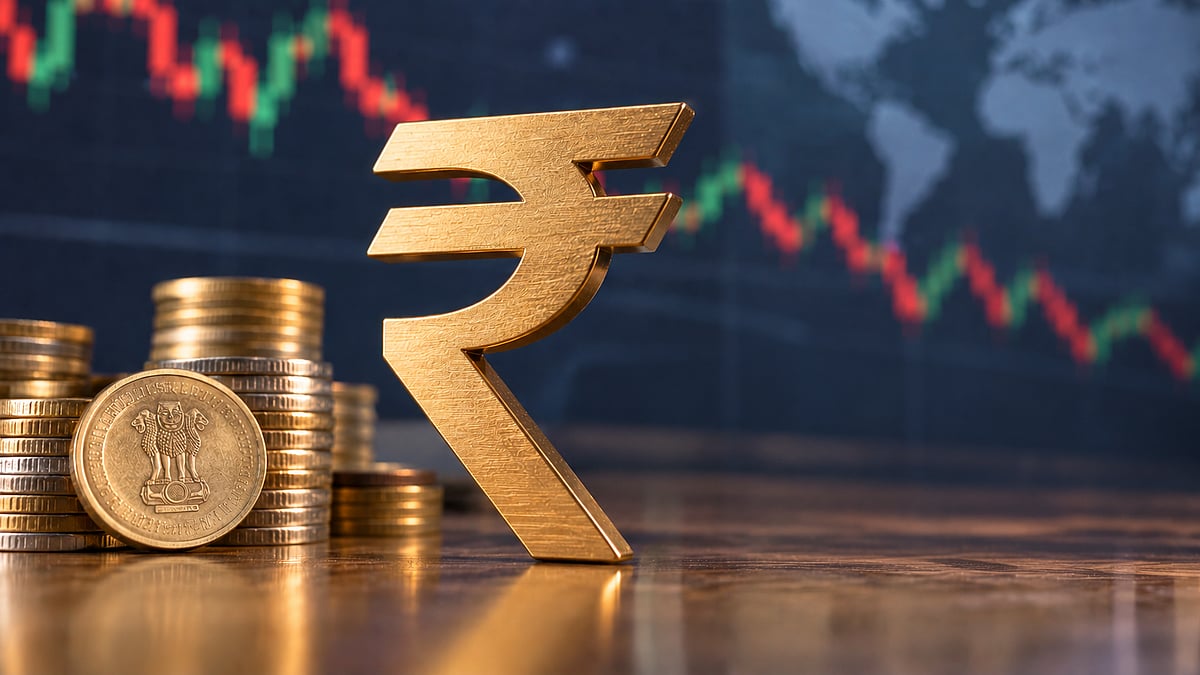
Indian Rupee Slips as Crude Nears $97 Amid Tensions
Jaishankar Warns Wars, Fertiliser Shortages Could Deepen Food Crisis

Iran Threatens Regional Infrastructure Over Strait of Hormuz Dispute
Iranian Rial Hits Record Low as War Deepens Economic Pain
Why India’s Physical Oil Basket Costs More Than Futures