4 hrs ago
Taylor Rule Explained After Iran’s Jibe at US Interest Rates
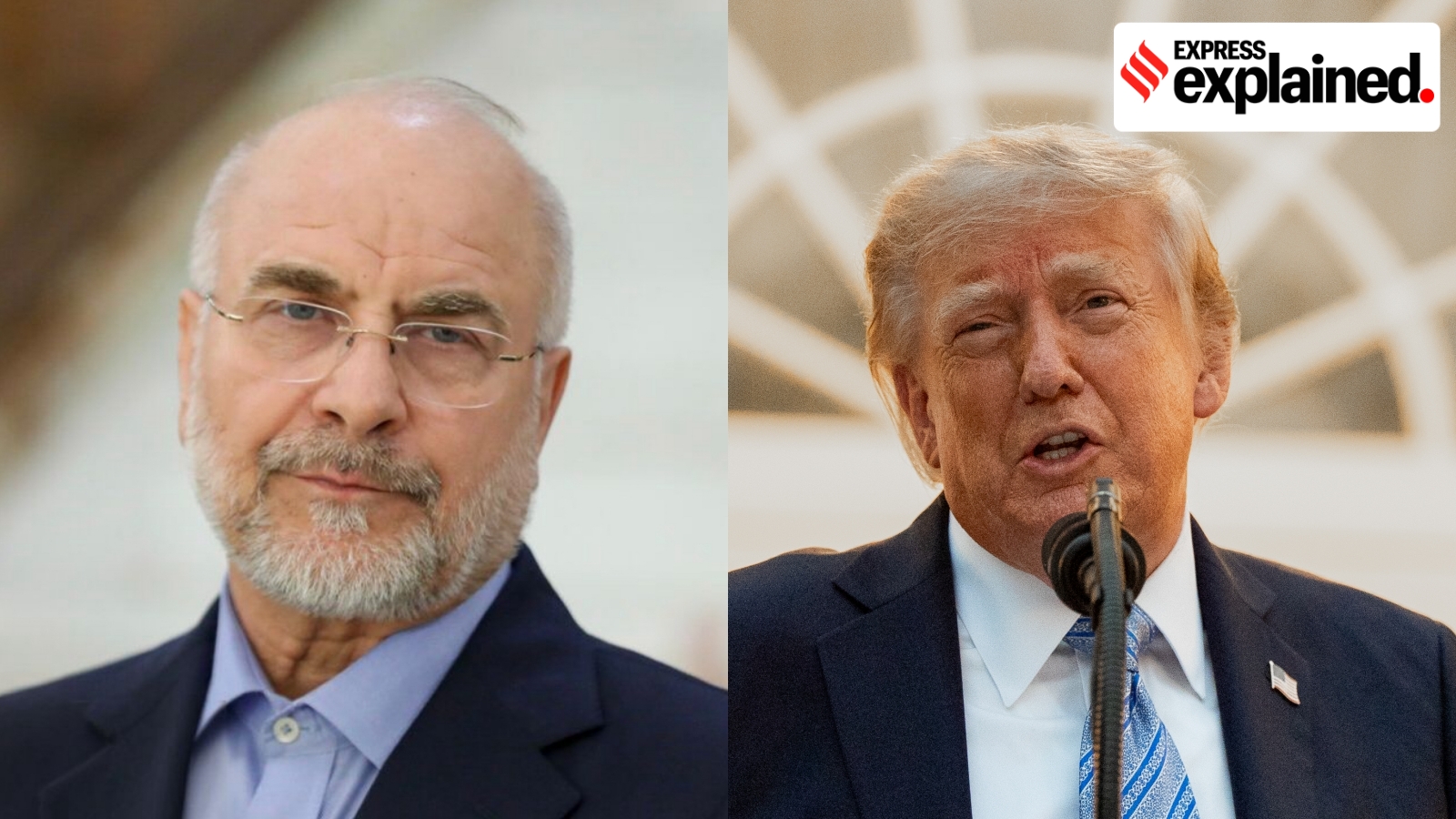
The Taylor Rule is a guide for deciding how high or low interest rates should be.
It says rates usually rise when prices are increasing too quickly.
Rates can also change depending on how strongly the economy is growing.
Iran’s parliament speaker, Mohammad Bagher Ghalibaf, changed the equation to include two important sea routes.
These were the Strait of Hormuz and the Bab el-Mandeb Strait.
He argued that raising US interest rates cannot reopen those routes or create more oil.
The US Federal Reserve nevertheless raised rates by 25 basis points, from 3.75% to 4%.
An expert said the equation was mainly a political message rather than a precise economic calculation.
The article says oil-supply problems may continue to push prices higher even when interest rates rise.

Iranian Parliament Speaker Mohammad Bagher Ghalibaf adapted the Taylor Rule to criticize US interest-rate policy amid disrupted oil shipping.
His modified equation added variables for the Strait of Hormuz and Bab el-Mandeb Strait, which he described as geopolitical shocks.
The US Federal Reserve raised its interest rate from 3.75% to 4%, a 25-basis-point increase and its first hike in over three years, according to the article.
The standard Taylor Rule links interest rates to inflation, the inflation target, the neutral real interest rate, and the economic output gap.
An expert called Ghalibaf’s formula rhetorical, saying interest-rate changes cannot directly resolve an oil-supply disruption caused by blocked maritime routes.
- Who
- Mohammad Bagher Ghalibaf, the Iranian Parliament Speaker; the US Federal Reserve; and economist John Taylor, whose original rule was cited.
- What
- Ghalibaf used a modified Taylor Rule to criticize US interest-rate policy during disruptions to oil shipments through key maritime straits.
- Where
- The economic effects were discussed in the United States, while the shipping disruptions centered on the Strait of Hormuz and Bab el-Mandeb Strait.
- When
- Ghalibaf posted the equation on September 16, 2026; the Federal Reserve raised rates hours later, according to the article.
- Why
- Ghalibaf argued that interest-rate increases cannot solve a physical oil-supply problem caused by blocked or disrupted maritime routes.
Ghalibaf’s Argument
Expert Qualification
Effect of interest-rate hikes
Ghalibaf’s Argument
Ghalibaf argued that a 25-basis-point increase cannot reopen the Strait of Hormuz or produce additional oil.
Expert Qualification
Rahul Menon said rate changes are only marginal in this situation because the main pressure comes from disrupted oil flows.
Meaning of the modified equation
Ghalibaf’s Argument
The added Strait of Hormuz and Bab el-Mandeb variables were used to represent geopolitical risks and an associated oil-price premium.
Expert Qualification
Menon said the mathematical form should not be taken too literally because the post was primarily rhetorical.
Limits of monetary policy
Ghalibaf’s Argument
The post suggested that the Federal Reserve cannot control inflation effectively while maritime chokepoints restrict energy supplies.
Expert Qualification
The article explains that the Taylor Rule is a rule of thumb, not a law, and that central banks consider many other factors and may use alternative tools.
Key facts
- Original Taylor Rule
- Introduced by economist John Taylor in a 1993 paper to guide interest-rate decisions.
- Common equation
- i = r* + π + 0.5(π−π*) + 0.5(y−y*)
- Modified equation
- Ghalibaf added terms for Strait of Hormuz and Bab el-Mandeb risks.
- US rate decision
- The Federal Reserve raised rates from 3.75% to 4%, or by 25 basis points.
- Hormuz traffic
- The article reports a 10-day average of about 16 vessels using the Strait of Hormuz.
- Bab el-Mandeb traffic
- The article reports a 10-day average of 26 vessels using the Bab el-Mandeb Strait.
- Expert assessment
- Rahul Menon described the post as rhetorical and said oil flows were the central issue.
Quotes
Rahul Menon
Associate professor at the Jindal School of Government and Public Policy
“Essentially he’s (Ghalibaf) saying that the interest rate changes right now are just tinkering at the margin, because the main factor that’s going to drive up prices for the American population is the fact that Iran is not letting any oil pass through the Strait of Hormuz”
 indianexpress.com
“I don’t think we should look too strongly at the mathematical nature of that equation. What matters is the fact that you don’t have any oil coming through these places”
indianexpress.com

Mohammad Bagher Ghalibaf
Speaker of the Iranian Parliament
“Straits Taylor Rule: i = r* + π* + 1.5(π−π*) + 0.5(y−y*) + α(SOH−SOH*) + β(BEM−BEM*), α,β > 0 Let’s see if a hike could open SOH or produce a single barrel”
indianexpress.com
Sources
Related news

US Escalates Iran Economic Pressure as Hormuz Crisis Deepens
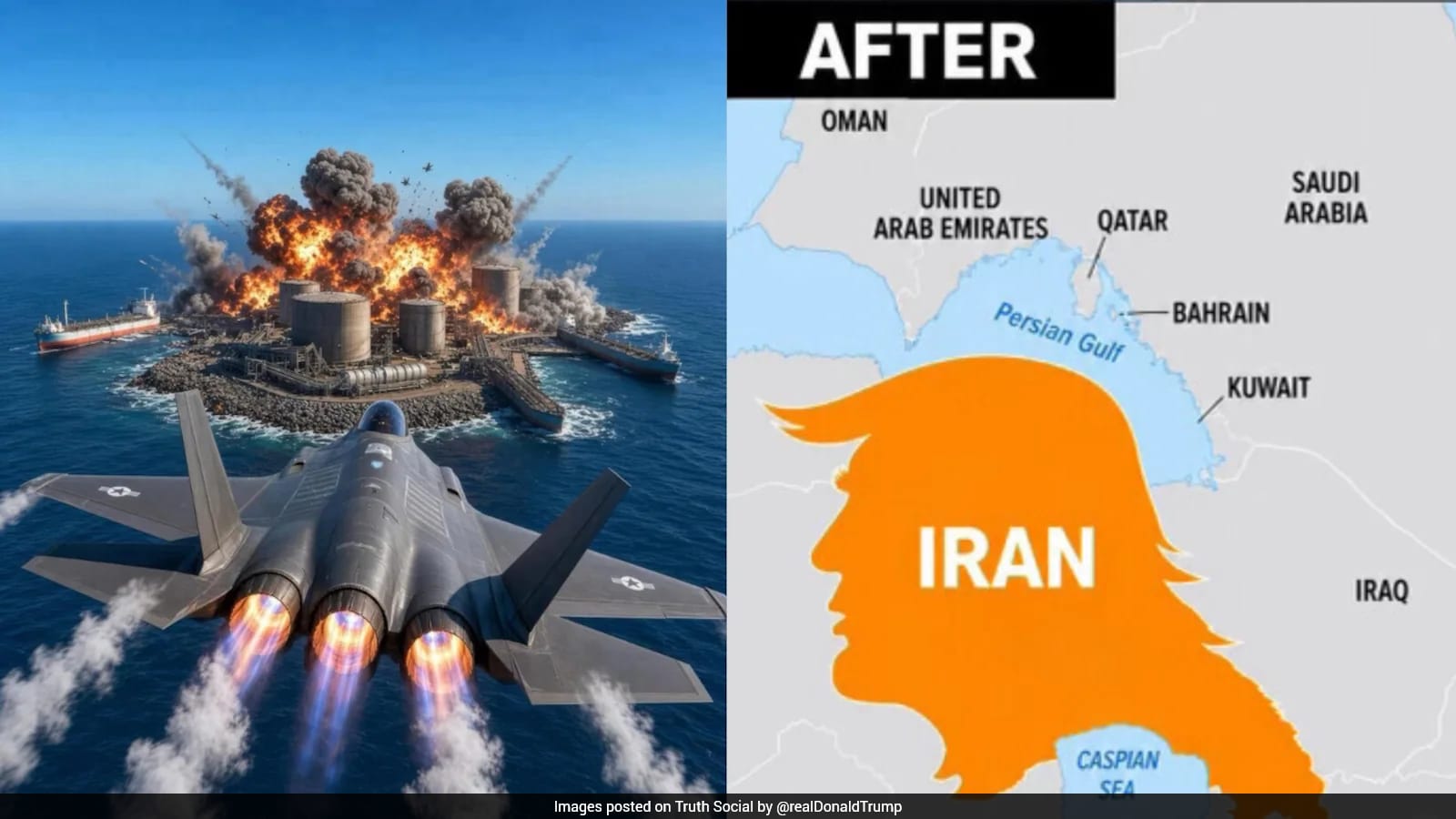
Trump Targets Iran’s Oil Hub With AI-Powered Posts

Iran Warns U.S. Energy Interests as Hormuz Traffic Falls
Bessent Predicts Pipelines Will Bypass Strait of Hormuz
US Says Iran Lacks Hormuz Control, Faces Economic Death Spiral
Iran’s Hormuz Leverage Wanes as U.S. Economic Pressure Intensifies

US Gas Prices Near Yearly Peak Before 2026 Midterms

Engineers India Targets Saudi, UAE Pipeline and Storage Projects

India Tells UN Security Council Maritime Navigation Must Remain Free
India Expert Calls for Global Military AI Norms Before Deployment