2 weeks ago
India's next economic reform starts with stronger corporate boardrooms

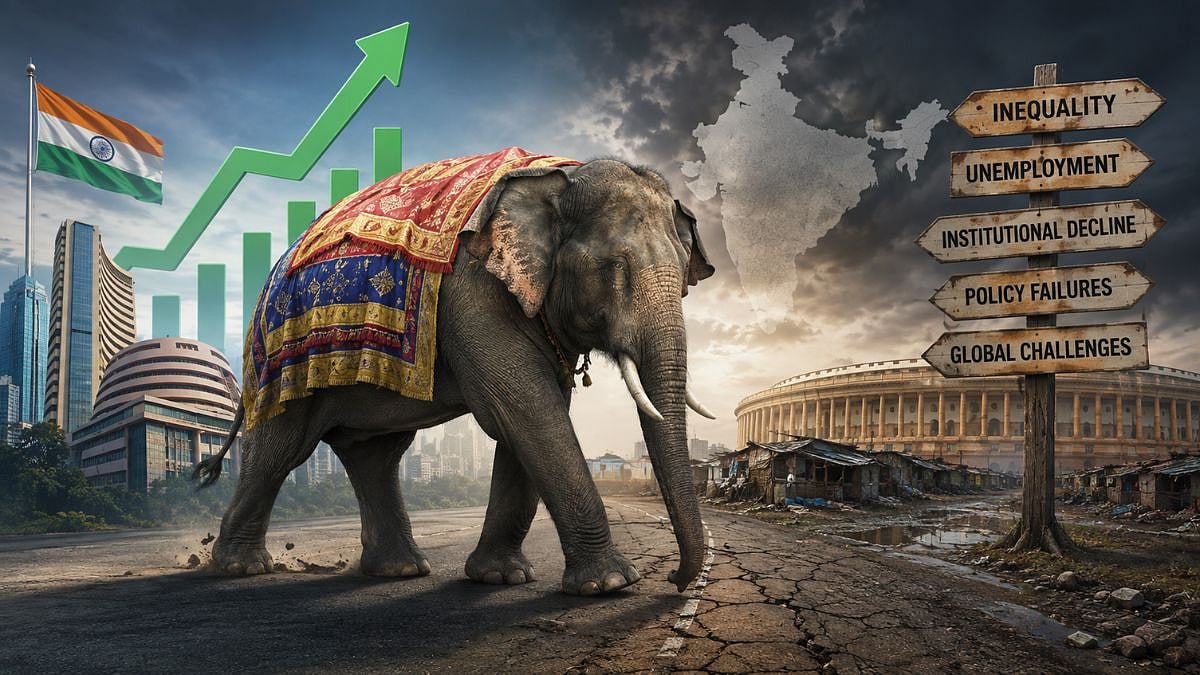
India has big dreams.
It wants to become a rich country, make lots of products, and be great at computers and robots.
The government has built roads, banks, and rules to help businesses grow.
But one important team is often forgotten: the people who lead big companies, called the board.
These leaders make big choices about what to build and which new technology to use.
The article says that better rules alone are not enough anymore.
We also need better leaders who can think, ask hard questions, and make wise decisions.
Some leaders even copy private company secrets into robot helpers, which is risky.
The article says strong company leaders can help India succeed for a very long time.

India aims to become a developed economy, a global manufacturing hub, and a leader in digital business and AI.
The article argues that corporate boards receive remarkably little attention but shape the quality of India's institutions.
Two decades of reforms have strengthened disclosure standards, independent directors, and shareholder protection in India.
The next challenge, the author says, is building better boards rather than writing better governance regulations.
Boards now face risk from AI adoption, geopolitical fragmentation, and overseas acquisitions, with some directors uploading confidential papers into public AI tools.
- Who
- Srinath Sridharan, an author, corporate adviser, and independent director on corporate boards.
- What
- An argument that India's next economic reform must focus on strengthening the capability of corporate boards.
- Where
- India.
- When
- Not explicitly dated; the article addresses India's current ambitions amid rapid change in the past five years.
- Why
- To sustain India's ambitions of becoming a developed economy, global manufacturing hub, and leader in AI and digital business.
Key facts
- Author
- Srinath Sridharan
- Author role
- Author, corporate adviser, and independent director
- Country focus
- India
- Reform period referenced
- Past two decades of corporate governance reforms
- Core argument
- Next-generation reform should build better boards, not just better regulations
- Key risks cited
- AI adoption, geopolitical rivalry, international acquisitions
- Article type
- Opinion/analysis essay
Sources
Related news

India's Reform Test: Balancing Business Ease and Governance

Fix the boardroom, and the rest of governance follows

Corporate India Reshapes Boardrooms Through Faster Leadership Renewal

India’s Stock Market Faces Pressure to Prove Future Growth

India's Manufacturing Push Faces Value Addition Test, Deloitte Says
India Needs Deeper Reforms to Reach 8% Growth, Ahluwalia Says

Swara Bhasker’s Jauhar Remarks Revive Padmaavat’s Historical Debate

Young Government Bank Officer Reveals Salary, Benefits After 2.5 Years

India’s Dementia Crisis May Affect 16.9 Million Seniors by 2036

Five Student-Friendly Laptops Covering Every College Budget and Workload

Putin Faces Western Isolation While Russia Builds Non-Western Ties