

3 days ago
India Seeks Strategic Foothold in Laos’s Rare Earth Sector
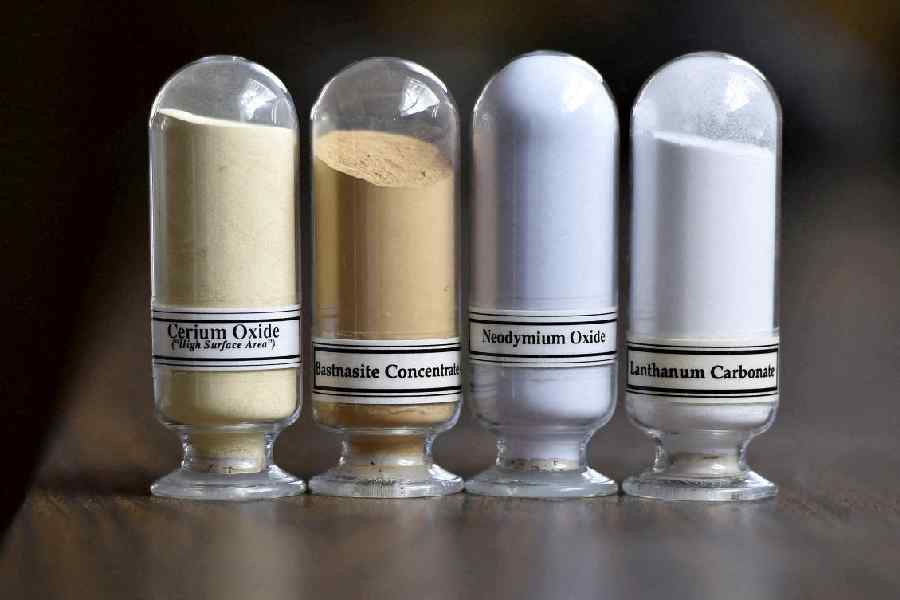
Rare earth elements are special materials used in electric cars, wind turbines and defence equipment.
Much of the processing for these materials happens in China.
Laos and nearby Myanmar may have important supplies of these minerals.
China has moved quickly to secure access to mines in both countries.
India has been more cautious because of political problems, changing rules and environmental damage linked to some mining methods.
Laos has a central government and is developing a national rare earth strategy, but its oversight is still uncertain.
The article says India could still invest in Laos if it also builds processing facilities.
It should work carefully with local and international partners and protect the environment.
This could give India another source of rare earth materials instead of relying so heavily on China.

Laos’s Xieng Khouang and Houaphanh provinces have attracted dozens of rare earth mining sites since 2022.
A 2022 geological study estimated roughly 600,000 tonnes of rare earth oxides across the two provinces, though this is not a proven reserve.
China has secured reliable access to rare earth feedstock from Laos and Myanmar while retaining most global separation and processing capacity.
Indian institutions have hesitated because of political, regulatory and environmental risks, as well as limited domestic separation capacity.
The article recommends that India pursue Laos partnerships tied to processing investment, stronger institutions and higher environmental standards.
- Who
- India, China, Laos, Myanmar and companies or concession holders involved in rare earth mining and processing.
- What
- India is considering how to secure a responsible strategic position in Laos’s emerging heavy rare earth sector.
- Where
- Xieng Khouang and Houaphanh provinces in Laos, with comparisons to Myanmar’s Kachin State and China’s processing industry.
- When
- Mining activity in the highlighted Lao provinces expanded after 2022; Laos ordered a national rare earth strategy in October 2023, and China imposed heavy rare earth export restrictions in 2025.
- Why
- India wants to reduce dependence on China for heavy rare earth elements needed for electric vehicles, wind energy and defence manufacturing.
Caution and Governance
Faster Strategic Engagement
Whether India’s earlier hesitation was justified
Caution and Governance
Indian institutions faced serious risks from Myanmar’s civil conflict, Laos’s changing regulations, environmental concerns and limited domestic separation capacity.
Faster Strategic Engagement
The article argues that excessive caution allowed Chinese buyers to secure concessions and feedstock access, leaving India with fewer strategic options.
How India should compete
Caution and Governance
India should avoid entering projects without credible governance, environmental safeguards and a path to processing the minerals.
Faster Strategic Engagement
India should move quickly to acquire or develop a foothold in Laos, while pairing investment with separation facilities and long-term partnerships.
Environmental standards
Caution and Governance
Documented water and soil contamination makes strong environmental oversight essential before new projects proceed.
Faster Strategic Engagement
India could use higher environmental standards as a competitive advantage with Lao authorities concerned about dependence on a single buyer.
Key facts
- Key minerals
- Dysprosium, terbium and yttrium are identified as heavy rare earth elements important for permanent magnets.
- Lao provinces
- Satellite mapping identified dozens of new mining sites in Xieng Khouang and Houaphanh since 2022.
- Estimated resource base
- A 2022 study estimated about 600,000 tonnes of rare earth oxides across the two provinces; the figure is a geological estimate, not a proven reserve.
- Indian vehicle
- Khanij Bidesh India Limited, or KABIL, was incorporated in 2019 and has focused mainly on lithium and cobalt projects.
- Environmental concern
- Investigations and reports cited in the article found toxic contamination associated with some ion-adsorption clay mining sites, including reported river contamination in Houaphanh.
- China’s position
- China retains the overwhelming share of global rare earth separation and processing capacity, according to USGS and IEA assessments.
- Recommended approach
- The article calls for upstream investment linked to separation capacity, stronger institutional engagement and higher environmental standards.
Sources
Related news
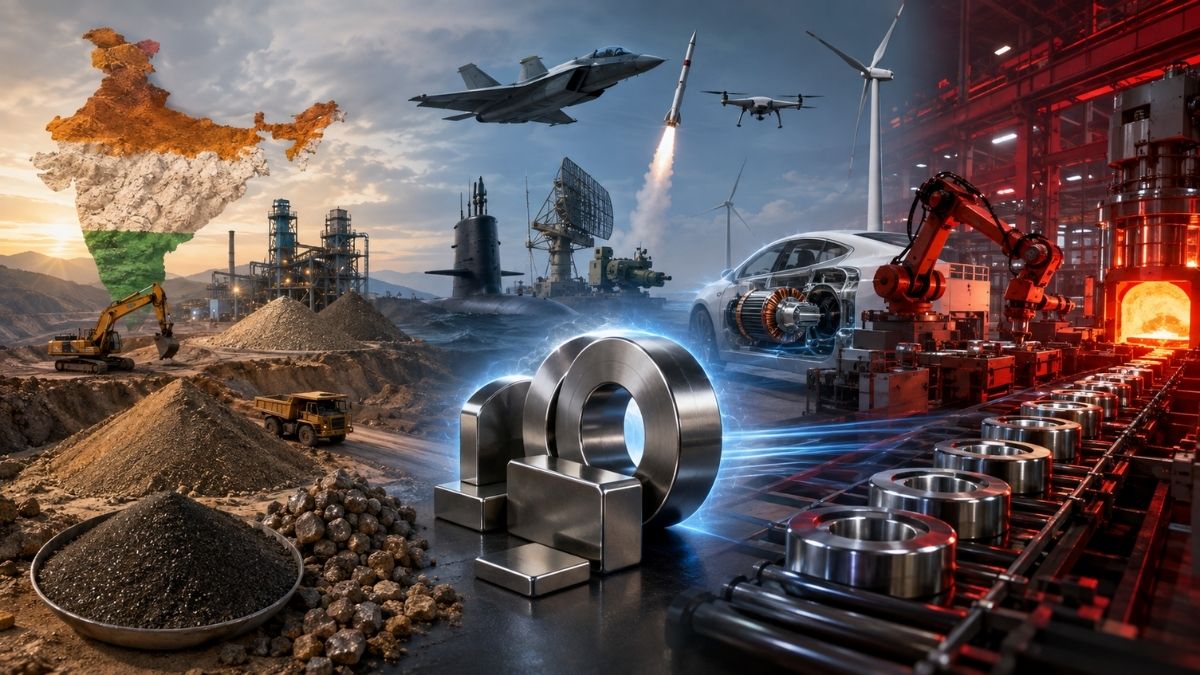
India has the rare earths; China still makes the magnets
Coal India Evaluates Chile Lithium Asset Acquisition for EV Supply
L&T Plans India Rare-Earth Magnet Manufacturing to Reduce China Dependence
L&T Plans Rare-Earth Magnet Production as India Cuts China Reliance
India’s Rs 7,280-Crore Magnet Scheme Draws Three Diverse Bidders
Why India is struggling to acquire critical mineral assets abroad
India Secures Uranium From Uzbekistan, Australia Amid Nuclear Expansion
NLMC Plans Auction of 459 Visakhapatnam Steel Plant Plots
India and Argentina Advance Trade, Lithium, and Pharma Cooperation

Government Reaches 78% of FY27 Capital Receipts Target
