2 weeks ago
Opinion argues India glorifies power over merit and accountability

This is an opinion article about whom India chooses to admire.
The author says history books sometimes describe invasions and conquest too gently.
He believes this teaches people to respect powerful rulers more than ordinary citizens.
He uses Rahul Gandhi as an example of someone presented as a representative of struggling students despite family and institutional advantages.
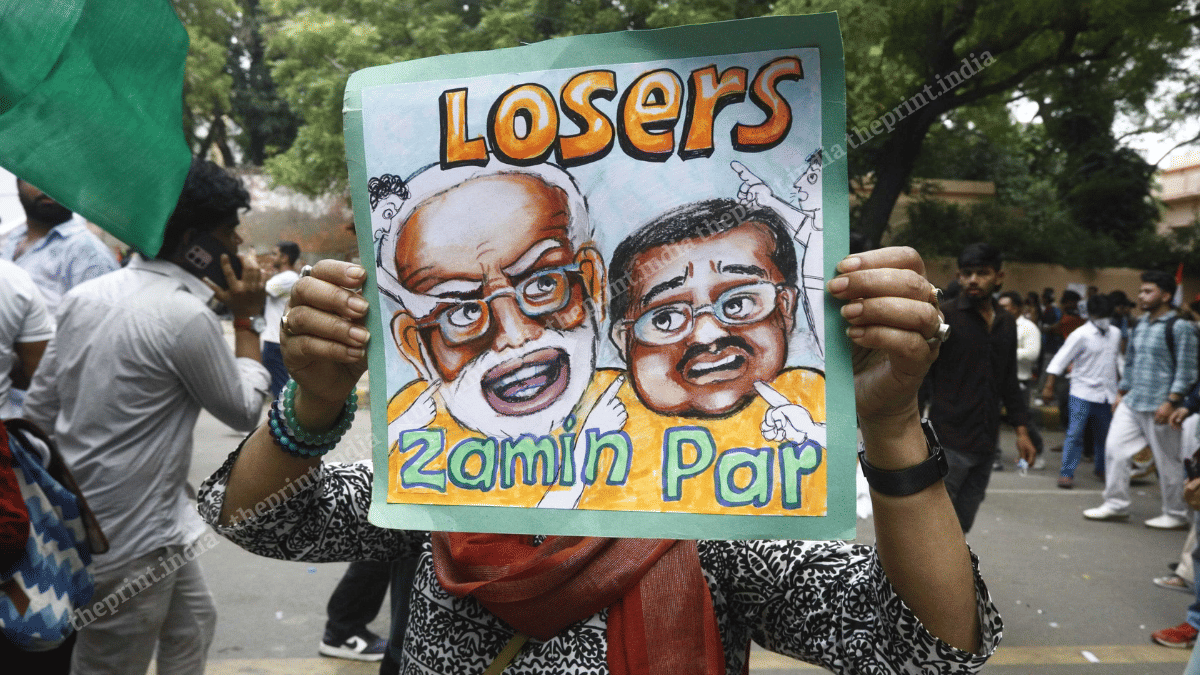
He uses Arvind Kejriwal as an example of a politician whose anti-corruption image conflicts, in the author’s view, with criticism over his official home’s renovation costs.
He also discusses Salman Khan, who gives advice about behavior on television despite convictions, bail and other controversies described in the article.
The author says these examples show that public figures are not always judged by the same standards as everyone else.
He argues that people should demand merit, consistency and accountability from leaders and celebrities.
The article was submitted by Akshay Sharma and was published without editing or fact-checking by ThePrint.

Akshay Sharma argues that Indian history teaching softens descriptions of Mughal and British conquest.
The article criticizes presenting Rahul Gandhi as an aspirational student despite his reported institutional and family privileges.
It questions Arvind Kejriwal’s opposition to E20 fuel while citing his engineering background and the renovation costs of his official residence.
It argues that Salman Khan’s television moralizing contrasts with his criminal convictions, bail history and public controversies.
The author says India should apply consistent standards of merit and accountability instead of celebrating powerful figures.
- Who
- The article is written and submitted by Akshay Sharma and discusses Rahul Gandhi, Arvind Kejriwal and Salman Khan.
- What
- It argues that India often glorifies powerful or famous people despite questions about merit, privilege and accountability.
- Where
- India, including its schools, politics, public institutions and television culture.
- When
- It addresses longstanding patterns in history education and public life, while citing events and cases spanning several years.
- Why
- The author argues that softened accounts of conquest and inconsistent standards for prominent figures encourage admiration of power over merit and accountability.
Key facts
- Article type
- Subscriber-submitted opinion piece
- Author
- Akshay Sharma
- History argument
- The author says Mughal and British conquest is often reframed as cultural synthesis or modernization rather than described primarily as invasion and extraction.
- Rahul Gandhi
- The article says he entered St. Stephen’s under the sports quota with roughly 61 percent in Class 12, attended Harvard and later completed an MPhil at Cambridge.
- Arvind Kejriwal
- The article criticizes his opposition to E20 fuel and raises questions about renovation costs at his official residence, called “Sheesh Mahal” by critics.
- Salman Khan
- The article references his convictions in the 2002 hit-and-run and blackbuck poaching cases, his bail history and controversies over comments about Yakub Memon.
- Publication note
- ThePrint says submitted pieces are published as received and have not been edited or fact-checked.
Sources
Related news
India’s Traditional Education Mostly Served Elites, Not Everyone

Fadnavis Targets UPA Over NCERT’s Coverage of Mughals, Shivaji
Yogi Adityanath Rebukes Rahul Gandhi Over Manusmriti Remarks
Fadnavis Attacks Congress Over NCERT Coverage of Shivaji

The 'Anti-National' Label's Long Career in Indian Politics

What Railway PNR Details Reveal Before Your Journey

Jyoti Yadav’s Covid Book Challenges India’s Forced Forgetting

Single-Income Families With Home Loans Should Prioritize Term Insurance

Why Indian Work Permit Seekers Face Costly Misinformation
Punjab Faces Calls for Verification Amid Crime and Migration Concerns