1 week ago
India’s Traditional Education Mostly Served Elites, Not Everyone
Many people imagine that ancient Indian schools taught everyone equally.
The article says this picture is too simple.
Important schools often trained priests, scholars, administrators or rulers instead of ordinary children.
Some sacred lessons were restricted by caste, while practical skills were taught at home or through family occupations.
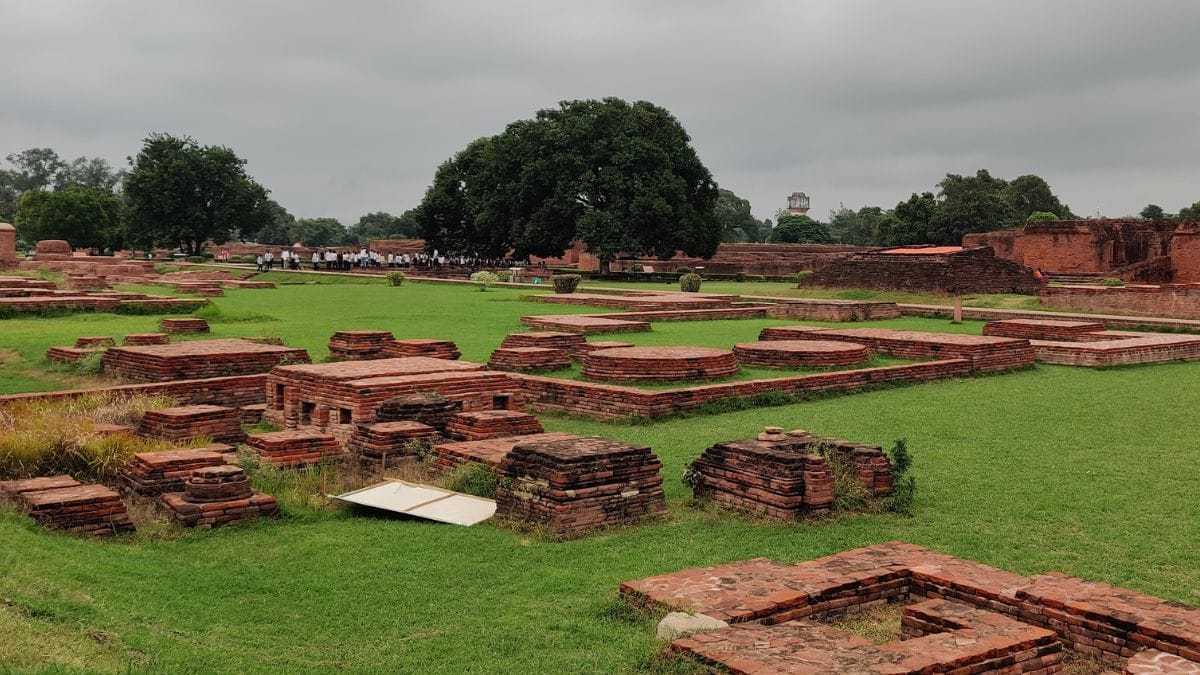
Nalanda and some madrasas were famous and taught advanced subjects, but only a limited number of students could attend.
Local schools also existed, although many children worked at home instead of going to school.
British officials later favored Brahmin teachers, shaping modern ideas about traditional education.
The author says India should improve its schools for everyone instead of trying to recreate the past.

Ancient gurukuls and elite schools primarily served princes, priests, scholars and other specialists, not the average Indian.
Sacred Vedic learning was restricted by caste, while vocational skills were usually taught within families and occupational communities.
Nalanda and elite madrasas offered rigorous education, but admission and access remained limited to selected students.
Colonial officials often promoted Brahmin teachers, helping create the later image of Brahmins dominating Indian village schools.
The article argues that improving education requires building a better future rather than restoring idealized traditional systems.
- Who
- Indian rulers, teachers, students and communities; the article was written by historian Anirudh Kanisetti.
- What
- The article examines the limits of India’s traditional education systems and argues that they generally prioritized elite and state needs over mass education.
- Where
- Across the Indian subcontinent, including Nalanda, Awadh, Bengal, Malabar, Lahore and southern India.
- When
- The discussion spans ancient India through the medieval period, the 18th and 19th centuries, and the present.
- Why
- The author challenges idealized memories of traditional education and argues that modern educational problems require new solutions rather than a return to the past.
Traditional-Education Ideal
Historical Critique
Who traditional schools served
Traditional-Education Ideal
Traditional learning is often presented as an inclusive culture in which seekers could study under a guru.
Historical Critique
The article says available evidence points mainly to elite, ritual and administrative training, with limited access for ordinary Indians.
Value of Nalanda and madrasas
Traditional-Education Ideal
Institutions such as Nalanda and Farangi Mahal demonstrate that precolonial India supported sophisticated, internationally connected education.
Historical Critique
The article agrees they were advanced but emphasizes that they served selected scholarly, administrative and juridical elites rather than the wider population.
Role of colonial education
Traditional-Education Ideal
Colonial-era institutions helped families without earlier access to education enter government service and achieve upward mobility.
Historical Critique
Colonial officials also favored Brahmin teachers and helped create the image of Brahmin-dominated traditional schooling, while reshaping or weakening indigenous institutions.
Key facts
- Ancient sacred learning
- The article says Vedic education was largely restricted to elite groups, especially Brahmins, princes and sages.
- Vocational education
- Practical skills were commonly taught through families, castes and work rather than public schools.
- Nalanda
- The Buddhist monastery used an oral entrance test involving Buddhist and Vedic scripture, and only some applicants were admitted.
- Farangi Mahal
- The 18th-century Lucknow madrasa reportedly offered 700 seats and taught logic, philosophy, mathematics and Euclidean geometry alongside Quranic study.
- Colonial school surveys
- William Adam found 1,255 of 1,463 Hindu teachers surveyed in Bengal were non-Brahmin.
- Government primary schools
- By 1882, nearly 70,000 of 85,000 British-run government primary schools had originally been Indian schools.
- Modern argument
- The author says state-funded education should provide economic mobility for millions, rather than reproduce elite-focused traditional models.
Sources
Related news

Opinion argues India glorifies power over merit and accountability
UP establishes Bharatiya Gyan Parampara Shodhpeeths in universities, colleges

How Foreign Rule and Institutions Reshaped Bharatiya Cultural Life

Sudha Murty Visits Nalanda With Parliamentary Delegation