3 weeks ago
Academic Freedom Index 2026 Calls India an Autocratizing Country
A group of researchers from different countries made a big report about how free teachers and researchers are to think, teach, and study at universities around the world.
They looked at information from 1900 to 2025 and checked almost 179 countries.
The report says that more countries are getting worse at protecting this freedom than getting better.
It names India, Hungary, and Turkey as countries where universities have lost a lot of independence over the last ten years.
The researchers found that universities that make their own decisions protect their teachers much better than universities controlled by politics.
India's problem grew slowly since about 2013, while the United States got worse quickly starting around 2020.
The report also says that with liberal attitudes now common on campuses, teachers with conservative ideas are afraid to speak up.
The researchers say universities should be protected from outside interference, but they should still be watched fairly.

The Academic Freedom Index 2026, released by V-Dem and partners, identifies India, Hungary and Turkey as 'autocratizing countries' where university autonomy has weakened over the past decade.
The report found a Pearson correlation of 0.91 between institutional autonomy and the freedom to research and teach across 179 countries.
Academic freedom declined in 50 countries between 2015 and 2025, while only nine countries registered improvements.
India's deterioration is described as gradual, stretching from roughly 2013 through 2025, while the United States saw a steep decline beginning around 2020.
The report says higher education institutions have become a locus of liberal attitudes, with scholars holding conservative or heterodox viewpoints feeling reluctant to speak openly.
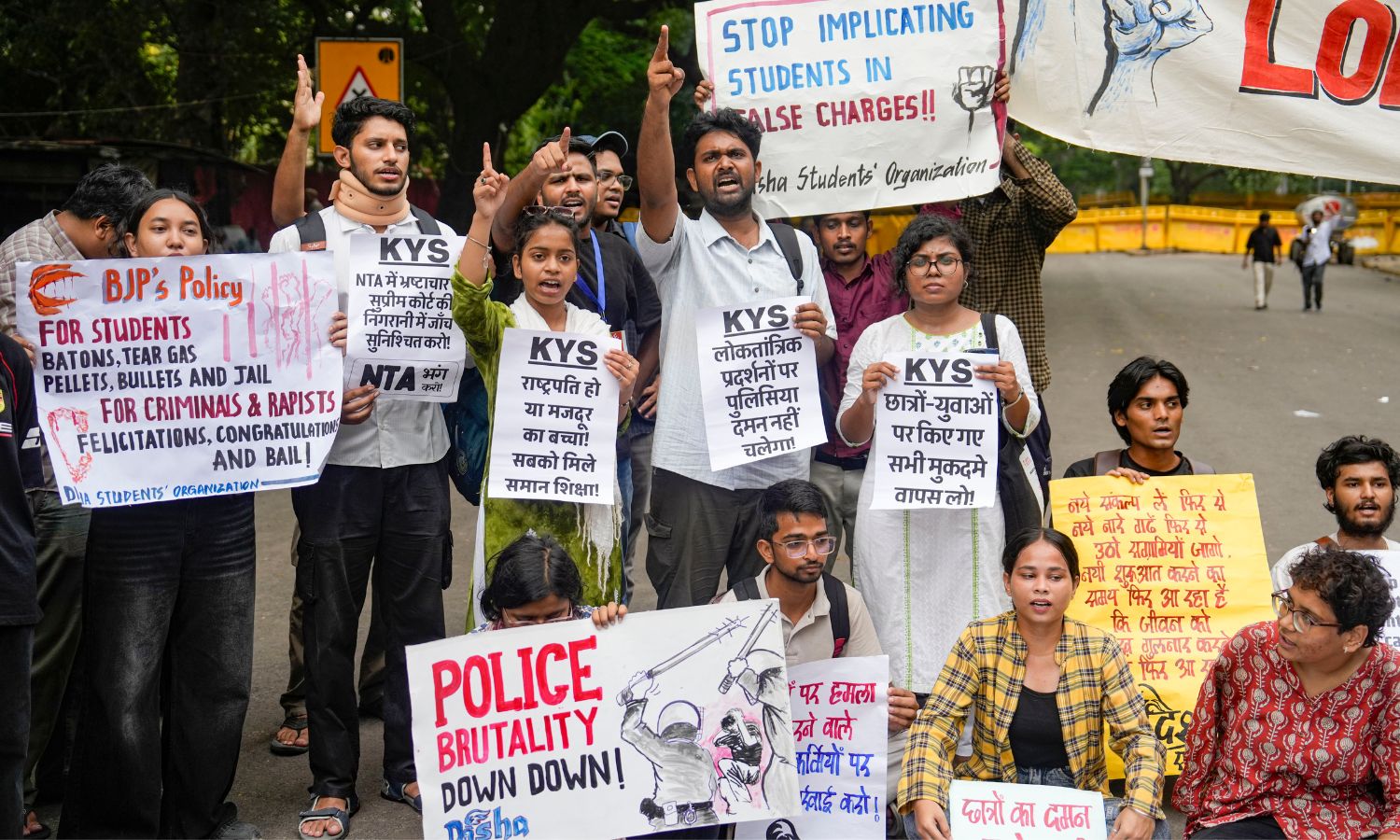
For India, the report comes amid protests over the NEET-UG paper leak and recruitment examinations, with students demanding accountability and safeguards against malpractice.
- Who
- Researchers at Friedrich-Alexander-Universität Erlangen-Nürnberg (FAU), the V-Dem Institute, the Scholars at Risk Network, and the Global Public Policy Institute (GPPi), who produce the Academic Freedom Index.
- What
- The Academic Freedom Index 2026 found global declines in academic freedom, flagged India, Hungary and Turkey as 'autocratizing countries', and documented a strong link between institutional autonomy and freedom to research and teach.
- Where
- A global study covering 179 countries, with particular attention to India, the United States, Hungary and Turkey.
- When
- Released as the 2026 edition of the index, which assessed academic freedom between 1900 and 2025.
- Why
- Governments can undermine academic freedom through leadership appointments, conditional funding, and restrictions on admissions, hiring and research content when institutional autonomy is weak.
Academic freedom advocates
Government and national-interest perspective
University autonomy vs. oversight
Academic freedom advocates
Universities should be protected from undue political interference; competition is the only way to handle India's demographic pressures.
Government and national-interest perspective
Public institutions still need fair oversight and accountability; the report itself stresses universities should not operate without any controls.
Campus expression climate
Academic freedom advocates
Campuses should be open to all viewpoints, and scholars with conservative opinions should not fear social sanction or reputational harm.
Government and national-interest perspective
Prevailing liberal norms on campuses are a reality of higher education culture, not something imposed by the state.
Exam and recruitment integrity
Academic freedom advocates
Students are justified in protesting exam leaks and recruitment delays, which undermine years of preparation and demand accountability.
Government and national-interest perspective
Examination and recruitment systems are being handled administratively; repeated cancellations and protests reflect systemic pressures rather than deliberate failures.
Key facts
- Report
- Academic Freedom Index 2026
- Producers
- FAU, V-Dem Institute, Scholars at Risk Network, and Global Public Policy Institute (GPPi)
- Countries assessed
- 179 countries, covering 1900–2025
- Global trend
- Academic freedom declined in 50 countries from 2015–2025; only 9 improved
- Key correlation
- Pearson correlation of 0.91 between institutional autonomy and freedom to research and teach
- Autocratizing countries
- India, Hungary and Turkey
- India's trajectory
- Gradual deterioration from roughly 2013 through 2025
- US trajectory
- Steep decline beginning around 2020
Quotes
V-Dem report authors
Researchers from the Academic Freedom Index study
“Conversely, when institutional autonomy is weak, governments can exert indirect control through leadership appointments, conditional funding, or restrictions on operational decision-making in admissions, hiring of academic staff, and research content, thereby undermining academic freedom even without overt repression.”
 deccanchronicle.com
“Autonomous institutions are better equipped to resist political pressure, safeguard merit-based appointments, and provide organizational shelter for scholars whose work might challenge prevailing political or ideological interests.”
deccanchronicle.com
Sources
Related news

India's Academic Freedom Hits Lowest Level Since 1900, Editorial Warns

Academics Sign Petition Against Indian Statistical Institute Bill 2026

India's Higher Education Control Push Sparks Autonomy Debate

Student leader Neha Bora backs ISI autonomy fight against Bill

ISI Bill 2026 sparks protests, faculty-government clash over autonomy

Why JNU Cancelling Umar Khalid's Book Talk Matters

Americans have less than 100 days to save their democracy

Britain's Political Volatility vs India's Stability

Modi's Adaptability Sustains His Political Power