1 hr ago
Delhi Floods Leave Peri-Urban Villages Bearing the Brunt
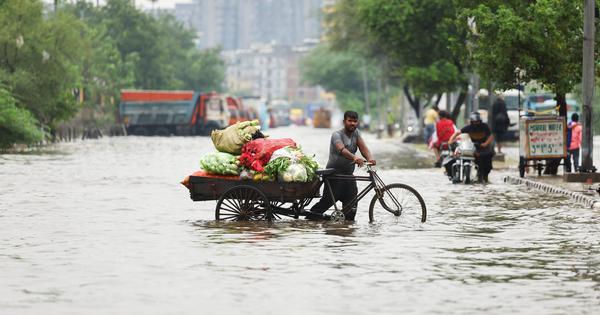
Cities produce a lot of rainwater and wastewater during the monsoon.
The Najafgarh drain carries much of this water near Delhi and Gurugram.
Farmers in nearby villages use some of the drain water to grow crops because groundwater is salty and rain is unreliable.
They built shared pipes and pumps to bring the water to their fields.
But when heavy rain comes, the drain can overflow and flood farmland.
In Raota, farmers say more than 200 acres have been underwater since the early 2000s.
This makes it hard for families, especially tenant farmers and sharecroppers, to earn a living.
The article says cities should protect villages instead of treating them as places where flood problems can be pushed.

Raota, a village on the Delhi-Gurugram border, faces repeated flooding from the Najafgarh drain.
The drain carries stormwater and wastewater from Delhi, Gurugram and Manesar, while farmers use its water for irrigation.
Farmers have built shared pipelines, pumps and distribution systems to move drain water to fields up to 2 km away.
More than 200 acres in Raota have reportedly been permanently inundated since the early 2000s.
The article calls for integrated water governance, restored wetlands, protected floodplains and meaningful village participation.
- Who
- Residents and farmers in villages around Delhi and Gurugram, especially Raota, are affected.
- What
- Urban stormwater and wastewater flows through the Najafgarh drain, which supports irrigation but also overflows and floods surrounding farmland.
- Where
- Raota and other villages along the Najafgarh drain on the Delhi-Gurugram border in the National Capital Region.
- When
- The flooding has become chronic, with more than 200 acres in Raota reportedly inundated since the early 2000s; Delhi village pradhans lost their positions in January 1990.
- Why
- Rapid urban expansion and heavy runoff place environmental costs on nearby villages, while local governance and flood-management systems remain inadequate.
Key facts
- Affected village
- Raota, one of Delhi’s remaining 49 rural villages
- Waterway
- The Najafgarh drain carries stormwater and wastewater from Delhi, Gurugram and Manesar.
- Agricultural use
- Farmers mainly use drain water for paddy cultivation and rely more on groundwater for wheat.
- Flooded farmland
- Farmers say more than 200 acres in Raota have been permanently inundated since the early 2000s.
- Irrigation system
- Collective pipelines and pumps transport drain water to fields located up to 2 km away.
- Governance issue
- Raota has no elected village panchayat; Delhi village pradhans lost their positions in January 1990.
- Proposed responses
- The article advocates decentralised stormwater management, wetland restoration, floodplain protection and village participation.
Quotes
Farmers in Raota
Local farmers describing the effects of permanent flooding on their land and livelihoods
“The state should buy our lands here and compensate us so that we can buy lands elsewhere.” “We cannot grow anything here now.”
 scroll.in
Sources
Related news
Water Stress Is Reshaping South Asian Urban Life
Climate-Resilient Urban Planning Could Make India’s Cities Safer
Maidan Garhi Pond Survives Delhi's Urban Expansion
Gurgaon Residents Clash With GMDA Over Floodwater Pumps
India's Cities Face Flooding as Rainfall Intensifies and Infrastructure Lags
NDMC Chief Apologises as Delhi Waterlogging Fuels Political Row

Adidas India Tech Restructuring Leaves Gurugram Workers Uncertain

Adidas Reduces India Technology Roles to Simplify Operations

Adidas Reports Major Cuts at Gurugram Technology Hub

India’s Road Rage and Hit-and-Run Crisis Draws Scrutiny