1 hr ago
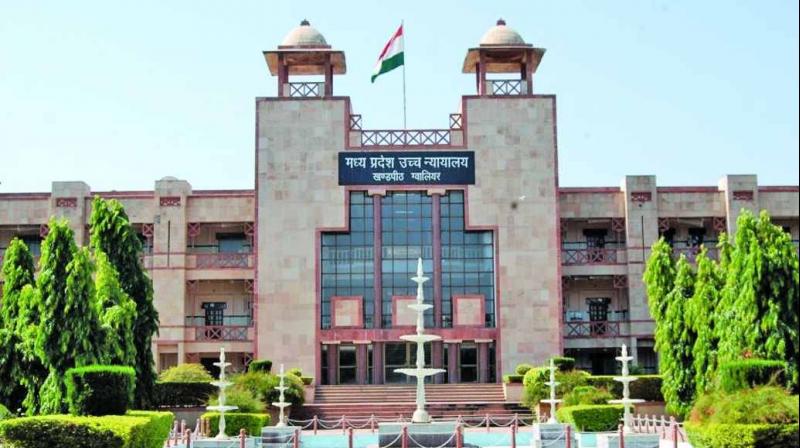
MP High Court Keeps Damoh Hijab Case Proceedings Alive

A school in Damoh became controversial after a poster showed girl students wearing headscarves.
Some people alleged that students were forced to follow Islamic dress and religious practices.
Four people connected with the school asked the Madhya Pradesh High Court to cancel the criminal case against them.
The court refused to do that.
It said wearing a hijab by itself is not a crime under the state’s religious-conversion law.
However, the case also includes allegations of compulsory dress, prayers, threats and pressure.
The court said these claims must be tested by looking at evidence in the trial.
It did not decide whether the accused are guilty.

The Madhya Pradesh High Court refused to quash criminal proceedings against four accused in the Damoh school case.
The court said wearing hijab alone does not constitute an offence under the Madhya Pradesh Freedom of Religion Act.
The prosecution alleges that hijab, namaz and Urdu were made compulsory, while tilak and kalawa were prohibited.
The court said claims of threats, coercion and religious practices must be assessed during trial.
The court noted that 32 of 33 prosecution witnesses had already been examined and that a chargesheet had been filed.
- Who
- The Madhya Pradesh High Court and four accused connected with Ganga Jamuna Higher Secondary School: Shailendra Kumar Jain, Abdul Wasim Bari, Anas Athar and Rustam Ali.
- What
- The court refused to quash the FIR and criminal proceedings alleging coercion over dress and religious practices at the school.
- Where
- Ganga Jamuna Higher Secondary School in Damoh, Madhya Pradesh.
- When
- The controversy began in May 2023; the High Court order was reported on Friday, more than three years later.
- Why
- The court found that allegations involving compulsory practices, threats and coercion were not inherently baseless and required determination through evidence.
Accused and Defence
Prosecution Allegations
Whether the case should continue
Accused and Defence
The four petitioners sought to have the FIR and criminal proceedings quashed, raising disputes about their roles and the evidence against them.
Prosecution Allegations
The prosecution alleged that students were compelled through threats and pressure to follow a particular dress code and religious practices.
Meaning of the hijab evidence
Accused and Defence
The defence challenged the allegations and relied on later affidavits stating that government-prescribed books were used and no religious education beyond the syllabus was provided.
Prosecution Allegations
The prosecution case was broader than students wearing hijab and included alleged compulsory prayers, religious practices, dress rules and restrictions on tilak and kalawa.
Role of school office-bearers
Accused and Defence
Shailendra Kumar Jain and Abdul Wasim Bari argued that they were not members or office-bearers of the management committee during the relevant period.
Prosecution Allegations
The prosecution relied on investigation material alleging their involvement or influence in the school’s affairs; the court said their roles must be decided at trial.
Key facts
- School
- Ganga Jamuna Higher Secondary School, Damoh
- Accused
- Shailendra Kumar Jain, Abdul Wasim Bari, Anas Athar and Rustam Ali
- Controversy began
- May 2023, after a poster showing girl students wearing headscarves drew complaints
- Allegations
- Compulsory hijab, namaz and Urdu, and alleged prohibition of tilak and kalawa
- Court ruling
- The FIR and proceedings were not quashed
- Investigation status
- Police had filed a chargesheet
- Trial status
- Thirty-two of 33 prosecution witnesses had been examined
Quotes
Madhya Pradesh High Court
The High Court hearing the Damoh school case
“Whether these practices were actually compulsory, whether students acted voluntarily, and whether there was an intention to convert through prohibited means were questions that could only be determined after appreciation of evidence.”
 indianexpress.com
“Mere wearing of a particular dress, without the statutory ingredients of conversion or an attempt to convert by the prohibited means, cannot automatically constitute an offence.”
indianexpress.com
Sources
Related news
Allahabad High Court Hijab Verdict Intensifies School Dress-Code Debate
Allahabad High Court Rejects Student’s Hijab Plea Over Uniform Rules
Allahabad HC Rejects Hijab Plea, Citing School Uniform Rules

Owaisi Slams Allahabad High Court Hijab School Uniform Ruling

Allahabad High Court Upholds Uniform, Rejects Student’s Hijab Plea