2 hrs ago
AI Pushes Woolly Mammoth Resurrection Target Into Early 2030s
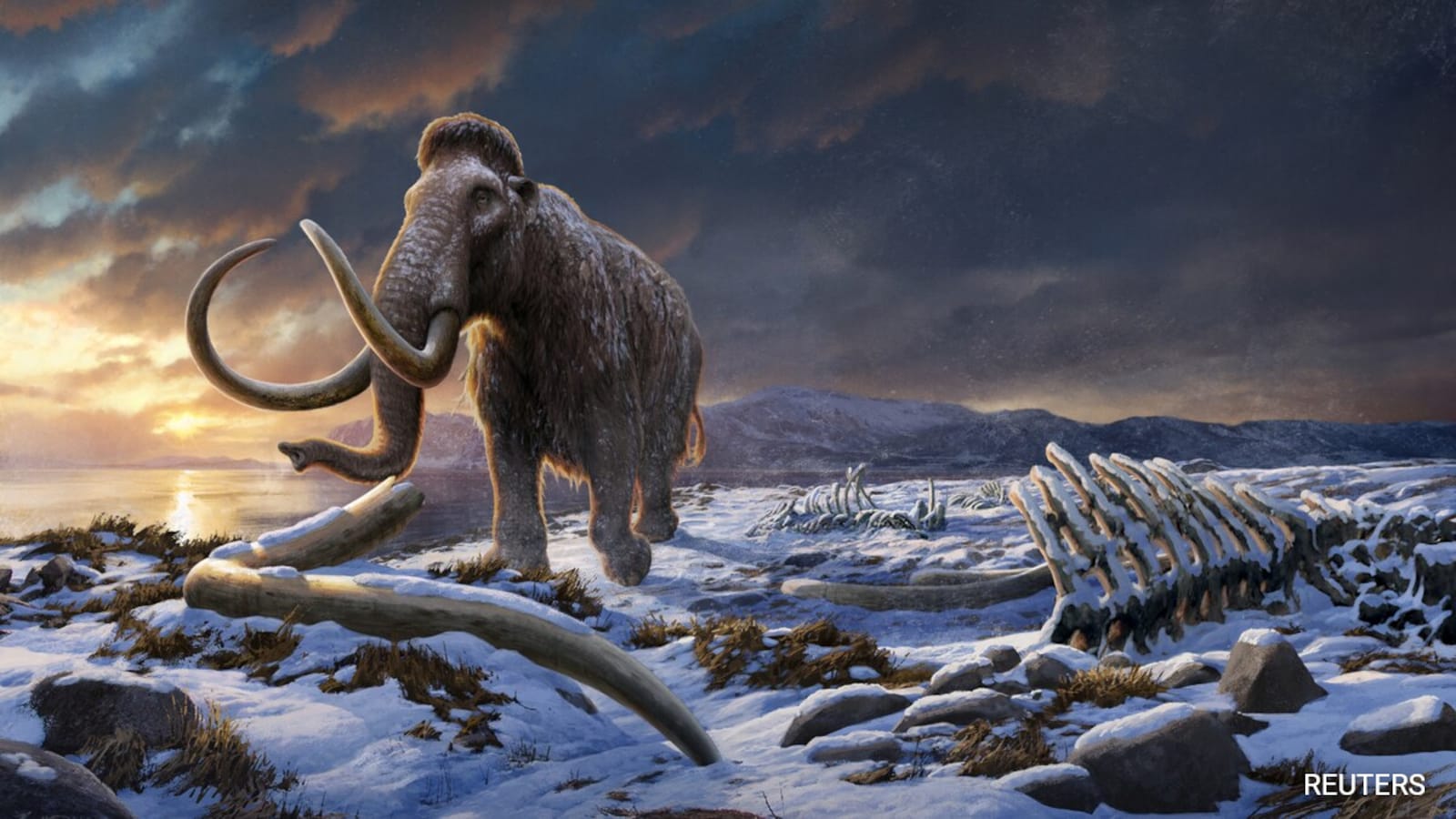
Scientists are trying to make an elephant that can live in very cold places like a woolly mammoth.
They are using an Asian elephant because it is the mammoth’s closest living relative.
At first, they thought they needed to change about 60 genes.
They now think more than 150 genes may need to be changed.
Artificial intelligence helps researchers study millions of possible gene combinations.
This may reduce the risk of serious problems in developing embryos.
The team has already made mice with some mammoth-like fur traits.
The goal is not to make a perfect mammoth clone.
Instead, scientists want a cold-tolerant elephant hybrid that could help Arctic ecosystems and provide useful research for conservation and medicine.

Colossal Biosciences has moved its mammoth-like elephant target from 2028 to the early 2030s.
Researchers found that more than 150 genes may need editing, up from an earlier estimate of about 60.
Deep-learning AI is being used to screen genetic combinations alongside CRISPR gene-editing tools.
The project aims to create a cold-tolerant Asian elephant hybrid, not an exact genetic clone.
Scientists say the work could support elephant conservation, medicine, and the restoration of shrinking tundra ecosystems.
- Who
- Colossal Biosciences researchers, including Chief Executive Ben Lamm, are leading the project.
- What
- Scientists are using AI and CRISPR to engineer a cold-tolerant Asian elephant hybrid with mammoth-like traits.
- Where
- The intended animal would be able to survive in Arctic temperatures and potentially support shrinking tundra ecosystems.
- When
- The original target was 2028, but the expected delivery has moved to the early 2030s; no firm birth date has been set.
- Why
- Researchers aim to explore de-extinction, help revive tundra ecosystems, support endangered-elephant conservation, and develop tools with possible medical applications.
Key facts
- Organization
- Colossal Biosciences
- Original target
- A mammoth-like elephant calf by 2028
- Revised target
- The early 2030s
- Closest living relative
- The Asian elephant, which shares 99.6 percent of its DNA with the mammoth
- Estimated genetic changes
- More than 150 genes, compared with an earlier estimate of about 60
- Technologies
- Deep-learning artificial intelligence and CRISPR gene editing
- Project outcome
- A cold-tolerant Asian elephant hybrid rather than an exact genetic clone
Sources
Related news

Indian Startup Uses Generative AI to Design Gene Editors

Claude Helps Identify CRISPR-Like Enzyme System in 21 Hours

Musk Predicts AI Will Surpass Humans Digitally By 2027
AI Decodes Animal Sounds, Raising Hopes of Interspecies Communication

Anthropic Says Claude Found CRISPR-Like System in Bacteriophage DNA

Greek Woman Gives Birth Using Embryo Frozen 22 Years