7 hrs ago
AI Decodes Animal Sounds, Raising Hopes of Interspecies Communication
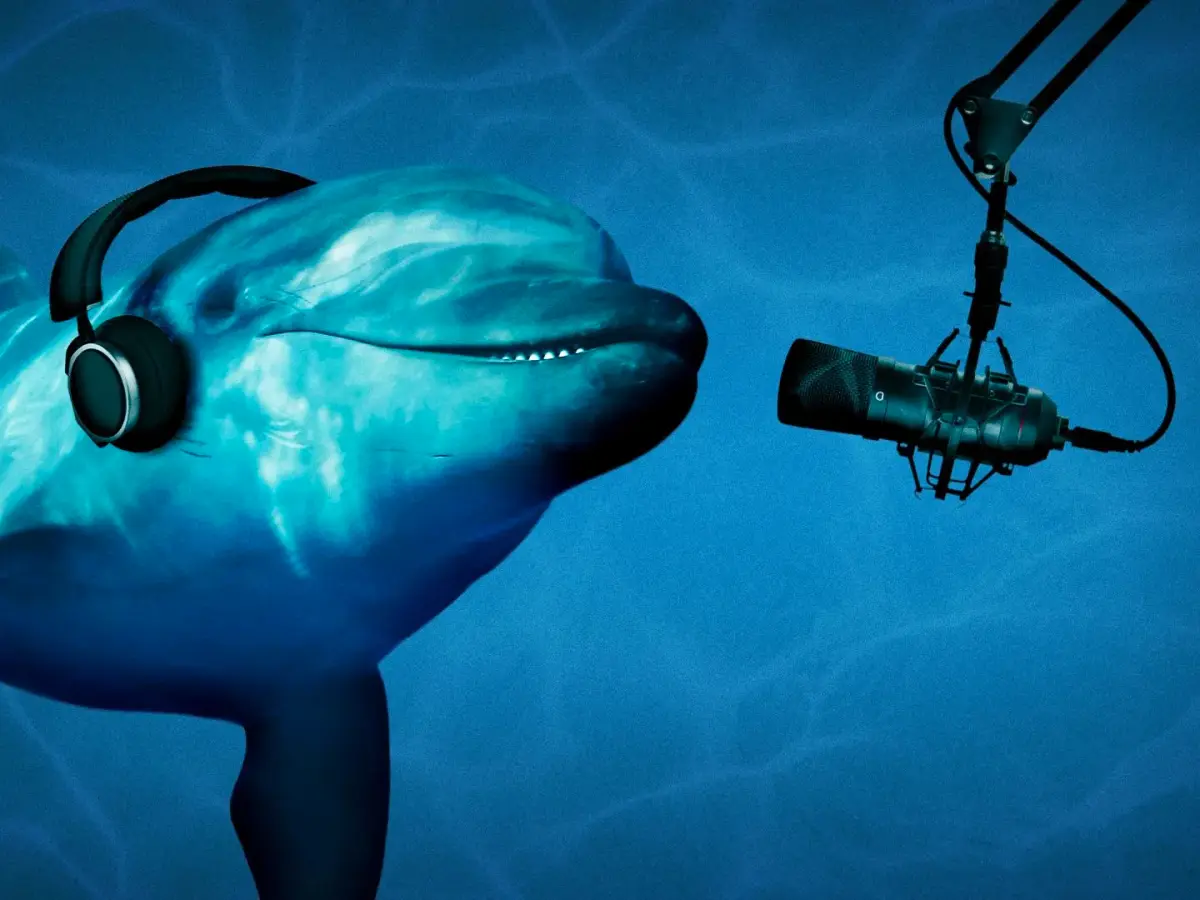
Scientists are teaching computers to study the sounds animals make.
They are looking at recordings from crows, whales, wolves and other species.
In Spain, researchers recorded thousands of hours of crow sounds.
One scientist thinks a quiet crow call may mean that help is needed during a nest attack.
AI can check whether the same sounds appear in the same situations again and again.
This does not yet prove that animals have a human-like language.
Animals also communicate with smells, colors, movements and sonar.
Some people think AI might eventually help humans communicate both ways with animals.
Other experts worry that this knowledge could be used to control or harm animals.

Researchers are using machine learning to analyze vast collections of animal sounds from species including crows, whales and wolves.
In 2018, Vittorio Baglione and Daniela Canestrari placed microphones on 43 carrion crows in Spain.
The crow recordings have grown to about 150,000, and AI is helping identify sounds and the birds that produced them.
Baglione believes one soft call may signal that a crow needs help when a buzzard attacks its nest, though this remains unproven.
Scientists see possible two-way communication by 2030, while experts warn the technology could enable large-scale animal manipulation.
- Who
- Scientists studying animal communication, including Vittorio Baglione, Daniela Canestrari and researchers at the Earth Species Project; Jeremy Coller and César Rodríguez-Garavito also expressed relevant views.
- What
- Researchers are using artificial intelligence to identify patterns in animal sounds and investigate whether those sounds have consistent meanings.
- Where
- The crow research was conducted in Spain, while the broader work covers multiple animal species.
- When
- The crow microphone study began in 2018; Jeremy Coller predicted that two-way communication could become possible by 2030.
- Why
- Scientists hope to understand animal communication, but experts also warn that the technology could make large-scale manipulation easier.
Potential Benefits
Potential Risks
Understanding animal calls
Potential Benefits
AI can process enormous collections of recordings and test whether repeated sounds consistently correspond to particular situations.
Potential Risks
Identifying patterns may not be enough because animal communication also includes smells, colors, movements, sonar and environmental context.
Two-way communication
Potential Benefits
Jeremy Coller has predicted that AI-assisted two-way communication with animals could become possible by 2030.
Potential Risks
The research has not proven that animals use a human-like language or that humans can reliably communicate with them.
Use of the technology
Potential Benefits
Decoding animal communication could improve scientific understanding of animal behavior.
Potential Risks
César Rodríguez-Garavito warned that AI could make it easier to manipulate animals and cause greater harm at scale.
Key facts
- Crow study start
- 2018
- Birds recorded with microphones
- 43 carrion crows
- Current crow recordings
- About 150,000 recordings
- Species mentioned
- Crows, whales and wolves
- AI developer
- Earth Species Project
- Possible communication timeline
- Jeremy Coller predicted two-way communication could be possible by 2030
- Main concern
- AI could enable greater harm or manipulation of animals at scale
Quotes

César Rodríguez-Garavito
Director of NYU’s More-Than-Human Life Program
“greater harm at scale”
 wionews.com
Sources
Related news

AI Animal Communication Research Offers Hope Alongside Risks
AI Cannot Decode Dugong Calls Yet, Say Scientists

India's first open-access ecoacoustic dataset captures wild soundscapes
Dog brains evolved to understand humans, Harvard study finds

Can Animals Sense Disasters? Science Examines Indian Beliefs