1 hr ago
Finance Ministry Seeks to Keep UPI MDR Off Consumers

The government wants to make sure shoppers do not pay extra fees when merchants accept UPI payments.
It will speak with banks, trader groups, and other stakeholders.
The government also plans to explain the new payment system before it starts on October 15.
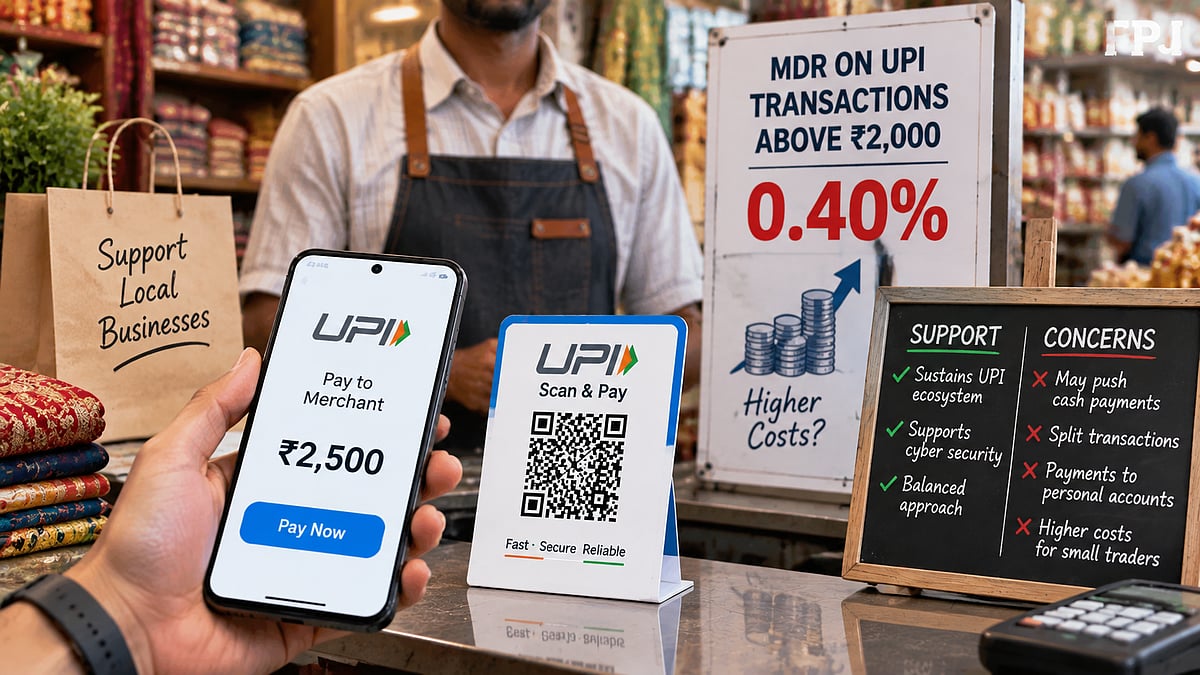
One proposed fee is 0.4% or ₹300, whichever is lower, for payments above ₹2,000.
Officials say these fees may not be enough to cover the cost of running UPI.
Those costs include servers, fraud prevention, and technical support.
The government will need to decide how to cover the remaining amount.
MDR is not a government tax, according to the Finance Ministry official.

The Finance Ministry will consult the Indian Banks’ Association, traders, and other stakeholders on preventing MDR from being passed to consumers.
The government plans an outreach programme before the new mechanism takes effect on October 15.
Proposed MDR includes 0.4% or ₹300, whichever is lower, for transactions above ₹2,000.
An official said the proposed charges would not fully cover annual UPI operating costs estimated at ₹20,000 crore.
Sources said the GST Council may review the 18% GST currently applied to MDR.
- Who
- The Finance Ministry, the Indian Banks’ Association, trader bodies, and other payment-system stakeholders.
- What
- The Finance Ministry plans consultations to prevent Merchant Discount Rate from being passed on to consumers.
- Where
- Within India’s banking and digital-payments ecosystem.
- When
- The new mechanism is scheduled to take effect on October 15; the report was published on September 24, 2026.
- Why
- To support a smooth rollout, address stakeholder concerns, and determine how to cover UPI operating costs.
Government and Consumer Protection View
Payment Industry and Funding View
Who should bear MDR
Government and Consumer Protection View
The Finance Ministry wants to work with banks and traders to ensure consumers do not bear MDR.
Payment Industry and Funding View
Payment-system stakeholders face costs for operating UPI, supporting technology, preventing fraud, and maintaining server capacity.
Whether proposed charges are sufficient
Government and Consumer Protection View
The government is considering a mechanism intended to support the rollout while avoiding a direct consumer burden.
Payment Industry and Funding View
A Finance Ministry official said the proposed MDR would not be sufficient to cover the system’s costs, requiring the government to find another funding source.
Long-term payment-system funding
Government and Consumer Protection View
The government may need to determine how to fill the funding gap if consumer charges do not cover costs.
Payment Industry and Funding View
The National Payments Corporation of India said a commercial, threshold-based model would provide more reliable capital for technological innovation than relying only on budget allocations.
Key facts
- New mechanism
- Scheduled to take effect on October 15.
- Proposed MDR
- 0.4% or ₹300, whichever is lower, for transactions above ₹2,000.
- Estimated annual operating cost
- Around ₹20,000 crore for UPI operations, bandwidth, fraud prevention, and technical support.
- MDR classification
- The Finance Ministry official said MDR is neither a tax nor a cess or surcharge.
- MDR recipients
- MDR remains within the payment ecosystem, and no part goes to the government, according to the official.
- GST rate under review
- Sources said the GST Council may review the 18% GST on MDR.
Quotes
A top Finance Ministry official
A senior official explaining the government’s plans for MDR consultations and funding.
“The plan is to talk to IBA and others to ensure that MDR is not passed on to the consumers, We are going to talk to trader bodies, such as the Confederation of All India Traders (CAIT), to bring them on board, It will not. The Government will need to take a call and find a way for filling the gap.”
 thehindubusinessline.com
Sources
Related news

Finance Ministry Moves to Address UPI MDR Consumer Concerns

India Plans Daily Monitoring of New UPI Merchant Fee

Government Says UPI Merchant Fee Fears Of Cash Shift Misplaced
Congress MPs Backed UPI MDR Push Before Party Opposition

Panel to Decide UPI MDR Charges Above ₹2,000 Soon

UPI Sets 0.4% MDR on High-Value Merchant Payments
CAIT Welcomes New E-Commerce Rules, Seeks Tougher Platform Action
Fuel Pumps Threaten UPI Restrictions Over Proposed MDR Fees

BJP Leaders Across India Mark PM Modi’s 76th Birthday