1 week ago
What FSSAI Eatery License Suspensions Mean for Businesses

FSSAI can temporarily stop a restaurant from operating when it breaks important food-safety rules.
This may happen because the kitchen is very unhygienic or because the restaurant ignored an earlier warning.
The restaurant must stop making and selling food while the suspension is active.
Officials may also take away or destroy food that they believe is unsafe.
The business must fix the problems and ask officials to inspect it again.
If the inspection shows that the problems are solved, the suspension can be removed.
If the problems are not fixed, the license may be cancelled.
A business whose license is cancelled must wait at least three months before applying for a new one.

FSSAI can suspend an eatery’s license for severe non-compliance, unhygienic conditions, or failure to follow an Improvement Notice.
During suspension, the food business must immediately stop manufacturing, cooking, and selling food.
Food Safety Officers may seize, safeguard, or destroy unsafe food found at the premises.
Businesses can seek reinstatement by fixing deficiencies, submitting a compliance report, and passing a fresh inspection.
Failure to correct violations can lead to license cancellation, followed by a mandatory three-month wait before reapplying.
- Who
- The Food Safety and Standards Authority of India (FSSAI), Food Safety Officers, Designated Officers, and affected food business operators.
- What
- A suspended eatery must stop food operations, correct deficiencies, and pass a re-inspection or risk license cancellation and penalties.
- Where
- At the affected eatery and under India’s food-safety regulatory framework.
- When
- Suspension can follow failure to comply with an Improvement Notice or be imposed immediately in the interest of public health; a cancelled-license holder must wait at least three months to reapply.
- Why
- Because of serious food-safety non-compliance, unhygienic conditions, failure to follow an Improvement Notice, or risks posed by unsafe food.
Key facts
- Governing framework
- Food Safety and Standards Act, 2006, and Food Safety and Standards (Licensing and Registration of Food Businesses) Regulations, 2011.
- Immediate effect
- The operator must cease all food manufacturing, cooking, and selling activities.
- Enforcement powers
- Under Section 38, Food Safety Officers may seize, keep in safe custody, or destroy unsafe food articles.
- Reinstatement process
- The business must correct deficiencies, submit a compliance report, request a fresh inspection, and demonstrate compliance.
- Possible final action
- Failure to rectify issues within the allotted time can result in permanent license cancellation after a show-cause notice.
- Cooling-off period
- A business with a cancelled license must wait at least three months from cancellation before applying for a new license.
- Selected penalties
- Penalties cited include up to ₹5 lakh for sub-standard food, ₹3 lakh for misbranding, ₹1 lakh for extraneous matter, and ₹10 lakh for misleading advertisements.
Quotes
Rishi Agrawal
Co-founder and CEO of TeamLease RegTech
“More serious offences can attract both fines and imprisonment. Section 59, for instance, provides for imprisonment and fines in cases involving unsafe food, with the punishment increasing where the violation results in injury or death.”
 livemint.com
“For an eatery, the impact is immediate; operations can stop, revenue is affected, employees and suppliers are disrupted, and customer trust can take a hit.”
livemint.com
Sources
Related news

FSSAI Suspends Food Business Licences for Violating Food Safety Rules
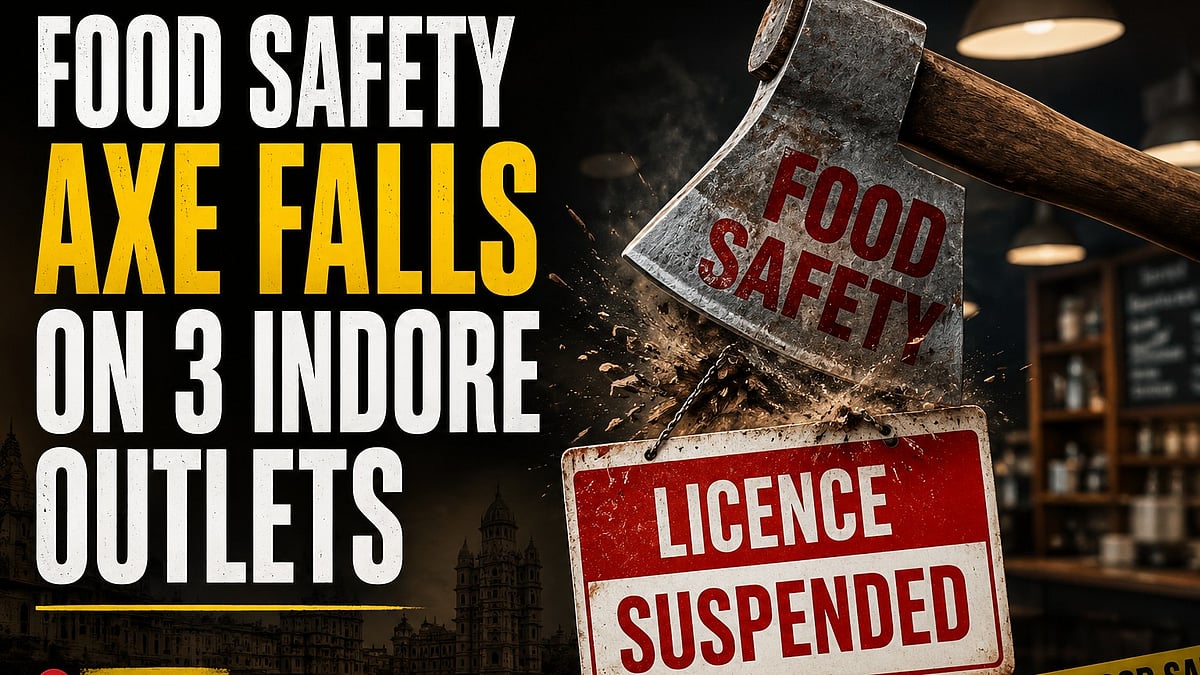
Indore Suspends Food Licences of Headly Pizza, BigBasket
Maharashtra FDA Explains When Restaurants Can Lose Licences
Maharashtra FDA Suspends Two Mumbai Food Licences After Inspections

Maharashtra FDA Suspends Four Food Licences Amid Statewide Safety Drive

Maharashtra FDA Suspends Licences Amid Mumbai Food Safety Violations
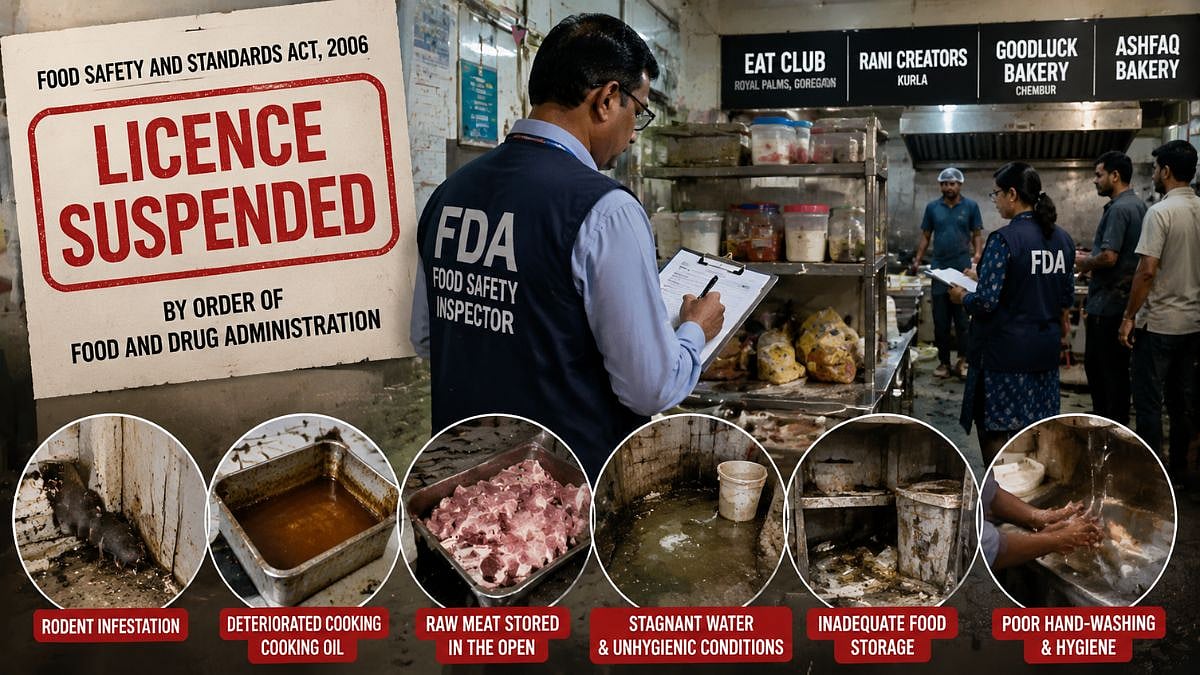
Mumbai FDA Suspends Two Food Licences, Flags Two More
India’s Proposed Food Warning Labels Face Health, Industry Backlash

FSSAI Chief Backs Mundhe’s Maharashtra Food Safety Drive

Egg prices surge 10-50% in six months, consumers concerned about adulteration
Cockroach Allegedly Spotted On Dessert Plate At Virar Restaurant