2 weeks ago
Indian courts will decide Hasina extradition, talks continue
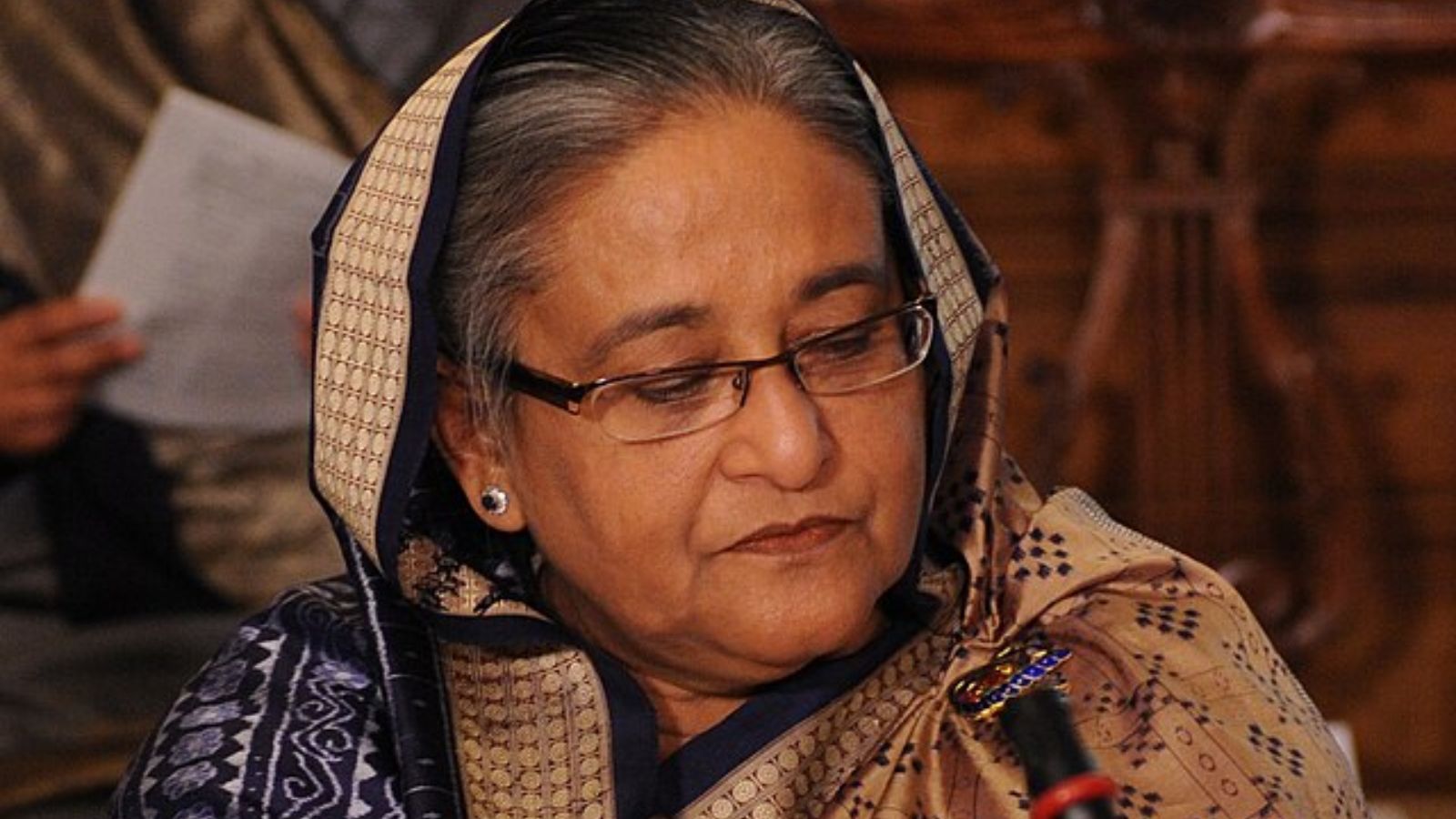
Bangladesh is asking India to send a woman named Sheikh Hasina back to Bangladesh.
She used to be the leader, called the Prime Minister, of Bangladesh.
In August 2024, big protests in Bangladesh forced her to leave.
She now stays in India, in a secret place in the city of New Delhi.
Bangladesh's leaders want her back because judges there gave her a very serious punishment for hurting people.
India says it will not decide by itself—its courts will look at the case.
Sheikh Hasina says she wants to go back to Bangladesh in December on her own.
Courts will check if the things she is accused of are also crimes in India.
This is a tricky problem, so India and Bangladesh are talking to each other to find a way out.

Top Indian officials say Indian courts, not politicians or diplomats, will decide on Bangladesh's request to extradite former Prime Minister Sheikh Hasina.
Hasina told a press conference on August 5 that she wants to return to Bangladesh in December, calling it the victory month of the 1971 liberation war.
Bangladesh's push follows a November 2025 International Crimes Tribunal verdict sentencing Hasina to death for 'crimes against humanity.'
Bangladesh's request was submitted with legal documents under the 2013 India-Bangladesh extradition treaty, and India's Ministry of External Affairs said it is examining the matter.
Awami League members say the verdict should be challenged because it was delivered under Bangladesh's interim government led by Muhammad Yunus.
- Who
- Sheikh Hasina, Bangladesh's ousted Prime Minister, along with Bangladesh's government under Prime Minister Tarique Rahman and India's Ministry of External Affairs.
- What
- India says its courts will ultimately decide Bangladesh's request to extradite Hasina, who faces a death sentence, while intense talks continue between Delhi and Dhaka.
- Where
- India, where Hasina is sheltered at an undisclosed location in New Delhi, and Bangladesh, with diplomacy underway between Delhi and Dhaka.
- When
- The request is being reiterated about two years after Hasina took refuge in India in August 2024; a November 2025 court verdict sentenced her, and she plans to return in December.
- Why
- Bangladesh seeks Hasina's extradition after the International Crimes Tribunal convicted her of 'crimes against humanity,' while India insists the decision rests with its judiciary under the 2013 extradition treaty.
Dhaka's push for extradition
Delhi's judicial and diplomatic stance
How Hasina's case should be handled
Dhaka's push for extradition
Bangladesh insists on extradition, pressing a maximalist position and citing Hasina's death sentence for 'crimes against humanity' as the basis for the request.
Delhi's judicial and diplomatic stance
India says its courts will take the final decision, not politicians or diplomats, and that intense discussions are on to move Dhaka away from its maximalist position.
Validity of the ICT verdict
Dhaka's push for extradition
The Bangladesh government treats the International Crimes Tribunal verdict as the foundation of its extradition request.
Delhi's judicial and diplomatic stance
Awami League members say the verdict should be challenged because it was delivered during an interim government led by Muhammad Yunus.
Key facts
- Central figure
- Sheikh Hasina, ousted Prime Minister of Bangladesh
- Age
- 78 years old
- Current location
- Undisclosed location in New Delhi, India
- In exile since
- August 2024, after the mass uprising in Dhaka
- Bangladesh verdict
- Death sentence from the International Crimes Tribunal (November 2025) for 'crimes against humanity'
- Extradition basis
- 2013 India-Bangladesh extradition treaty and India's Extradition Act, 1962
- Party
- Awami League (banned in Bangladesh)
- Planned return
- December, per Hasina's stated intention
Quotes
Sheikh Hasina (via her spokesperson)
Bangladesh’s ousted former prime minister, speaking through her spokesperson
“"The decision to extradite will be finally taken by our courts, it will not be a political or diplomatic decision. And what has to be established during the court process is whether the crimes that are alleged to have been committed are also categorised as crimes under the Indian law."”
 indianexpress.com
“"We are examining the matter in accordance with our established procedures, and whenever I have any update to share, I will inform you…"”
indianexpress.com
Sources
Related news
India Examining Bangladesh's Extradition Request for Sheikh Hasina

India Weighs Hasina Extradition Between Law and Diplomacy
India Stresses Reciprocity as Bangladesh Seeks Hasina Extradition
Bangladesh renews push for Hasina's extradition as envoy meets PM
Bangladesh Makes Hasina Extradition Red Line for Rahman's India Visit

India's Three Red Lines Shape Sheikh Hasina Extradition Talks
Bangladesh Recall Shanto, Mahmud for Asian Games T20 Squad

Sharma and Malik share halfway lead at Telangana Golconda Masters
India Replaces Sri Lanka as 2027 Women’s Champions Trophy Host
Centre Assures JDU Bihar’s Interests In Farakka Treaty Decision
India’s Record Wheat Harvest Opens $1.5 Billion Export Window