6 days ago
India’s Youth Protests Expose the Economic Cost of Waiting
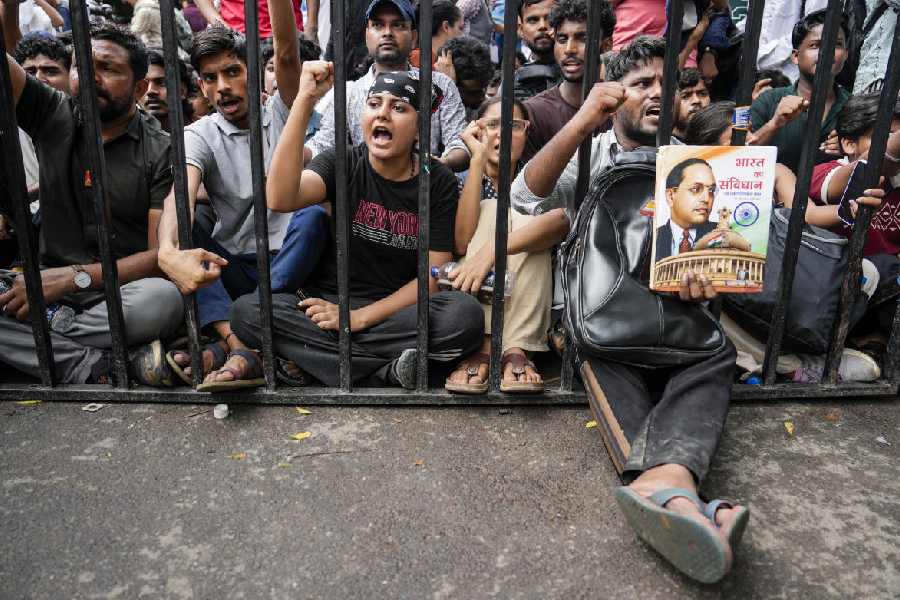
Many young people in India spend years trying to pass difficult exams for education or government jobs.
They may study, attend coaching, apply for jobs or wait for results.
Because they are waiting, they often do not earn money or gain workplace experience.
Their families pay for their living costs and exam preparation.
This can delay moving out, forming a household and becoming financially independent.
The article says this waiting also costs the wider economy.
People who start working later may earn less over their entire careers because early work years are important.
A study of a government recruitment freeze in Tamil Nadu found similar long-term effects.
The article argues that better exam rules and more available opportunities could reduce this hidden cost.

Youth protests began over examination irregularities but also highlighted India’s broader shortage of secure jobs.
Millions of young people spend years preparing, applying and waiting for competitive examinations and recruitment decisions.
This waiting can delay earnings, work experience, household formation and financial independence while families provide support.
India’s test-preparation market is estimated at $12-$15 billion, with JEE and NEET accounting for nearly 70% of undergraduate entrance-exam spending.
Research on a Tamil Nadu public-sector recruitment freeze found that affected candidates later had lower employment, earnings and household-formation rates.
- Who
- Young Indian exam aspirants, their families and policymakers are central to the story; the protests involved youth across India.
- What
- Youth protests over examination irregularities drew attention to the economic cost of prolonged preparation and waiting for scarce education and employment opportunities.
- Where
- The protests spread across India and converged in New Delhi; the cited recruitment study examined Tamil Nadu.
- When
- The article does not specify a date; it refers to protests that spread across India and converged in New Delhi.
- Why
- The protests began with anger over examination irregularities and demands for accountability, while also reflecting frustration over limited secure employment and prolonged delays before entering the workforce.
Key facts
- Youth unemployment statistic
- Around 40% of graduates aged 15-25 years are described as unemployed.
- Test-preparation market
- Estimated at roughly $12-$15 billion, with annual compounded growth estimates of 9%-15%.
- Major exam spending
- JEE and NEET together account for nearly 70% of undergraduate entrance-exam expenditure.
- Typical delay described
- Graduates may spend an additional two to three years preparing for government jobs or professional entrance examinations.
- Tamil Nadu recruitment freeze
- A partial public-sector recruitment freeze between 2001 and 2006 made remaining vacancies more competitive.
- Long-term effects
- A cited study found affected candidates later had lower employment rates, delayed household formation and lower earning capacity.
- Measurement gap
- Labour-force surveys do not have a clearly defined category for people waiting as exam aspirants.
Sources
Related news
India Faces a Future With Plenty of Work, Fewer Jobs
India’s Youth NEET Crisis Exposes Limits of Unemployment Data

Youth Protests Expose India's Institutional Failures, Guruswamy Says

Congress Says Modi Government Has Ravaged Youth Education-to-Employment Pathway

NITI Aayog Finds 8.7 Crore Youth Outside Work, Education
India’s NEET Youth and the Rise of Precariat Politics
India’s 7.8% Q1 Growth Outpaces Forecast Despite Global Risks

SHANTI Rules Seek to Boost India’s Nuclear Investment

India’s Solar Boom Faces Regional and Manufacturing Challenges
India Plans More Mega Textile Parks Amid Past Failures