2 weeks ago
Teesta River Tests India-Bangladesh Strategic Trust Near Siliguri Corridor
The Teesta is a river shared by India and Bangladesh.
People in Bangladesh depend on it for farming and protection from floods.
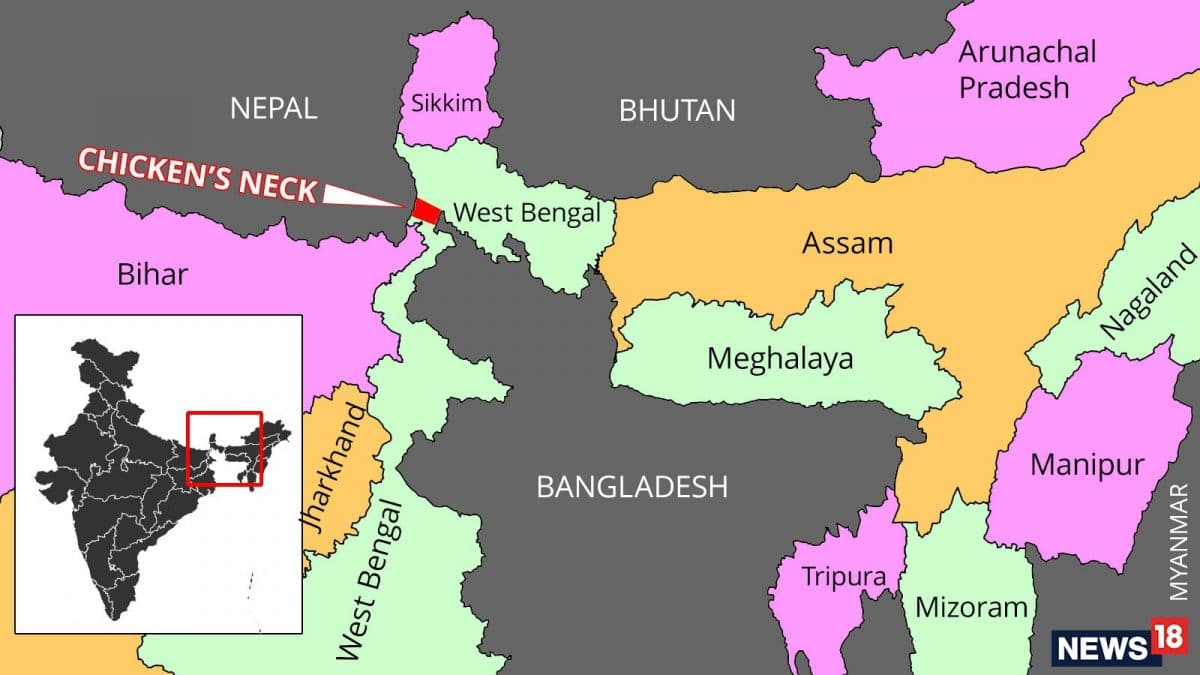
India is also concerned because the river is near the Siliguri Corridor, a very narrow stretch of land connecting India’s northeastern states to the rest of the country.
This makes nearby infrastructure important for India’s security.
Some projects connected to China have made India more cautious.
The article says Bangladesh has the right to seek help for development.
It also says India’s security concerns should be respected.
The two countries need to solve the problem through cooperation instead of suspicion.
Working together on water, floods, climate and infrastructure could strengthen their relationship.

The Teesta River dispute is presented as a major test of India-Bangladesh diplomacy, not merely a water-sharing disagreement.
India views developments near the Teesta through the vulnerability of the 20–22-kilometre-wide Siliguri Corridor, which links the mainland to the northeastern states.
Bangladesh seeks river restoration, flood control, irrigation and regional development amid erosion, flooding, sedimentation and uncertain water supplies.
Chinese involvement in Teesta-related infrastructure has increased India’s strategic concerns, although the article cautions against treating every Chinese-funded project as a conspiracy.
The article calls for joint river-basin management, climate cooperation and strategic transparency rather than a false choice between development and security.
- Who
- India and Bangladesh are the principal parties; China is discussed as a factor in the strategic context, while West Bengal’s concerns have affected negotiations.
- What
- The Teesta River dispute and related development projects are testing whether India-Bangladesh relations can combine water cooperation with strategic trust.
- Where
- The issue concerns the Teesta basin, North Bengal, Bangladesh’s Rangpur region and the nearby Siliguri Corridor in eastern India.
- When
- The proposed Teesta water-sharing agreement has remained unresolved for more than a decade; the article describes the current challenge in the context of developments since the 2015 Land Boundary Agreement.
- Why
- The dispute involves Bangladesh’s need for water and river development, India’s security concerns around the Siliguri Corridor, climate-related uncertainty and growing strategic competition.
Development and Partnership
Security and Strategic Caution
Bangladesh’s infrastructure priorities
Development and Partnership
Bangladesh has legitimate sovereign interests in pursuing river restoration, flood control, irrigation and regional development, including through international partners.
Security and Strategic Caution
India should assess infrastructure near the Siliguri Corridor carefully when projects involve a major strategic competitor such as China.
Role of China
Development and Partnership
Chinese-funded infrastructure should not automatically be treated as a strategic conspiracy, because development needs can be genuine.
Security and Strategic Caution
China’s expanding regional economic footprint complicates India’s assessment of projects located near a sensitive geographical vulnerability.
Resolving the Teesta dispute
Development and Partnership
India and Bangladesh should move beyond transactional water negotiations toward joint river-basin management and a comprehensive strategic partnership.
Security and Strategic Caution
India’s security concerns, including the vulnerability of the Siliguri Corridor, must be incorporated into any durable arrangement rather than set aside for faster development.
Key facts
- River at issue
- Teesta River
- Siliguri Corridor width
- Approximately 20–22 kilometres at its narrowest point
- Strategic role
- The corridor is the only land bridge connecting India’s eight northeastern states to the mainland.
- Agreement status
- The proposed Teesta water-sharing agreement has remained unresolved for more than a decade.
- Bangladesh’s concerns
- Riverbank erosion, erratic monsoons, sedimentation, floods and water scarcity affect the Teesta basin.
- Earlier diplomatic milestone
- The 2015 Land Boundary Agreement resolved a longstanding India-Bangladesh border dispute through negotiation.
- Proposed cooperation
- The article advocates joint river-basin management, flood forecasting, ecological restoration, climate resilience, connectivity and strategic transparency.
Sources
Related news

Teesta deadlock tests India-Bangladesh ties as Dhaka seeks China's help

Bangladesh and India Seek Equality-Based Reset in Bilateral Ties

Trivedi's Dhaka Challenge: India, Bangladesh Seek Diplomatic Reset
Shah Announces Tri-State Grid to Fortify Siliguri Corridor

Bangladesh's India Reset Runs Deeper Than Diplomacy Alone

Bangladesh Recall Shanto, Mahmud for Asian Games T20 Squad

Sharma and Malik Share Halfway Lead at Golconda Masters

India Replaces Sri Lanka as 2027 Women’s Champions Trophy Host

Centre Assures JDU Bihar’s Interests In Farakka Treaty Decision

India’s Record Wheat Harvest Opens $1.5 Billion Export Window