7 hrs ago
GST Council Proposes Streamlined Officers’ Committee Structure
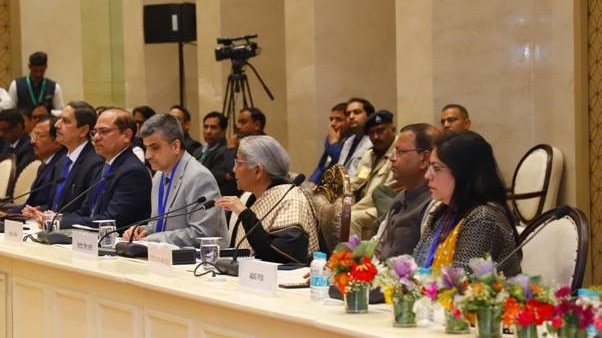
The GST Council has proposed changing how its officers’ committees are organised.
The changes come after GST has been in place for nine years.
One committee would make top-level decisions on matters sent to it.
Another would look at proposed changes to GST laws, rules and procedures.
The second committee would have 12 state representatives.
Five states would have permanent places, while the other seven places would rotate every two years.
States could also ask to join discussions about particular topics.
A central system would sort and track suggestions and complaints.
These changes are proposals, not stated as already implemented.

The proposal follows nine years of GST implementation and rate rationalisation after the 56th GST Council meeting.
The GST Implementation Committee would serve as the top-tier decision-making body and continue handling IT grievances.
A proposed Standing Committee of Officers would examine GST law changes, rules, processes and representations.
The Standing Committee would include 12 state representatives, with five larger states permanently represented and seven positions rotating every two years.
A centralised system would screen and track representations, while a 75% quorum and advance agenda circulation are proposed.
- Who
- The GST Council and its Secretariat, along with state and central government representatives.
- What
- A proposed restructuring of the officers’ committees and the handling of GST-related representations.
- Where
- The GST Council’s committee and Secretariat structure, involving states and the Centre.
- When
- Discussed at the sixth National Coordination Meeting in August; the first proposed two-year rotation cycle would include the listed states.
- Why
- The GST system has stabilised after nine years of implementation and extensive rate rationalisation following the 56th GST Council meeting.
Key facts
- Standing Committee membership
- 12 state representatives are proposed.
- Permanent state representatives
- Maharashtra, Uttar Pradesh, Gujarat, Tamil Nadu and Karnataka.
- Rotation
- Seven other positions would rotate every two years.
- Proposed first-cycle states
- Rajasthan and West Bengal; Kerala and Punjab; Jharkhand, Chhattisgarh and Meghalaya.
- Representation measure
- State grouping would weigh post-settlement gross SGST revenue for FY2025-26 and registered GSTINs as of March 31, 2026 equally.
- Proposed quorum
- 75%.
- GIC role
- Top-tier decision-making body and Information Technology Grievance Redressal Committee.
Sources
Related news
GST Council to Keep Rates Steady, Pursue Structural Reforms
GST Council Meeting Moves to October 8 Amid Reform Proposals

GST Council Meeting Rescheduled to Thursday for Process Reforms

GST Council to Consider Major Process and Compliance Reforms
October GST Council to Prioritise Process Reforms, FM Says

GST Rate Changes May Shift to Annual Process

GST Council Targets Easier Compliance and Stable Tax Rates
GST Rate Cuts Expand Tax Base as Effective Rate Falls
UPSC Key Covers Yemen, GST, Electoral Rolls and More
Festive Demand Hopes Drive Inventories to Record Highs