2 hrs ago
GST Council to Consider Major Process and Compliance Reforms

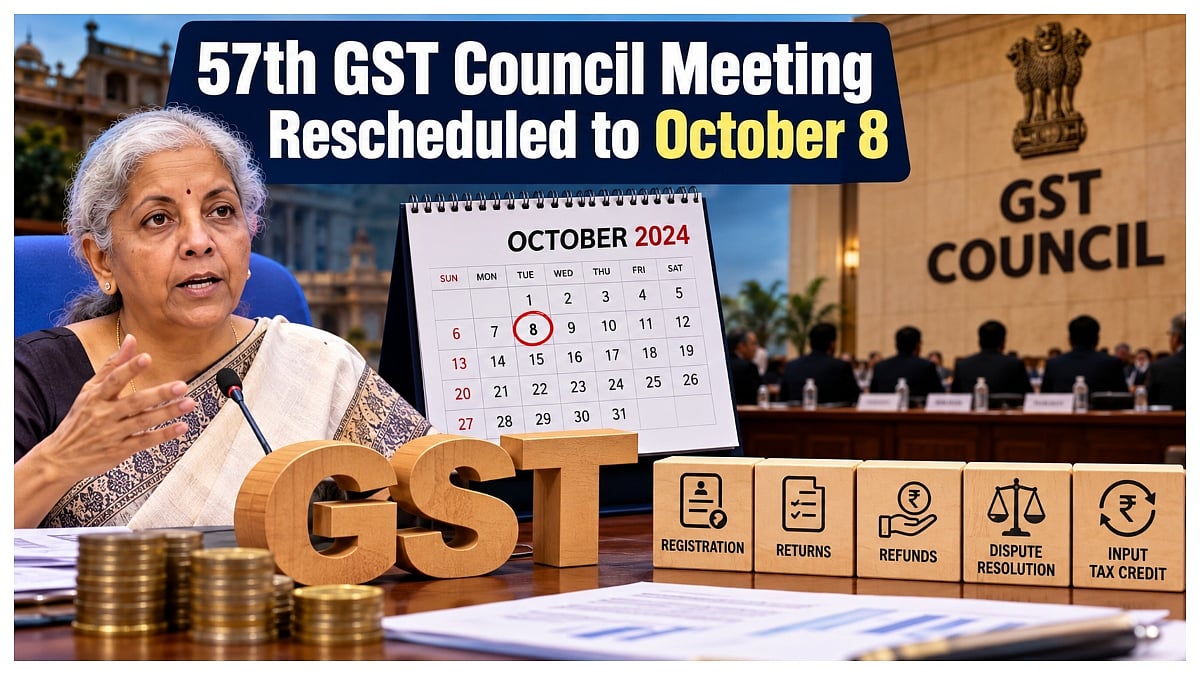
The GST Council is meeting on October 8 to discuss how the tax system works.
It is expected to focus on rules and paperwork, not a big change to tax rates.
The Council may make it easier for businesses to claim back some tax credits and complete GST tasks.
It may also make online registration simpler for small businesses.
Officials are considering changing when tax officers can arrest someone and when they can send a notice.
Some services sold to customers in other countries may get clearer export treatment.
The Council may also discuss how technology and good data can help people follow the rules.
Officials expect any approved changes to be introduced over time, through 2027.

The October 8 GST Council meeting is expected to focus on process reforms after the September 2025 rate overhaul, rather than broad new rate cuts.
Proposals include wider input tax credit refunds, simpler online-business registration, redesigned return and refund processes, and gradual implementation through 2027.
Officials are considering ending GST officers’ arrest powers, raising the prosecution threshold from Rs 1 crore to Rs 5 crore, and removing minimum prison sentences.
A proposal would bar notices for disputes below Rs 10,000, including qualifying pending cases; export-service rules may also be changed to treat more services as exports.
Officials say technology and quality data could support compliance with less paperwork, while the Council may hear state revenue concerns and discuss UPI transaction fees.
- Who
- The GST Council, chaired by Finance Minister Nirmala Sitharaman; proposals concern businesses and GST authorities.
- What
- A meeting expected to consider GST process, compliance, enforcement and export-service reforms.
- Where
- When
- October 8; the year is not explicitly stated in the articles, which refer to the September 2025 rate overhaul.
- Why
- To simplify compliance, reduce disputes, improve refunds and support a more stable and predictable GST system.
Reform proponents
Concerns and safeguards
Arrest and prosecution powers
Reform proponents
Officials say arrest powers can create unnecessary leverage over businesses; the proposals would rely on tax recovery, interest and penalties for disputes, while retaining prosecution for serious cases.
Concerns and safeguards
Prosecution would remain available, and the Council is expected to consider how it should operate alongside any removal of arrest powers.
Revenue effects of rate rationalisation
Reform proponents
Officials say there have been no major concerns about revenue being adversely affected by the September 2025 rate changes, making process reforms easier to pursue.
Concerns and safeguards
Some states may raise concerns about revenue growth and the fiscal effects they have experienced after the rate rationalisation.
Compliance and technology
Reform proponents
Officials argue that technology and good-quality data can encourage correct behaviour while reducing burdensome compliance.
Concerns and safeguards
The articles do not report a specific opposing position, but say proposals remain for Council deliberation and legislative changes would be needed for some reforms.
Key facts
- Meeting date
- October 8
- Main focus
- Process and compliance reforms following the September 2025 rate rationalisation
- Possible prosecution threshold
- Could rise from Rs 1 crore to Rs 5 crore
- Proposed notice threshold
- No notice for amounts below Rs 10,000; the proposal is expected to cover new and pending cases
- Input tax credit refunds
- Potential expansion to input services and capital goods, with separate timelines; capital-goods refunds could begin from April 2027
- Export services
- A proposal would base place of supply on the customer’s location for certain services, potentially allowing export treatment
- Implementation
- Reforms are expected to be introduced progressively through 2027
- Rate changes
- No broad rate rationalisation is expected at this meeting; officials anticipate rate reviews no more than once a year
Quotes
A GST official
An unnamed official discussing the proposed GST process redesign.
“All four processes are proposed to be redesigned on a single principle, namely that the system should do what can be done from data and the officer should be left with what needs judgement”
 indianexpress.com
“Tax disputes will be resolved through civil consequences, namely recovery of the tax, interest for the delay, and penalty.”
indianexpress.com
Sources

Related news
GST Council Meeting Moves to October 8 Amid Reform Proposals

GST 2.0 to Focus on Faster Refunds and Simpler Compliance

Modi Says Next GST Reform Phase Will Simplify Compliance

October GST Council to Prioritise Process Reforms, FM Says

GST Council May Curb Arrest Powers, Simplify Business Registration

GST Council Meeting Rescheduled to Thursday for Process Reforms

Cabinet May Approve ₹10,000 Crore SME Growth Fund

India’s GST Needs Deeper Reform Beyond Process Improvements