1 hr ago
Ethanol Policy Curbs Threaten Maharashtra Sugar Distillery Finances
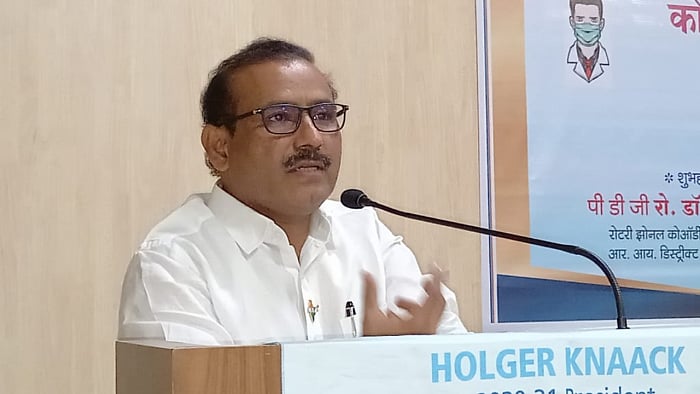
Rajesh Tope warned that some ethanol factories in Maharashtra could face financial problems.
These factories were built to help meet India’s E20 fuel-blending goal.
The government may restrict the use of sugarcane juice and B-heavy molasses for ethanol.
If factories must mainly use C-heavy molasses, they may produce less ethanol.
Their salaries, maintenance bills, insurance costs and loan payments would still continue.
This could make each litre of ethanol more expensive.
Tope said factories should be able to use both sugar-based materials and grain.
He also recommended making more useful products from factory by-products and wastewater.

Former minister Rajesh Tope warned that feedstock restrictions could hurt sugar-based ethanol distilleries in Maharashtra.
He said the state’s sugar industry has invested ₹16,000-20,000 crore in distillery projects.
Maharashtra has about 179 operational distilleries with combined sugar- and grain-based capacity of roughly 4.84 billion litres annually.
Greater reliance on C-heavy molasses could reduce production while fixed costs and bank repayments continue.
Tope suggested dual-feed distilleries, expanded grain ethanol production and greater by-product value addition.
- Who
- Former Maharashtra minister Rajesh Tope and sugar-based ethanol distilleries in the state.
- What
- Tope warned that restrictions on direct sugarcane juice and B-heavy molasses could reduce production and weaken distillery finances.
- Where
- Maharashtra, India.
- When
- Ahead of the 2026-27 season.
- Why
- Lower production could leave fixed costs, environmental expenses and bank repayments unchanged while raising ethanol costs and pressuring factory cash flows.
Key facts
- Operational distilleries
- Maharashtra has around 179 operational distilleries: 143 sugar- or molasses-based and 36 grain-based.
- Sugar industry investment
- Investment in sugar industry-based distilleries is estimated at ₹16,000-20,000 crore.
- Sugar-based capacity
- Sugar industry-based distilleries have combined annual ethanol capacity of around 3.8 billion litres.
- Grain-based capacity
- Grain-based distilleries can produce around 1.04 billion litres of ethanol annually.
- Policy concern
- Restrictions on direct sugarcane juice and B-heavy molasses could force greater reliance on C-heavy molasses.
- Proposed solution
- Tope suggested converting sugar-based distilleries to dual-feed systems using sugar-based feedstock and grain.
- Additional value
- Tope called for greater use of DDGS, maize oil, carbon dioxide, biogas and compressed biogas.
Quotes
Rajesh Tope
Former Maharashtra minister discussing the financial effects of ethanol feedstock restrictions
“Production may fall if the industry is forced to depend largely on C-heavy molasses. However, salaries, maintenance expenses, insurance, environmental compliance costs and bank instalments will continue.”
 freepressjournal.in
“The focus of future policy should not merely be on creating huge ethanol capacity, but on developing flexible capacity that has assured raw material and can operate profitably throughout the year.”
freepressjournal.in
Sources
Related news
Maharashtra Ethanol Plants Face Viability Risks Amid Feedstock Restrictions
India’s Ethanol Push Shifts From Sugarcane Toward Grain Feedstocks

India's Sugar Sector Faces a Testing 2026-27 Season

Policy Delays, Not Ethanol, Drive India’s Sugar Price Rise
India's Sugar Stocks Surge Amid Debate Over Ethanol's Role

Experts Link India’s Sugar Price Rise to Lower Cane Output

Maharashtra Minister Urges Jarange to Halt Mumbai Quota Agitation
Maharashtra FDA Finds Steep Mark-Ups on Hospital Devices

CJP to Launch Tribal School Campaign in Gadchiroli September 17
Bhiwandi Apartment Parking Fire Guts 14 Two-Wheelers, Residents Evacuate