1 hr ago
Pregnant Inmates in Madhya Pradesh Jails Struggle to Access Release
Ten pregnant women are currently in Madhya Pradesh prisons.
Two have been convicted, while eight are still awaiting trial.
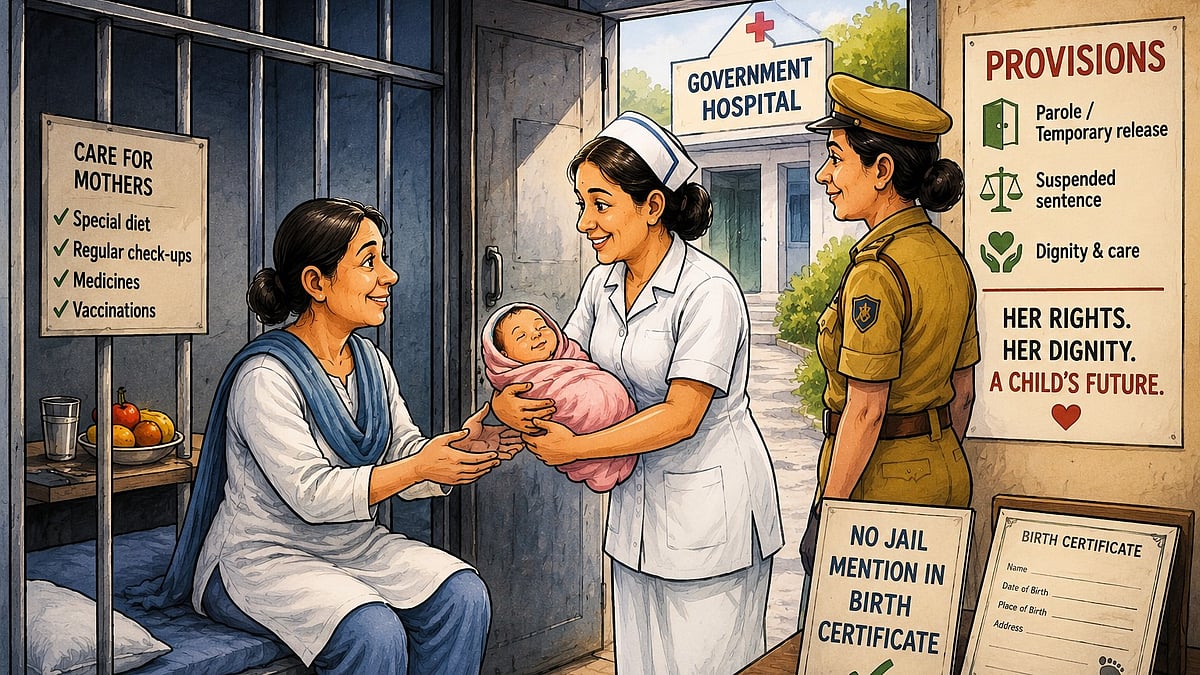
They can receive medical care, special food and regular check-ups.
Doctors and prison officials arrange hospital care when delivery is near.
Their families are informed about the birth.
Rules say pregnant prisoners may sometimes be released temporarily to give birth outside prison.
However, many cannot use this option because they do not know about it or cannot afford the process.
Officials also leave the jail off the child’s birth address to reduce stigma.

Madhya Pradesh jails currently hold 10 pregnant women: two convicts and eight undertrial prisoners.
The inmates are held in prisons across Bhopal, Sagar, Indore, Gwalior, Jabalpur, Vidisha and Ujjain.
Officials provide special diets, weekly gynaecologist visits, supplements, vaccinations and hospital care for deliveries.
Guidelines allow temporary release, parole or suspended sentences for childbirth, but awareness and financial barriers limit access.
Hospital birth records omit the jail address to help prevent children from carrying prison-related stigma.
- Who
- Ten pregnant women incarcerated in Madhya Pradesh, including two convicts and eight undertrial prisoners.
- What
- The women are receiving prison medical care, while most have been unable to access provisions for temporary release or parole before childbirth.
- Where
- Jails across Madhya Pradesh, including facilities in Bhopal, Sagar, Indore, Gwalior, Jabalpur, Vidisha and Ujjain.
- When
- At present; the article does not provide a specific date.
- Why
- Release provisions are difficult to use because of limited awareness and financial resources.
Prison Care and Existing Provisions
Barriers to Release and Family-Centred Birth
Conditions for pregnant inmates
Prison Care and Existing Provisions
Prison officials say necessary medical care, special food, supplements, vaccinations and hospital delivery arrangements are provided.
Barriers to Release and Family-Centred Birth
The report highlights that the women remain prisoners during pregnancy and motherhood, with most unable to access release options.
Childbirth outside prison
Prison Care and Existing Provisions
Guidelines allow temporary release, parole or suspended sentences so expectant prisoners can give birth outside jail.
Barriers to Release and Family-Centred Birth
Awareness gaps and a lack of financial resources prevent most eligible women from taking advantage of those provisions.
Key facts
- Pregnant inmates
- 10 women are currently pregnant in Madhya Pradesh jails.
- Legal status
- Two are convicts and eight are undertrial prisoners.
- Medical care
- A gynaecologist visits weekly, and inmates receive supplements, medicines and vaccinations.
- Diet
- Pregnant inmates receive special diets including milk and fruits.
- Delivery arrangements
- They are admitted to local government hospitals as delivery approaches.
- Release provisions
- Guidelines provide for temporary release, parole or suspended sentences for childbirth outside prison.
- Birth records
- Hospital records mention the jail’s locality and city but not that the mother is incarcerated.
Quotes
Unnamed jail official
Jail department official describing support for pregnant inmates
“We also try to satisfy their cravings as far as possible through jail canteen and by allowing eatables from their homes to be delivered.”
 freepressjournal.in
“They stay in their barracks during the entire period and other women inmates take care of them.”
freepressjournal.in
Varun Kapoor
Director General of Prisons and Correctional Services in Madhya Pradesh
“The jail administration ensures that all necessary medical and other facilities are provided to pregnant jail inmates.”
freepressjournal.in
Sources
Related news
Raksha Bandhan: Sisters Visit Inmate Brothers At Ashoknagar Jail

Madhya Pradesh Partners With University for Inmate Mental Healthcare

MP govt to release 124 prisoners on Independence Day

Jabalpur Jail Allows Raksha Bandhan Meetings With Families

Uttar Pradesh Expands Financial Aid to Promote Institutional Deliveries

Tirupati Launches 16 'Thalli Bidda Express' Vehicles for Pregnant Women
Two Women Allegedly Assault Colleague In Gwalior Street Fight
Supreme Court Quashes FIRs Against 15 CJP Activists
Bhopal GRP Recovers ₹62.26 Lakh in Train Theft Crackdown
Four Killed, Two Critically Injured in Ashoknagar Bike Crash