2 hrs ago
Bangladesh Garment Factories Could Recover Cooling Costs in Four Years
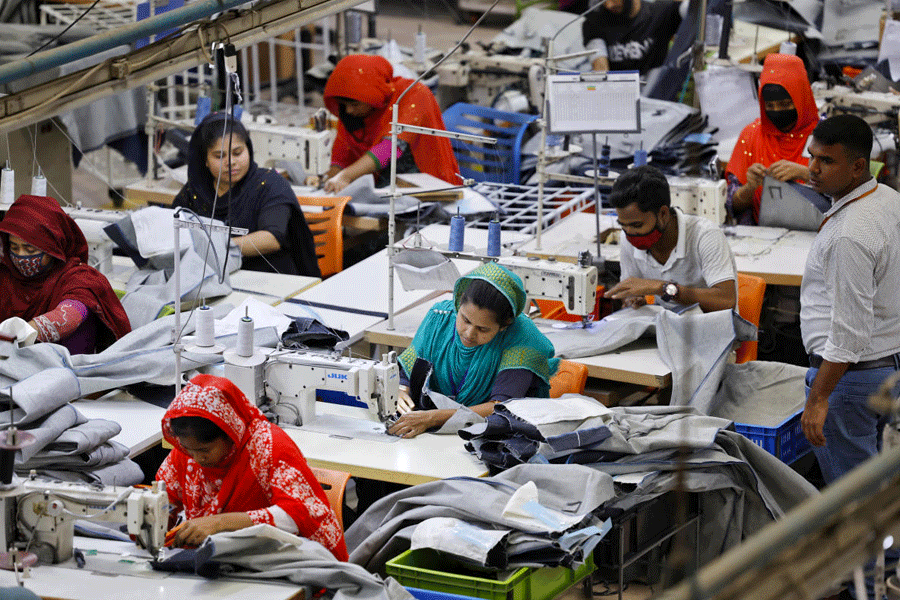
Factories in Bangladesh can become very hot, especially where workers iron and finish clothing.
Researchers measured temperatures at eight factories in Dhaka over six months.
They found that the inside of factories was often hotter than outside.
This heat can make workers sick or less able to work safely.
The researchers said heat stress reduced factory revenue by about 4.1% on average.
They found that changes such as roof insulation, reflective paint and better airflow could pay for themselves within four years.
The report says clothing brands should help factories pay for these improvements.
This matters because climate change is making extreme heat a bigger problem for clothing production.

Cooling investments in Bangladesh garment factories could pay for themselves within four years, according to Cornell researchers.
Measures include reflective paint, roof insulation and improved airflow ventilation.
Heat readings at eight Dhaka factories found indoor temperatures often exceeded outdoor levels, especially in ironing and finishing areas.
Heat stress reduced annual factory revenue by an average of 4.1% at the factories studied.
The report urged global apparel brands to share adaptation costs with suppliers investing in worker cooling.
- Who
- Researchers at Cornell University's Global Labor Institute studied garment factories, while apparel brands and suppliers are affected by the findings.
- What
- A study found that cooling systems and other heat-reduction measures in Bangladesh garment factories can be commercially viable and recover their costs within four years.
- Where
- Eight garment factories in Dhaka, Bangladesh.
- When
- The findings were reported on Sunday; temperature data were collected over six months, and related projections concern risks by 2030.
- Why
- To reduce worker heat stress and address financial risks from climate-related heat in apparel supply chains.
Shared Climate-Adaptation Costs
Supplier Investment Decisions
Who should pay for cooling improvements?
Shared Climate-Adaptation Costs
The Cornell University Global Labor Institute report and the American Apparel and Footwear Association support brands sharing costs when suppliers may not receive enough financial return to fund resilience measures alone.
Supplier Investment Decisions
Factory manufacturers must assess whether cooling investments are commercially justified, although the study says the measures examined could recover their costs within four years.
Business case for cooling
Shared Climate-Adaptation Costs
Researchers say cooling protects workers and can reduce revenue losses caused by heat stress, which averaged 4.1% at the factories studied.
Supplier Investment Decisions
The report indicates that brands and suppliers are still discussing mitigation costs, greenhouse-gas targets and alternative energy sources before committing resources.
Key facts
- Estimated payback period
- Within four years
- Factories studied
- Eight factories in Dhaka
- Temperature monitoring
- Six months
- Average revenue loss
- 4.1% annually due to heat stress
- Cooling measures
- Reflective paint, roof insulation and airflow ventilation
- Earlier climate-risk estimate
- Heat and flooding could erase $65 billion in apparel export earnings from Bangladesh, Cambodia, Pakistan and Vietnam by 2030
- Industry response
- The American Apparel and Footwear Association released a toolkit on protecting workers from extreme temperatures
Quotes
Nate Herman
Executive vice president of the American Apparel and Footwear Association
“As extreme heat becomes an increasingly common reality worldwide, our industry must act to protect the workers who are at the heart of our supply chains.”
 telegraphindia.com
“If you're contemplating cooling investments but you don't know how much is going out the door, it's very difficult.”
telegraphindia.com
Sources
Related news
West Asia War Pushes Surat Textile Prices Higher Before Diwali
Surat Weaving Factories Plan Two Weekly Shutdown Days
Apparel Exporters Seek Cotton Yarn Export Controls Amid Surge
Climate Change Forces Assam Tea Gardens Into New Rhythms

Textile Firms Mount Smart Comeback as FY27 Outlook Strengthens

Indian Tea Association Seeks Bengal Support to Revive Tea Industry

Trump's UNGA Meetings Target New York, Ukraine and Global Cooperation

Jaishankar Arrives in New York for High-Level UNGA Meetings

A Book Traces Climate Refugees’ Journey from Bangladesh to Kolkata

India Targets More Medals on Asian Games Day 2