3 hrs ago
London Launches Public Robotaxi Service With Uber And Wayve

Uber and Wayve are letting some people in London ride in cars driven by an artificial-intelligence system.
The cars are Ford Mustang Mach-Es.
A trained human still sits inside to watch the road and take over if needed.
Passengers are told when their car is autonomous.
They can choose a regular car instead.
Wayve says its system uses cameras and radar to understand its surroundings.
The company wants the system to learn how to drive in different places and conditions.
London is a difficult test because it has busy streets, narrow roads, pedestrians and black cabs.
The results may help decide whether these cars can eventually drive without a human supervisor.

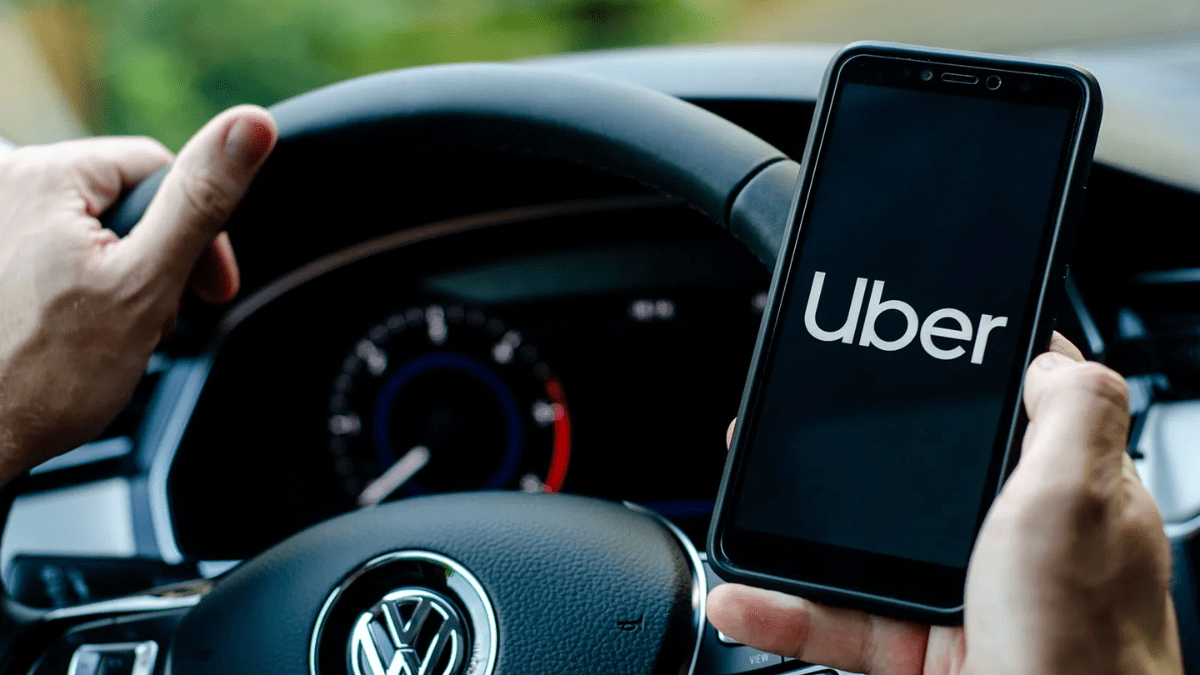
Uber and Wayve have opened London’s first public robotaxi service.
Selected UberX, Uber Comfort and Uber Electric riders may receive autonomous Ford Mustang Mach-E vehicles.
A trained safety operator will remain in each vehicle and can take control.
Passengers can decline autonomous rides and request a conventional vehicle at no extra charge.
Wayve and Uber plan future expansion, including Nissan Leaf vehicles in Tokyo in 2026.
- Who
- Uber and British self-driving technology company Wayve are operating the service, with London passengers as riders.
- What
- A public robotaxi service offering some Uber passengers rides in vehicles controlled by Wayve’s autonomous driving system.
- Where
- London, with planned Wayve-equipped Nissan Leaf vehicles for Uber riders in Tokyo in 2026.
- When
- The service has now launched; Uber and Wayve began their partnership in 2024, and public-road trials followed the next year.
- Why
- The rollout gives Wayve a real-world test of autonomous driving in a demanding urban environment and begins a wider commercial deployment.
Autonomous Transport Supporters
Cautious Critics And Constraints
Readiness for public roads
Autonomous Transport Supporters
Uber and Wayve present the launch as an initial step toward wider and eventually fully autonomous operation.
Cautious Critics And Constraints
The service is not yet completely driverless because a human safety operator must supervise every journey.
Wayve’s driving approach
Autonomous Transport Supporters
Wayve says its AI Driver can learn from real-world environments and adapt to unfamiliar roads, vehicles, weather and cities.
Cautious Critics And Constraints
London’s dense traffic, narrow and one-way streets, pedestrians and established black-cab industry make the city a demanding test.
Passenger adoption
Autonomous Transport Supporters
Passengers interested in the technology can increase their chances of receiving an autonomous ride through an Uber app setting, at no additional charge.
Cautious Critics And Constraints
Passengers who do not want an autonomous ride can opt out and request a conventional vehicle instead.
Key facts
- Operating companies
- Uber and Wayve
- Initial vehicle
- Ford Mustang Mach-E
- Eligible Uber services
- UberX, Uber Comfort and Uber Electric
- Human supervision
- A trained safety operator remains in the vehicle and can intervene.
- Passenger choice
- Riders can decline an autonomous vehicle and request a conventional one.
- Autonomous technology
- Wayve says its AI Driver uses cameras and radar and is designed to learn from real-world driving.
- Planned expansion
- Uber and Wayve plan to introduce Wayve-equipped Nissan Leaf vehicles in Tokyo later in 2026.
Sources
Related news
Tesla Cybercab Launch In Austin Faces Safety Questions
Waymo Picks Munich for First EU Robotaxi Service

Amazon’s Zoox Robotaxis Begin Road Operations Amid Rider Unease
Pakistan’s Remote-Controlled Driverless Car Crashes Into Police Van
Uber AI Pricing Raises Questions About Fare Differences
Uber Cuts 3,300 Jobs While Preparing for Robotaxis
Uber Cuts About 10% of Workforce in Global Overhaul

Uber CEO on Uncertain Future
Uber Expands in Rural Japan