3 weeks ago
Can Indian Knowledge Systems Be Defended From Pseudoscience?
A professor who studies the history of mathematics in India wrote about a big problem.
Some people mix up real science with ideas that cannot be tested, like magic.
Real science lets you try to prove it wrong, and if a test fails, the idea is corrected or thrown away.
The professor says some Indian institutes are putting untestable ideas like 'energy chakras' and 'the science of reincarnation' next to real science at big conferences.
At one conference in IIT Mandi, scientists talked about brain machines and meditation, but also about rebirth and astrology.
A speaker at IIT Madras said a sound made by NASA from the Big Bang proves the universe said 'Om,' which is not what science shows.
Scientists at IIT Roorkee said cow urine can stop a virus, and a science journal is now checking that claim.
The professor thinks this confuses students and the public, who trust big institutions.
He says the amazing mathematics of old India, like Ramanujan's work, is wonderful on its own and does not need made-up claims.

Teaching Indian mathematics, professor Aalok Thakkar says separating genuine achievements from pseudoscience is becoming harder as institutions blur the line.
IIT Mandi's June conference paired cognitive neuroscience and brain-computer interfaces with the science of reincarnation, energy chakras and Pancha Kosha.
A three-hour special session on 'Theory of Quantum Emotion' spanned 14 papers, and jyotisha was presented as a scientific theory for criminology.
An IIT Madras keynote presented NASA's sonification of Big Bang pressure waves as proof that the universe produced the syllable 'Om.'
IIT Roorkee's study claiming distilled cow urine works against chikungunya, funded under the nearly Rs 98 crore SUTRA-PIC programme, is under journal investigation.
- Who
- Professor Aalok Thakkar of Ashoka University, and researchers and organizers at IIT Mandi, IIT Madras and IIT Roorkee.
- What
- An opinion analysis of how Indian institutions are legitimizing pseudoscience, such as reincarnation science, energy chakras, astrology-based criminology and cow-urine medicine, alongside genuine science in Indian Knowledge Systems programming.
- Where
- India, chiefly the campuses of IIT Mandi, IIT Madras and IIT Roorkee, plus earlier Indian Science Congress editions including one in Kolkata.
- When
- June 2026 (MBCC 2026 conference at IIT Mandi; IIT Roorkee cow-urine study) and March 2026 (IIT Madras Dikshitar anniversary keynote), with earlier examples from 2015 and 2019.
- Why
- Because unfalsifiable claims placed beside real research transfer institutional credibility and mislead students, funders and the public, harming legitimate Indian Knowledge Systems scholarship.
Critics of pseudoscience in Indian Knowledge Systems
Backers of traditional-knowledge research
What counts as science
Critics of pseudoscience in Indian Knowledge Systems
Only falsifiable claims that could be tested and shown wrong belong in scientific venues; topics like the science of reincarnation and energy chakras are pseudoscience that borrows credibility from genuine research.
Backers of traditional-knowledge research
The Ministry of Education-patronized conference at IIT Mandi listed yoga, meditation, reincarnation and chakras alongside neuroscience as conference themes, presenting them as part of a 'home-grown flagship' exploration of consciousness and Indian philosophy.
Traditional medicine and cow-product research
Critics of pseudoscience in Indian Knowledge Systems
The SUTRA-PIC programme produced claims such as distilled cow urine fighting chikungunya, which drew an integrity investigation and damages research credibility.
Backers of traditional-knowledge research
Government funding supports research into cow-derived products and traditional medicine as part of India's indigenous scientific heritage, a serious research avenue supported by about 10 papers.
Institutional credibility
Critics of pseudoscience in Indian Knowledge Systems
When respected institutions place pseudoscience beside science, they signal legitimacy to students, funders and the public, and degrade genuine Indian Knowledge Systems work.
Backers of traditional-knowledge research
Integrating Indian Knowledge Systems into mainstream mental-health and consciousness research gives long-neglected Indian frameworks academic recognition and institutional backing.
Key facts
- Author
- Aalok Thakkar, Assistant Professor of Computer Science, Ashoka University
- Event
- 3rd Mind, Brain and Consciousness Conference (MBCC 2026), June 2026
- Host institution
- IIT Mandi's Indian Knowledge System and Mental Health Applications Centre
- Patronage
- Indian Knowledge Systems Division, Ministry of Education
- Conference scale
- 19 keynote lectures, 250 technical presentations, 275-page abstract book
- 'Quantum Emotion' session
- 3 hours, 14 papers
- SUTRA-PIC funding
- Nearly Rs 98 crore for research on cow-derived products
- Cow urine study
- Claimed antiviral activity against chikungunya; journal investigation opened
Quotes
Director, IIT Mandi
Director of IIT Mandi
“Delighted to share that the home‑grown flagship conference of the IKSMHA Centre at @iit__mandi, the 3rd Mind Brain Consciousness Conference (MBCC 2026), is set to bring together leading minds exploring consciousness, neuroscience, cognition, meditation, philosophy, and Indian…”
 scroll.in
Sources
Related news

Indian mechanism marrying science and faith hollows out both
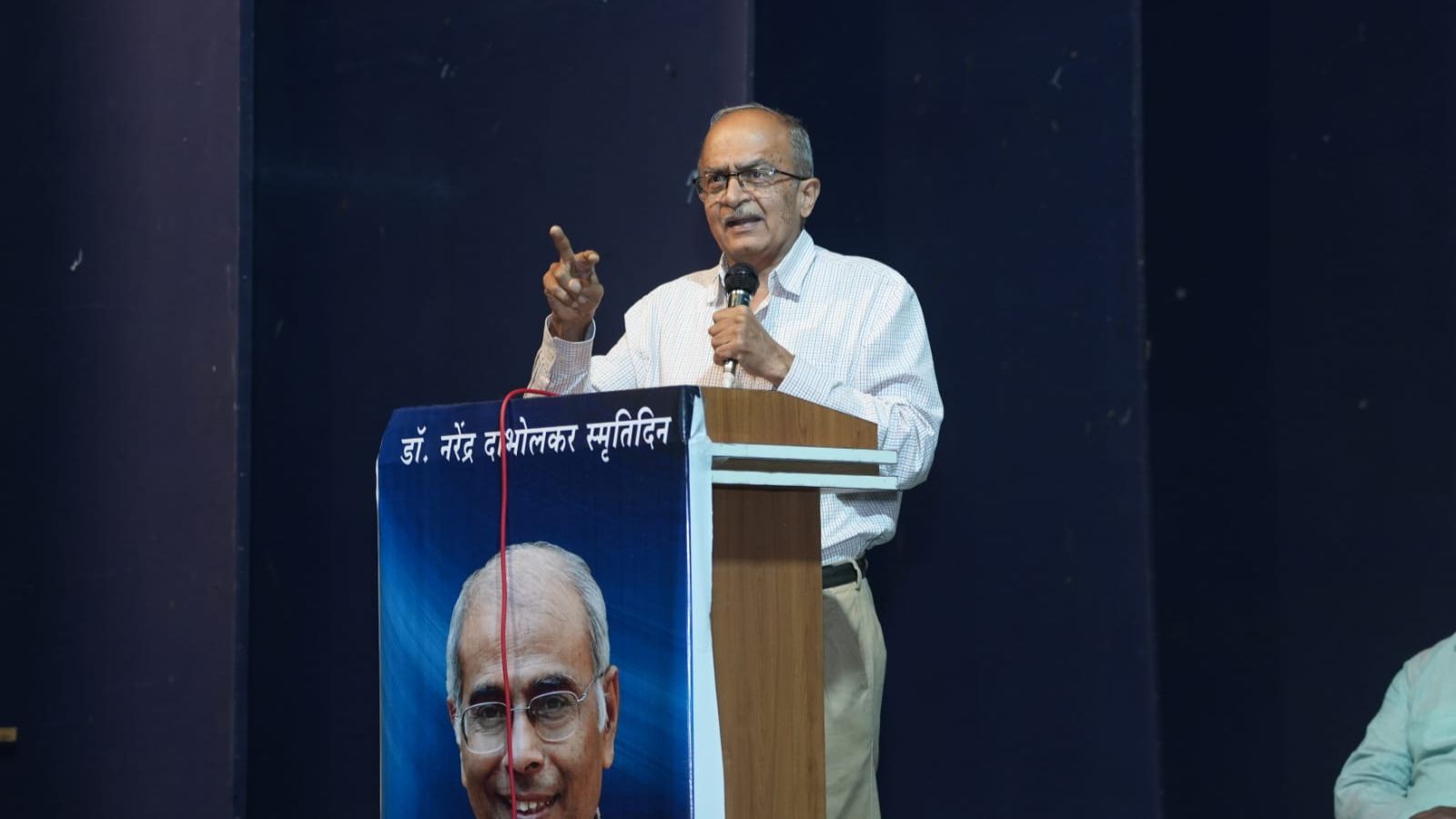
Prashant Bhushan Accuses Modi Government of Spreading Pseudoscience

Experts Challenge Maharashtra Textbook’s Depiction of Vedic Mathematics
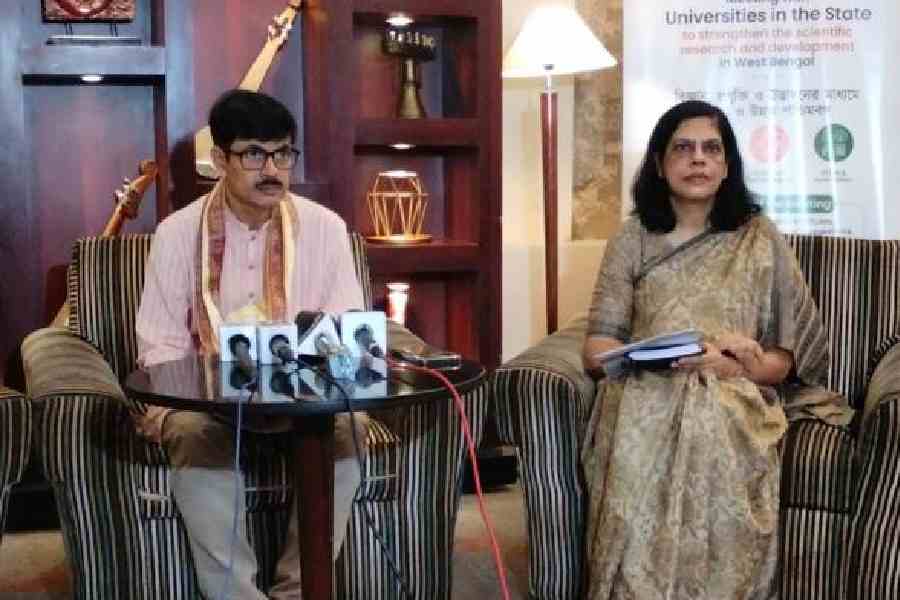
Science congress meets Vivekananda's Vedanta, aligns with Viswakarma Puja

Vivaan Karulkar Connects Ancient Knowledge, Science And Modern Innovation

Why Vedic Sages Might Be Called Intellectual Naxals Today
NASA Launches Roman Telescope to Explore Cosmic Mysteries
NASA’s Roman Telescope Set to Probe Dark Energy, Exoplanets

AI Manager Fires Human Employee at San Francisco Retail Store

Physicist's Tribute Hails India as Greatest Nation on Earth

Nila Spaces, Ultrahuman Partner to Make Wellness Measurable in Homes