2 weeks ago
Bangladesh’s Revolution Exposed the Challenge of Rebuilding the State
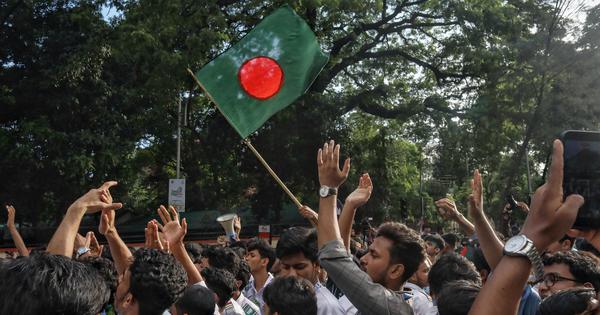
Bangladesh’s young people helped lead a huge movement that brought down a powerful government.
The movement became especially strong after Abu Sayeed was killed.
This showed that ordinary people can challenge even very powerful leaders.
But removing a government is different from rebuilding the country’s institutions.
After the government fell, people disagreed about elections, constitutional changes and how to fix the state.
Social media helped the protest grow quickly, but governing requires patience, planning and cooperation.
Young leaders may have energy and courage but may not yet have enough experience to manage a country.
The article says successful change usually combines youth activism with experienced institutions and organized political groups.
Bangladesh’s biggest challenge is turning the uprising’s energy into lasting democratic reform.

Bangladesh’s July uprising, led largely by students and young activists, helped topple a government that had ruled for 15 years.
The movement gained broad public support after the killing of Abu Sayeed became a symbol of state violence.
After the government fell, disagreements emerged over constitutional reform, elections, bureaucracy, judicial independence, corruption and economic recovery.
The article argues that youth movements can mobilize quickly through social media but often lack the organization and institutional experience needed to govern.
Bangladesh’s experience is compared with political movements in Nepal, the Arab Spring, Thailand and Sri Lanka, where lasting change depended on organizational continuity and institutional reform.
- Who
- Students, young activists and millions of Bangladeshi citizens led the July uprising; the interim administration and competing political actors later faced the reform challenge.
- What
- A youth-led uprising toppled Bangladesh’s long-serving government, but the country has struggled to convert that political victory into durable institutional change.
- Where
- Bangladesh, particularly Dhaka, with comparisons to Nepal, Tunisia, Sri Lanka, Thailand, Poland and South Korea.
- When
- The discussion focuses on the period two years after Bangladesh’s July uprising and compares it with other recent youth-led movements.
- Why
- Lasting change has been difficult because protest movements can unite people against a government more easily than they can agree on reforms, build organizations and manage state institutions.
Reform Before Elections
Elections Before Reform
Sequence of political change
Reform Before Elections
Some political actors argued that structural transformation should occur before elections so that the new political system would rest on stronger institutions.
Elections Before Reform
Other political actors argued that democratic legitimacy should come first through elected representatives, with reforms addressed through an elected government.
Role of established experience
Reform Before Elections
The movement’s anti-establishment outlook favored rejecting political figures associated with the old order and prioritizing new leadership.
Elections Before Reform
The article argues that successful transitions often combine youthful energy with institutional knowledge, rather than rejecting all experienced political voices.
Key facts
- Movement
- Bangladesh’s July uprising was led largely by students and young activists.
- Political outcome
- A government that had ruled for 15 years collapsed under public pressure.
- Symbol of violence
- The killing of Abu Sayeed became a powerful symbol of state violence and increased public sympathy for the movement.
- Post-uprising problems
- The interim administration inherited economic pressure, fragile law and order, weakened institutions and high public expectations.
- Main disagreements
- Political actors differed over constitutional reform, electoral timing, bureaucratic restructuring, judicial independence, corruption and economic recovery.
- Central lesson
- Toppling a government is an event, while reforming a state is a longer process requiring patience, expertise and institutions.
Sources
Related news

Gen Z Protest: Harbinger of Political Transition in South Asia

Nepal Opposition Leader Warns Gen Z Anger Was Long-Building

Women of Bangladesh's July Uprising Faded from Political Structures: Report
Nepal's Gen Z Protests Offer India Lessons, Journalist Argues
Nepal’s New Populist Government Faces Doubts Five Months On
After 36 Days, Cockroach Movement Leaves Government Facing Youth Discontent

Bangladesh Recall Shanto, Mahmud for Asian Games T20 Squad

Sharma and Malik Share Halfway Lead at Golconda Masters

India Replaces Sri Lanka as 2027 Women’s Champions Trophy Host
Centre Assures JDU Bihar’s Interests In Farakka Treaty Decision

India’s Record Wheat Harvest Opens $1.5 Billion Export Window