2 hrs ago
Rain May Boost Ocean Carbon Absorption by 13.6 Percent

Rain may help the ocean take in more carbon dioxide from the air.
Raindrops collect some carbon dioxide as they fall through the atmosphere.
They also make the salty ocean surface fresher, which helps it hold more gas.
Rain hitting the water creates movement that helps carbon dioxide enter the ocean.
This can create a thin freshwater layer on top of the sea.
Scientists estimate that rainfall could increase ocean carbon absorption by as much as 13.6 percent.
However, the effect is not the same everywhere.
In warm places, the freshwater layer can heat up and absorb less carbon dioxide.
Researchers say more measurements are needed to understand the effect in different seasons and regions.

A University of Notre Dame study found rainfall may increase ocean carbon dioxide absorption by up to 13.6 percent.
Rain dilutes salty surface water, creates turbulence, and carries dissolved carbon dioxide into the ocean.
Rainwater can form a 1-to-3-meter freshwater layer that remains separate from deeper ocean water for hours or days.
Sambuddha Misra cautioned that higher rainfall does not automatically mean greater carbon absorption, especially in warm tropical waters.
Researchers said global carbon calculations may underestimate rain-driven ocean absorption by 5 to 15 percent.
- Who
- Researchers led by the University of Notre Dame, with comments from chemical oceanographer Sambuddha Misra of the Indian Institute of Science.
- What
- A study found that rainfall may increase ocean absorption of atmospheric carbon dioxide by up to 13.6 percent.
- Where
- The process occurs at ocean surfaces worldwide, with examples discussed for the Bay of Bengal and other regions.
- When
- The finding comes from a recent study; the articles do not provide a publication date.
- Why
- Rain dilutes salty surface water, carries dissolved carbon dioxide, and creates turbulence that increases gas exchange between air and water.
Rainfall Has a Larger Carbon Role
The Effect Varies by Region
Overall carbon absorption
Rainfall Has a Larger Carbon Role
The University of Notre Dame-led researchers found that rainfall can increase ocean carbon dioxide absorption by up to 13.6 percent, and said current calculations may underestimate the effect.
The Effect Varies by Region
Sambuddha Misra cautioned that the finding should not be simplified to mean that more rain always produces more carbon absorption.
Tropical versus higher-latitude waters
Rainfall Has a Larger Carbon Role
Rain-driven dilution and turbulence can make surface waters absorb more carbon dioxide.
The Effect Varies by Region
Misra said the effect may be weaker in the tropics because freshwater layers heat up, while the process may be more efficient at higher latitudes.
Confidence in global estimates
Rainfall Has a Larger Carbon Role
The researchers said rainfall effects should be included in calculations of carbon exchange between the ocean and atmosphere.
The Effect Varies by Region
Misra said more in-situ, regional, and seasonal measurements are needed before the effect can be fully assessed.
Key facts
- Potential increase
- Up to 13.6 percent more ocean carbon dioxide absorption
- Estimated undercount
- Global carbon calculations may underestimate rain-driven absorption by 5 to 15 percent
- Freshwater layer depth
- Typically about 1 to 3 meters
- Layer duration
- The freshwater layer can remain isolated for hours or sometimes days
- Main mechanisms
- Dilution, turbulence, and carbon dioxide carried by raindrops
- Important limitation
- Warm tropical waters may reduce the effect as the freshwater layer heats up
- Needed research
- In-situ measurements and regional and seasonal studies
Quotes
Wade McGillis
Co-author of the study on rainfall and ocean carbon absorption
“When rain falls through the atmosphere, it scoops up atmospheric carbon dioxide that it then injects into the ocean. When the rain hits the ocean surface, the transfer of CO₂ between the atmosphere and ocean increases—like opening a window to ventilate a room.”
 theprint.in
Sambuddha Misra
Chemical oceanographer at the Indian Institute of Science
“In the short term the fresh water might absorb more carbon dioxide but once the layer gets hotter this absorption is not as much.”
theprint.in
Sources
Related news

Heavy Rain Waterlogs Kolkata as More Showers Threaten

Rain Cools Kolkata After Hot, Humid Spell; Cyclone Alerts Rejected
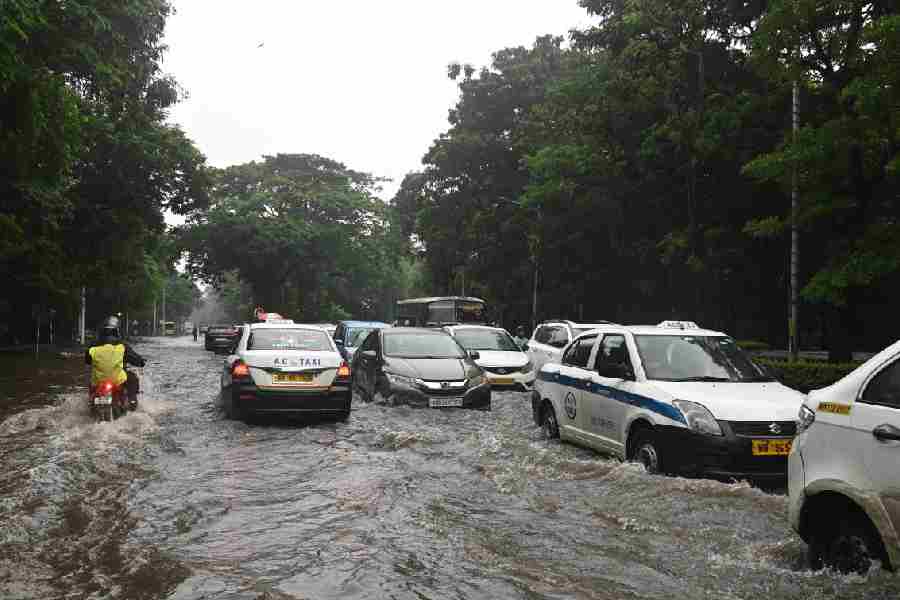
Kolkata Rain Causes Waterlogging and Traffic Chaos for Second Day

Heavy Rain Waterlogs Delhi, Snarls Traffic Near Airport

Heavy rain to continue across southern and eastern India

IIT Hyderabad Professor Kirti Chandra Sahu Wins National Teachers’ Award

Dr Gopinath K Takes Charge As DMRL Director In Hyderabad

India’s AI Strategy Must Move Beyond the Application Layer

India and Japan Deepen Defence Technology and Security Cooperation

India Builds Sovereign AI Through Infrastructure, Regulation and Partnerships