1 month ago
Taxpayers Confused by ITR Filing Reason

Taxpayers in India are often confused about the 'Reason for Filing ITR' question when submitting their income tax returns.
The confusion arises because the legal language used in the Income Tax Act is different from what taxpayers understand as their reasons for filing.
Tax experts explain that taxpayers should carefully read and select the option that best fits their situation to avoid any issues.
They also advise reviewing important documents like Form 26AS, the Annual Information Statement (AIS), and Form 16 before submitting returns.
The deadline for filing income tax returns is July 31.

Taxpayers find the 'Reason for Filing ITR' question confusing due to legal language.
Experts advise selecting the option that best reflects the taxpayer's situation.
Incorrect selection may lead to scrutiny, but the field is mainly for identifying the statutory basis for filing.
Review Form 26AS, AIS, and Form 16 before submitting returns.
The deadline for ITR filing is July 31.
- Who
- Taxpayers and tax experts
- What
- Confusion about the 'Reason for Filing ITR' question in income tax returns
- Where
- India
- When
- During the ITR filing period, with the deadline on July 31
- Why
- To ensure accurate and appropriate selection of the reason for filing income tax returns
Taxpayers' Perspective
Tax Experts' Perspective
Understanding the Question
Taxpayers' Perspective
Taxpayers find the 'Reason for Filing ITR' question confusing due to the legal language used.
Tax Experts' Perspective
Tax experts believe the confusion arises from a mismatch between taxpayers' practical reasons and the legal language in the Income Tax Act.
Choosing the Right Option
Taxpayers' Perspective
Taxpayers often pick the first option that seems to apply, which may not be correct.
Tax Experts' Perspective
Experts advise taxpayers to carefully read and select the option that best reflects their situation to avoid scrutiny.
Impact of Incorrect Selection
Taxpayers' Perspective
Taxpayers fear that selecting the wrong reason could affect their tax liability or invite scrutiny.
Tax Experts' Perspective
Experts clarify that the field is intended to identify the statutory basis for filing and does not significantly impact tax liability.
Key facts
- Claiming a tax refund
- If you want to get back excess TDS or tax paid.
- Carrying forward losses
- If you want to carry forward losses from shares, mutual funds, business, etc.
- Mandatory filing
- If the Income Tax Act requires you to file even if your income is below the exemption limit.
- Others
- If none of the above apply but you still want to file your ITR.
- Filing Deadline
- July 31
- Expert Advice
- Review Form 26AS, Annual Information Statement (AIS), and Form 16 before submitting returns.
Quotes
CA Siddharth Maurya
Managing Director, Vibhavangal Anukulkara Pvt Ltd
“"The very common confusion about the 'Reason for Filing ITR' comes from a mismatch between what a taxpayer basically means to do, like doing a civic duty, and the heavy, intimidating language inside the Income Tax Act."”
 businesstoday.in
“"The most common confusion being observed is around the newly introduced 'reason for filing ITR' field. Many taxpayers assume that selecting an incorrect reason could affect their tax liability or invite scrutiny."”
businesstoday.in
Sources
Related news

Gujarat launches DNA-based sports talent hunt for 2030 Commonwealth Games

The Rise of Skill-Based Hiring in India's Evolving Job Market

Coders drive GPU laptop demand in India's premium PC market

WhatsApp announces AI tool to detect scammers on platform

New model maps Delhi’s traffic noise across urban landscape

Large Digital Payments Draw Scrutiny Through Mismatches, Not Modes

Defective ITR notices: 15-day deadline to respond, revised return options

Can UPI, NEFT, RTGS transactions trigger income tax notices?

ITR Refund: 5 Reasons That May Trigger a Tax Notice
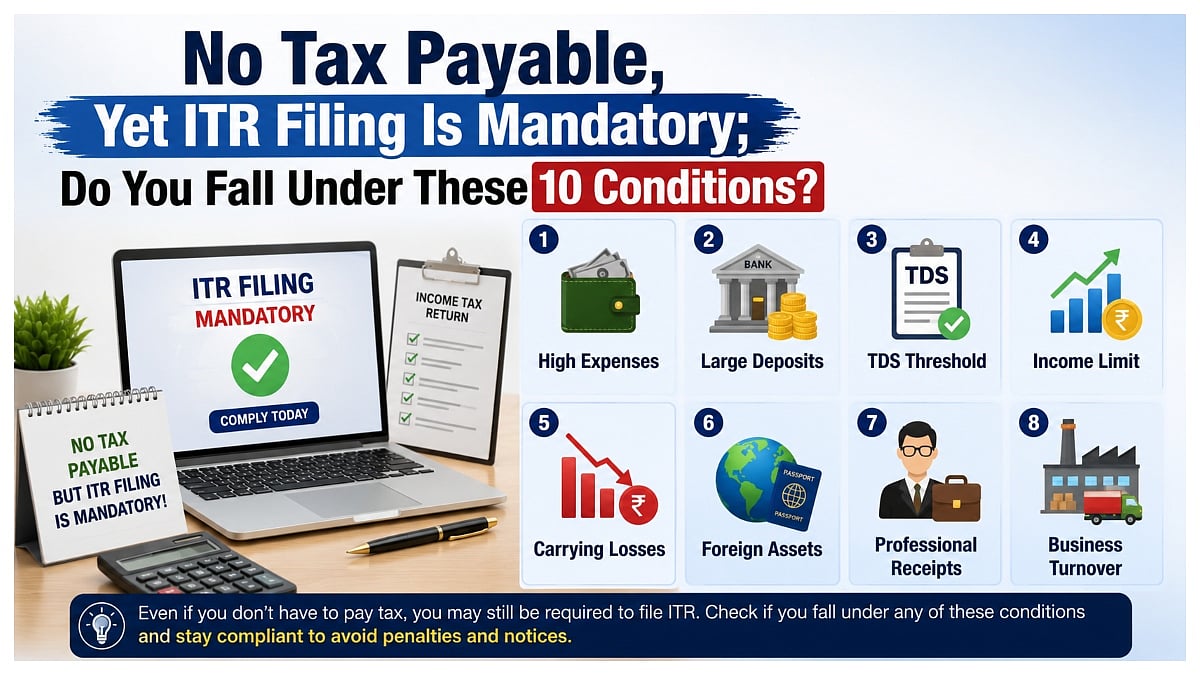
ITR Filing Mandatory Even Without Tax Payable: 10 Conditions