1 month ago
ITR Filing Mandatory Even Without Tax Payable: 10 Conditions
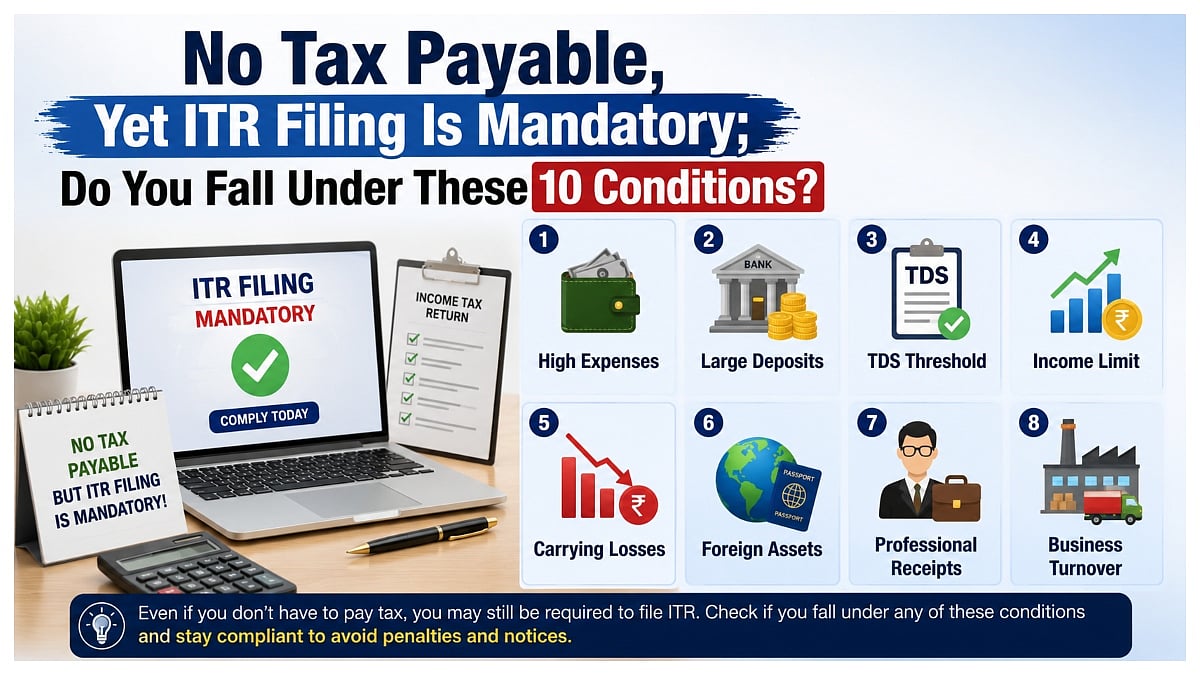
If you live in India and earn money, you usually have to file a tax return called an ITR.
Even if you don’t owe any tax, you still have to file if you meet certain rules.
For example, if you pay a lot of electricity bills, travel abroad for a lot of money, or keep a lot of money in bank accounts, you must file.
Also, if you get a lot of money from work, run a business, or have losses you want to use later, you need to file.
The government wants to know about these big expenses and deposits so they can keep track of everyone’s finances.
So, check your bills, bank deposits, travel costs, and business receipts before deciding you don’t need to file.

File ITR if electricity bills reach ₹1 lakh or more in a year.
File ITR if foreign travel expenses reach ₹2 lakh or more.
File ITR if savings account deposits reach ₹50 lakh or more, or current account deposits reach ₹1 crore or more.
File ITR if TDS/TCS collected is ₹25,000 or more (₹50,000 for seniors).
File ITR for incomes, losses, foreign assets, professional receipts over ₹10 lakh, or business turnover over ₹60 lakh.
- Who
- Indian taxpayers
- What
- Mandatory filing of Income Tax Return (ITR) under specific conditions
- Where
- India
- When
- Fiscal year 2025-26
- Why
- To comply with tax rules even when no tax is payable
Key facts
- Basic exemption limit (old regime)
- ₹2.5 lakh
- Basic exemption limit (new regime)
- ₹4 lakh
- Electricity bill threshold
- ₹1 lakh
- Foreign travel expense threshold
- ₹2 lakh
- Savings account deposit threshold
- ₹50 lakh
- Current account deposit threshold
- ₹1 crore
- TDS/TCS threshold
- ₹25,000 (₹50,000 for seniors)
- Professional receipts threshold
- ₹10 lakh
- Business turnover threshold
- ₹60 lakh
Sources
Related news
Filing ITR: A Responsibility and Pride

Who Must File Income-Tax Returns by 31 October?

Why Previous ITR-4 Filers May Need ITR-3 in AY 2026-27

Seven Freelancer Tax Filing Mistakes Before August 31 Deadline

Audit and Non-Audit Taxpayers Face Different ITR Deadlines

ITR guide for freelancers: correct form before August 31 deadline

Large Digital Payments Draw Scrutiny Through Mismatches, Not Modes

Defective ITR notices: 15-day deadline to respond, revised return options

Can UPI, NEFT, RTGS transactions trigger income tax notices?

ITR Refund: 5 Reasons That May Trigger a Tax Notice