2 weeks ago
India’s US Export Share Holds Near 20% Despite Tariffs
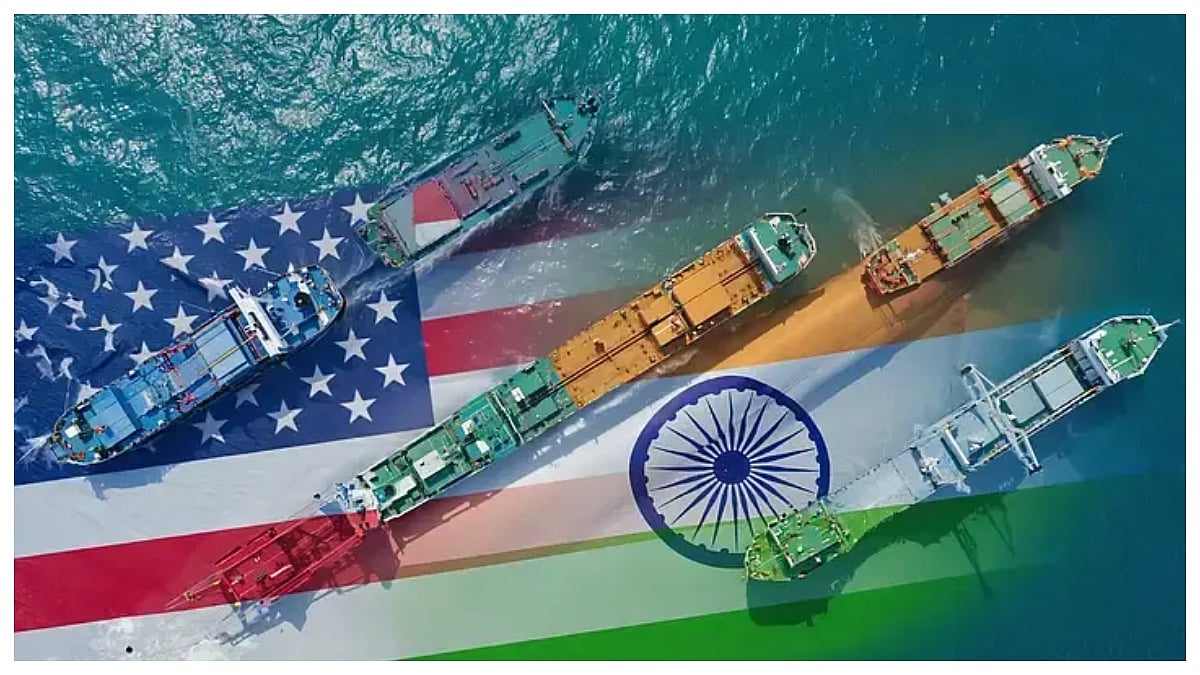
The United States still buys about one-fifth of the goods India sells to other countries.
This remained true even after President Donald Trump’s government placed high tariffs on Indian products.
The tariffs reached 50% at one point and later fell to 10%.
India has been trying to sell more products in other countries so it does not depend so much on the United States.
It signed trade agreements with the United Kingdom, the European Union, Oman and New Zealand.
India is also adding about 500 kinds of products, especially electronics, engineering goods and marine products.
Exports to China grew quickly, but they were still much smaller than exports to the United States.
Experts say it could take two or three years for this trade diversification to make a big difference.

The United States accounted for about 20% of India’s exports in the 12 months through July.
Tariffs on Indian goods reached as high as 50% before falling to 18% and then 10%.
India concluded trade agreements with the United Kingdom, European Union, Oman and New Zealand.
Exports to China rose 42% to $21.5 billion, compared with $88.5 billion shipped to the United States.
Export officials say diversification is necessary, but meaningful results may take at least two to three years.
- Who
- India, the United States, Indian exporters, Prime Minister Narendra Modi’s government and Commerce Secretary Rajesh Agrawal.
- What
- India’s share of exports going to the United States remained near 20% despite tariffs and efforts to diversify trade.
- Where
- The trade involves India, the United States, China and other markets in Europe, Asia, the Middle East, Africa and Latin America.
- When
- The data covers the 12 months through July, after a year of tariff uncertainty and changing US duties.
- Why
- India is seeking to reduce dependence on a single market and limit risks from tariffs, global uncertainty and changing trade patterns.
Diversification Push
US Market Dependence
Need to reduce trade risk
Diversification Push
Indian officials and exporters say new trade agreements and additional markets can reduce reliance on one destination and help manage tariff and global-trade risks.
US Market Dependence
The United States remains the most attractive market because of its size and demand for electronics, engineering goods, pharmaceuticals, gems and jewelry, and textiles.
Speed of market change
Diversification Push
India is pursuing agreements across Europe, Asia, the Middle East, Africa and Latin America while expanding its export product base.
US Market Dependence
Ajay Sahai said diversification will take at least two to three years to produce meaningful results, and several fast-growing markets remain much smaller than the United States.
Manufacturing opportunity
Diversification Push
Pritam Banerjee said free trade agreements and deeper integration with major economies could help India attract manufacturing shifting away from China.
US Market Dependence
Banerjee warned that India’s opportunity to attract this manufacturing is narrow, creating time pressure for the country.
Key facts
- US export share
- About 20% of India’s exports in the 12 months through July.
- Earlier US share
- The United States accounted for 17.4% of India’s exports in 2022-23.
- US tariff rate
- Tariffs on Indian goods reached as high as 50%, later fell to 18%, and currently stand at 10%.
- US export value
- India shipped $88.5 billion in goods to the United States during the period.
- China export value
- Exports to China rose 42% to $21.5 billion during the period.
- Trade agreements
- India concluded or reached agreements with the United Kingdom, European Union, Oman and New Zealand.
- Diversification timeline
- The Federation of Indian Export Organizations said meaningful results may take at least two to three years.
- New product lines
- India identified about 500 additional export product lines, mainly in electronics, engineering and marine products.
Quotes
Rajesh Agrawal
Commerce Secretary of India
“"The focus is on engaging with economies that collectively account for over two-thirds of global GDP," "In an environment of global uncertainty and shifting trade patterns, FTAs also serve as institutional anchors for trusted economic partnerships."”
 NDTV
NDTV
“"the industry has become extremely cautious of the fact that they have to diversify as a strategy to de-risk," "and from that perspective, I think it's a very good lesson the US tariff war taught us."”
NDTV
Sources
Related news
Indian Exports to US Stay Steady Despite Tariff Pressures
India-US Trade Pact Talks Intensify Amid Exporter Tariff Concerns
India urged to review trade strategy amid US tariff turmoil
Canada’s U.S. Tariff Fight Opens Door for India Partnership
India, US Continue Trade Talks Amid Tariff Uncertainty

India Replaces Sri Lanka as 2027 Women’s Champions Trophy Host
Mitsubishi Revives Pajero With 201PS Fifth-Generation SUV

IIM-Born CEO Says Australia’s Everyday Life Runs on Trust
UN Report Says 1.5°C Overshoot, Return Remains Possible

Uday Kotak Warns Global Bond Markets Face Roller-Coaster Volatility