1 week ago
India’s Chief Justice Sets Limits on AI in Courts
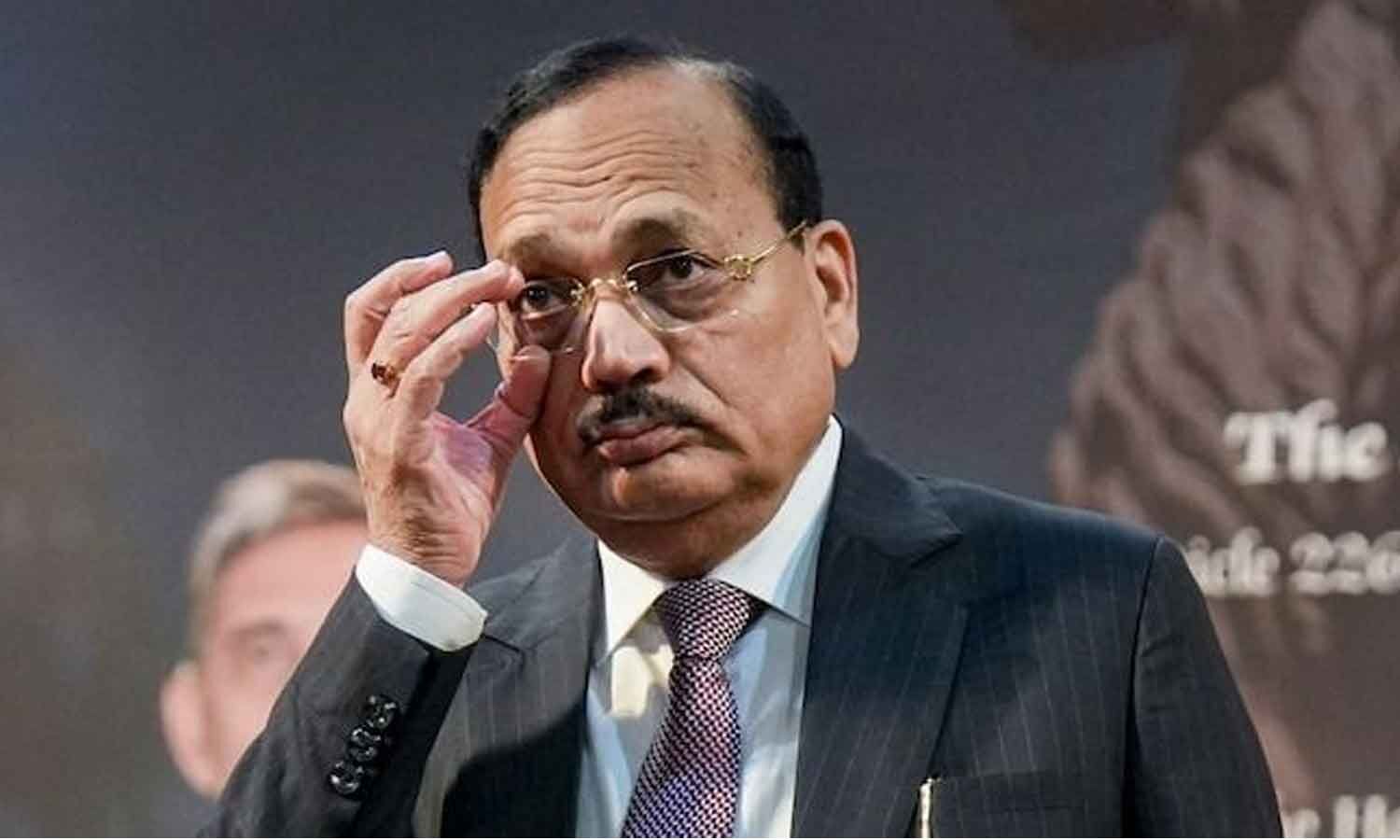
India’s Chief Justice Surya Kant said computers can help courts with some tasks.
They can search for legal information, translate judgments and help people find case updates and procedures.
They may also help with scheduling and writing down spoken words.
However, computers should not make important decisions about people in court.
Judges must decide whether witnesses are believable and whether someone should receive bail.
Kant said human judgment and the law must remain central.
He discussed these ideas with German judge Ulrich Herrmann.
They also talked about mediation and ways to make courts easier to use.
India may create a permanent group to supervise AI in the judiciary.

Chief Justice of India Surya Kant said AI may support judicial reasoning but cannot replace judicial conscience or human judgment.
Indian courts use AI for legal research, translating judgments into 16 languages and helping citizens access case information and procedures.
Draft rules would permit AI for scheduling, transcription and translation but prohibit it from assessing credibility, flight risk, recidivism or bail eligibility.
Kant proposed a permanent apex body to supervise AI adoption and accountability in the judiciary.
Kant and German judge Ulrich Herrmann discussed mediation, digital justice and possible institutional cooperation between India and Germany.
- Who
- Chief Justice of India Surya Kant and Ulrich Herrmann, presiding judge of Germany’s Federal Court of Justice at Karlsruhe.
- What
- They discussed responsible AI use in courts, digital justice, mediation and possible institutional cooperation.
- Where
- At a bilateral meeting involving Indian and German judicial representatives; Kant was on a four-day visit to Germany and the United Kingdom.
- When
- Wednesday, August 26; the reports do not specify the year.
- Why
- To exchange experience on court technology, judicial administration, access to justice, mediation and cooperation between judicial institutions.
Key facts
- Core principle
- AI may augment judicial reasoning but cannot replace judicial conscience, careful adjudication or human judgment.
- Current uses
- AI is used for legal research, translating judgments into 16 languages and providing case-status and procedural information.
- Permitted functions
- Draft regulations allow administrative uses such as scheduling, transcription and translation.
- Prohibited assessments
- The draft rules bar AI from assessing witness credibility, flight risk, recidivism or bail eligibility.
- Oversight proposal
- A permanent apex body has been proposed to supervise AI adoption and accountability.
- Mediation topics
- The discussions covered cross-border commercial mediation, recognition and enforcement of mediated settlements, and mediator training.
- Possible cooperation
- India and Germany discussed an MoU or another arrangement involving court technology, AI, mediation and digital judicial processes.
Quotes
Surya Kant
Chief Justice of India
“Artificial intelligence may augment judicial reasoning, but it cannot substitute judicial conscience. Draft regulations from the Supreme Court's AI Committee permit administrative uses such as scheduling, transcription and translation, while barring AI from assessing witness credibility, flight risk, recidivism or bail eligibility; a permanent apex body has been proposed to supervise the adoption and accountability of AI.”
 theprint.in
 thehansindia.com
 deccanchronicle.com
“Our two judiciaries share the same underlying responsibility: to preserve judicial independence and public confidence while adapting our institutions to new forms of litigation and new expectations of access.”
theprint.in
thehansindia.com
deccanchronicle.com
Sources

Related news

India’s Education System Faces an Uneasy AI Reckoning
CJI Urges Law Universities to Lead Legal Tech Integration
JudgeGPT Trial Shows AI’s Potential to Speed Judicial Justice
Allahabad High Court Judge: AI Must Not Replace Human Consciousness
Chief Justice: Judiciary Doesn't Take Sides, Constitution Is Supreme

CJI Surya Kant Says India Can Become Global Mediation Centre