1 hr ago
Tesla’s Cybercab Advances Driverless Robotaxi Plans in Austin

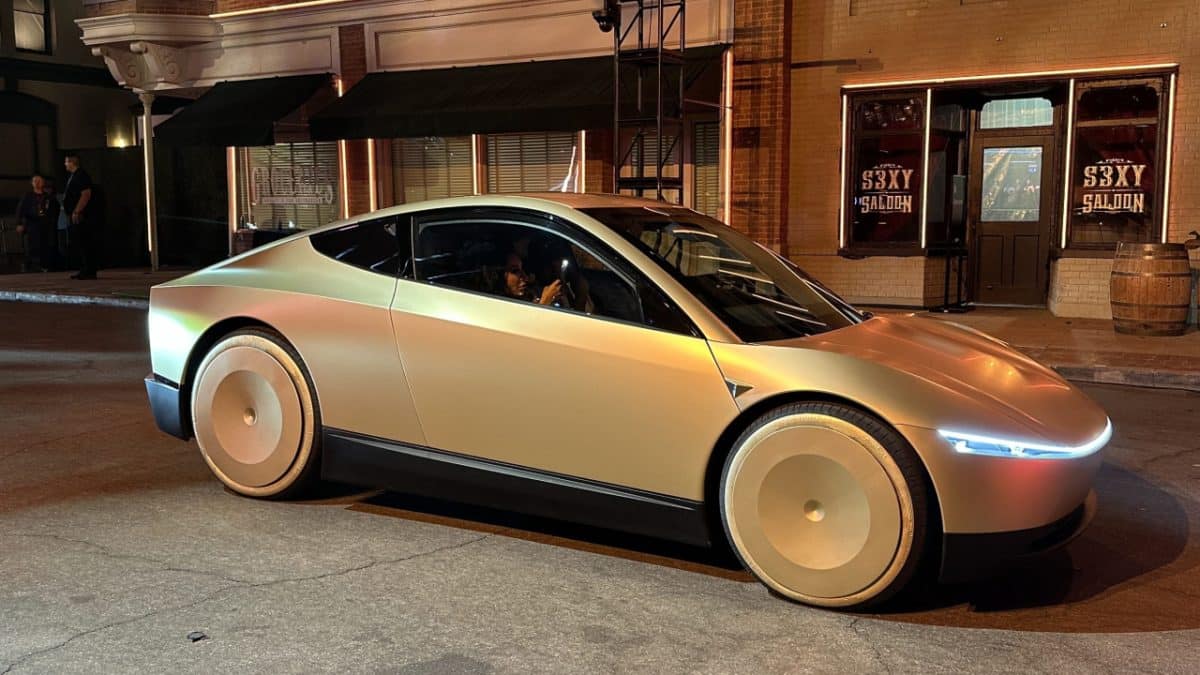
Tesla is developing a taxi that can drive without a person controlling it.
The vehicle is called the Cybercab.
It has two seats and reportedly has no steering wheel or pedals.
Tesla has begun testing a production version in Austin.
The company plans to rely on cameras to help the vehicle understand the road.
Some experts think this could make the robotaxi cheaper to build and operate.
Waymo says vehicles using more sensors can be safer and better for self-driving.
Nevada has approved Tesla’s application to use as many as 5,000 robotaxis in Las Vegas.

Tesla is testing its unmanned Cybercab robotaxi in Austin, Texas.
The two-seat vehicle is designed without a steering wheel or pedals.
Tesla says the production Cybercab will use cameras rather than a broader sensor suite.
Experts believe its lower hardware costs could help Tesla compete with Alphabet’s Waymo.
Nevada approved Tesla’s application for up to 5,000 robotaxis in Las Vegas.
- Who
- Tesla and Elon Musk are developing and promoting the Cybercab, while Alphabet’s Waymo is a competing robotaxi company.
- What
- Tesla has begun engineering tests of a two-seat, driverless Cybercab without a steering wheel or pedals.
- Where
- The Cybercab is being tested in Austin, Texas, with a proposed deployment in Las Vegas, Nevada.
- When
- Testing was reported on June 30, 2026; Tesla’s no-steering-wheel statement was posted on September 2, 2026.
- Why
- Tesla aims to create an economical, scalable robotaxi and potentially expand it into a full-scale cab-hailing service.
Tesla’s Camera-Based Approach
Waymo’s Sensor-Based Approach
Cost and scalability
Tesla’s Camera-Based Approach
Experts cited in the article believe Tesla’s camera-based system could reduce costs and make the Cybercab easier to scale.
Waymo’s Sensor-Based Approach
Waymo uses a more extensive sensor suite, which the article describes as more expensive but presents as an alternative approach.
Safety
Tesla’s Camera-Based Approach
Tesla is proceeding with a camera-based design for its driverless Cybercab.
Waymo’s Sensor-Based Approach
Waymo has argued that sensor-based autonomous vehicles are better and safer than vehicles relying on cameras alone.
Market impact
Tesla’s Camera-Based Approach
Experts have speculated that a lower-cost Cybercab could disrupt the robotaxi market and pressure competitors.
Waymo’s Sensor-Based Approach
Waymo is identified as a major competitor that could face pressure from Tesla’s planned vehicle and operations.
Key facts
- Vehicle
- Tesla Cybercab, a two-seat autonomous taxi
- Controls
- Tesla’s robotaxi account said the vehicle has no steering wheel or pedals
- Technology
- The Cybercab is described as using cameras rather than a broader sensor suite
- Testing location
- Austin, Texas
- Las Vegas approval
- The Nevada Transportation Authority approved an application covering 5,000 robotaxis
- Potential competitor
- Alphabet’s Waymo
- Commercial uncertainty
- The article says it remains unclear whether Tesla will expand the vehicle into a full-scale cab-hailing application
Quotes
Tesla Robotaxi
Tesla’s Robotaxi account on X, formerly Twitter
“No steering wheel, no pedals”
 thestatesman.com
Sources
Related news
Tesla Cybercab Launch In Austin Faces Safety Questions
Uber and Wayve Launch London’s First Public Robotaxi Service

Amazon’s Zoox Robotaxis Begin Road Operations Amid Rider Unease
Waymo Picks Munich for First EU Robotaxi Service

Tesla Reportedly Discontinues Solar Roof Tiles Amid AI Power Shift

Wall Street Week Ahead: Jobs, AI Earnings and Tesla Cybercab
Uber Cuts 3,300 Jobs While Preparing for Robotaxis

Tesla Expands Ahmedabad Network With Body Shop, Model Y Drives
Ather Energy Stock Surges 130%, Outpacing Tesla and BYD
Pakistan’s Remote-Controlled Driverless Car Crashes Into Police Van