9 months ago
Supreme Court: Property Registration Doesn't Prove Ownership, Blockchain Suggested
Imagine you buy a toy and get a receipt.
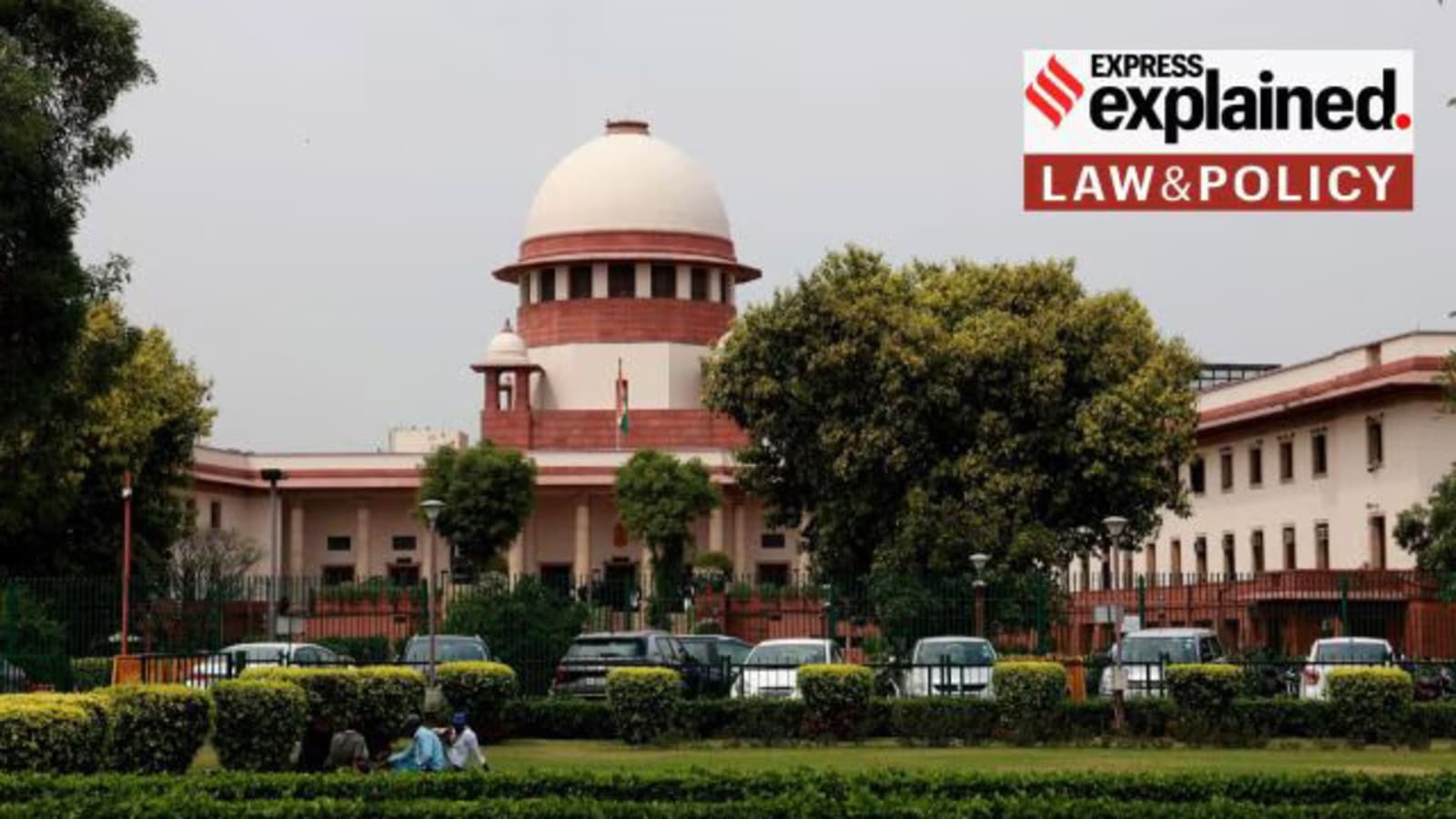
The Supreme Court said that like a receipt for a toy, a property registration paper only shows that a deal happened.
It doesn't automatically mean you are the real owner.
The court also said that India's system for keeping track of who owns which piece of land is a bit weak and sometimes causes lots of arguments in court.
To make things better and more trustworthy, the court suggested using a special computer technology called blockchain.
This technology can record everything in a very secure and clear way.
The court has asked a special group to study how to use this technology to improve property registration in the future.

Supreme Court stated property registration does not equate to proof of ownership.
Two rulings this year clarified that sub-registrars' role is to record transactions, not determine ownership.
The court described India's land record system as 'structurally fragile'.
Blockchain technology was proposed as an 'alternative paradigm' for property registration.
The Law Commission was asked to study integrating blockchain into the land registration regime.
- Who
- Supreme Court of India
- What
- Reiterated that property registration does not prove ownership and suggested blockchain technology for land records.
- Where
- India (specifically addressing rules in Tamil Nadu and Bihar)
- When
- November 7 (and April 2025, referring to previous judgments)
- Why
- To clarify the limited role of sub-registrars in property transactions and address the 'structurally fragile' Indian land record system.
State Government Intentions
Supreme Court Ruling
Sub-Registrar's Role
State Government Intentions
States like Tamil Nadu and Bihar introduced rules requiring sub-registrars to check for previous ownership documents or mutation records, intending to prevent fraudulent sales and ensure land records are up-to-date.
Supreme Court Ruling
The Supreme Court ruled that sub-registrars have a ministerial role to simply record transactions and verify paperwork. They are not empowered to ascertain ownership or verify previous titles, as this function belongs to civil courts.
Impact of New Rules
State Government Intentions
The state rules aimed to prevent fraud and synchronize property records with actual land holdings.
Supreme Court Ruling
The Supreme Court found these rules legally flawed and practically impossible to follow, creating bureaucratic hurdles and restricting the freedom to hold and dispose of property, thus being arbitrary and ultra vires to the parent law.
Key facts
- Key Legislation
- Transfer of Property Act, 1882; Indian Stamp Act, 1899; Registration Act, 1908
- Supreme Court Clarification
- Property registration records a transaction, not ownership.
- Current System
- Presumptive title system, where registered documents create a presumption of ownership that can be challenged in court.
- Challenged State Rules
- Tamil Nadu's Rule 55A and Bihar's requirement for mutation proof (jamabandi).
- Suggested Technology
- Blockchain technology for a more secure, transparent, and tamper-proof registration system.
- Recommended Action
- Law Commission of India to study integration of blockchain into land registration.
Quotes
The Supreme Court Bench
The Supreme Court Bench
“While we appreciate the intention of the State to synchronise the registrable document with real time land holding, there is a big missing link given that the process of mutation and the process of survey and settlement are nowhere near completion.”
 indianexpress.com
“It is not the function of the Sub-Registrar or Registering Authority to ascertain whether the vendor has title to the property which he is seeking to transfer.”
indianexpress.com
The Court
The Court
“Digitisation is the process of creating an electronic copy of the existing paper record, and if the original record is inaccurate, incomplete or subject to dispute, the digital version will simply perpetuate the flaw.”
indianexpress.com
“more secure, transparent and tamper-proof”
indianexpress.com
Sources
Related news
India Needs More Meaningful MPs, Not Just More Seats
Supreme Court Keeps Hanging, Leaves Door Open For Review

Supreme Court Issues Notice On Paper Leak Property Confiscation PIL

Supreme Court Rejects Plea To Replace Death By Hanging

NALSAR row puts Bar Council of India in focus