1 week ago
Supreme Court Keeps Hanging, Leaves Door Open For Review
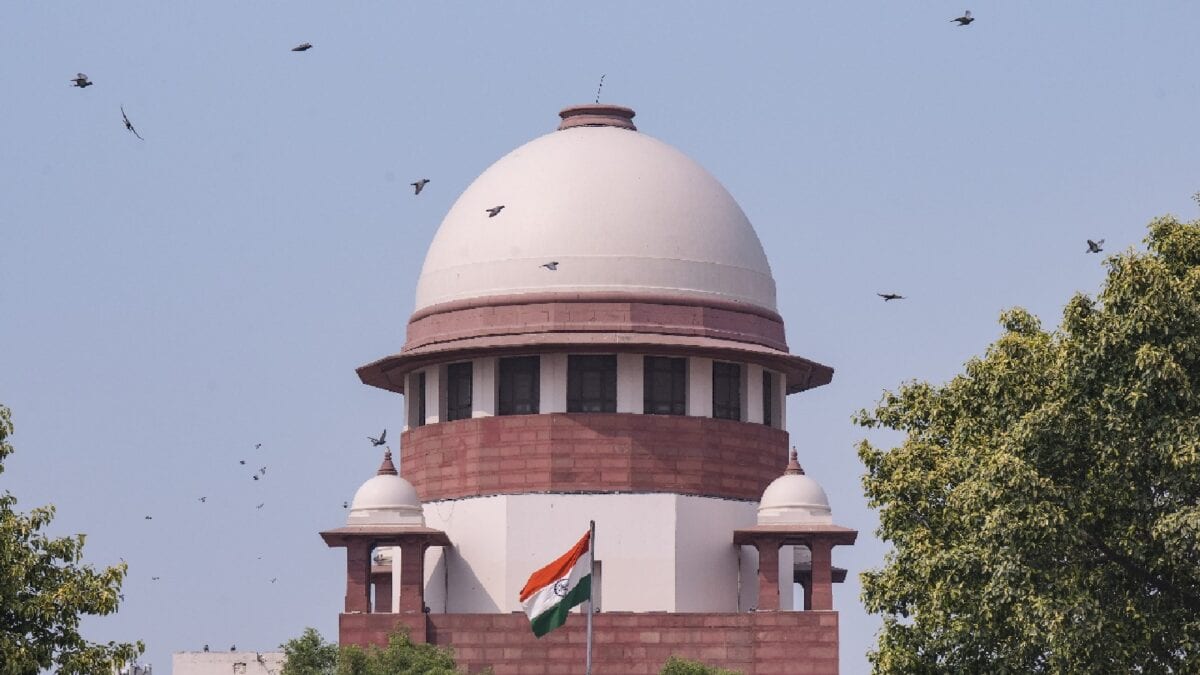
India’s Supreme Court decided that hanging can still legally be used for civilian executions.
A lawyer had argued that hanging can be painful, unpredictable and against a person’s right to dignity.
The court said the evidence presented was not strong enough to change an earlier 1983 ruling.
That earlier ruling found that properly conducted hanging was constitutional.
Indian law therefore continues to require hanging for civilian death sentences.
Military courts can also allow execution by shooting.
Some people support lethal injection because it may appear more clinical.
The government says lethal injection can also go wrong and that hanging has been safer and quicker in India.
The court left open the possibility of reconsidering the issue if better scientific evidence becomes available.

The Supreme Court dismissed a petition challenging hanging as India’s method of civilian execution.
The bench ruled that existing evidence did not justify revisiting its 1983 decision in Deena vs Union of India.
Section 393(5) of the Bharatiya Nagarik Suraksha Sanhita requires condemned civilians to be hanged by the neck until death.
The court said dignity protections under Article 21 continue to apply to prisoners on death row.
The ruling allows future review if new scientific, medical or empirical evidence about execution methods emerges.
- Who
- The Supreme Court bench of Justices Vikram Nath and Sandeep Mehta; senior advocate Rishi Malhotra filed the challenge.
- What
- The court dismissed a petition seeking to replace or abolish hanging as India’s prescribed civilian execution method.
- Where
- India, before the Supreme Court.
- When
- The ruling was issued on Tuesday, and the report was last updated on August 20, 2026.
- Why
- The petition argued that hanging can cause unnecessary pain and violate the constitutional right to dignity under Article 21; the court found the material insufficient to overturn the existing precedent.
Arguments For Changing The Method
Arguments For Retaining Hanging
Pain and predictability
Arguments For Changing The Method
The petitioners argued that hanging may fail to cause immediate unconsciousness, potentially resulting in strangulation or other prolonged suffering.
Arguments For Retaining Hanging
The earlier Supreme Court ruling held that properly administered hanging causes death quickly and does not involve unconstitutional brutality or degradation.
Lethal injection as an alternative
Arguments For Changing The Method
Supporters say lethal injection could provide a less visibly violent, more clinical and potentially quicker death.
Arguments For Retaining Hanging
The Union government cited botched lethal injections in the United States and argued that lethal injection is not necessarily safer or more humane.
Scientific evidence and legal policy
Arguments For Changing The Method
The petition sought reconsideration of the 1983 precedent, relying on later scientific arguments and a study of historical hangings.
Arguments For Retaining Hanging
The court said the evidence was insufficient to reopen the precedent, while noting that Parliament retained hanging in the Bharatiya Nagarik Suraksha Sanhita.
Key facts
- Current civilian method
- Hanging by the neck until death under Section 393(5) of the Bharatiya Nagarik Suraksha Sanhita.
- Earlier precedent
- The 1983 Supreme Court judgment in Deena vs Union of India upheld hanging as constitutional when properly administered.
- Constitutional protection
- The court said Article 21 dignity protections continue to apply to prisoners on death row.
- Military alternatives
- The Army Act and Air Force Act permit death sentences imposed by court-martial to be carried out by hanging or shooting.
- Lethal-injection proposal
- The Law Commission of India recommended lethal injection as an alternative in its 187th Report in 2003.
- Government position
- The Union government argued in 2018 that hanging was safer and quicker and reduced the risk of a lingering death.
- Future review
- The court said future scrutiny remains possible if new scientific, medical or empirical evidence emerges.
Quotes
Justices Vikram Nath and Sandeep Mehta
Bench of Supreme Court justices
“The dismissal does not foreclose any future scrutiny based on scientific knowledge and subsequent developments.”
 news18.com
Sources
Related news

Supreme Court Rejects Plea To Replace Death By Hanging

Supreme Court Retains Hanging, Leaves Door Open For Alternatives
Supreme Court bins plea to replace death by hanging

Supreme Court Upholds Execution by Hanging, Stresses Dignity
India Retains Hanging as Global Executions Rise Despite Debate

SC Verdict: Hanging Stays, Centre Can Explore Alternatives

Supreme Court Questions IPS Deputation for CAPF Leadership Positions
Supreme Court Quashes 20-Year Conviction, Reaffirms Juvenile Legal Protections

Two Years After RG Kar Doctor's Rape-Murder, Case Remains Unresolved

ED widens Chhattisgarh probes with two arrests and searches

Delhi High Court Orders Madhya Pradesh to Pay Advocate Dues