

1 week ago
Ladakh Diverts Glacier Water to Revive 1,000 Acres

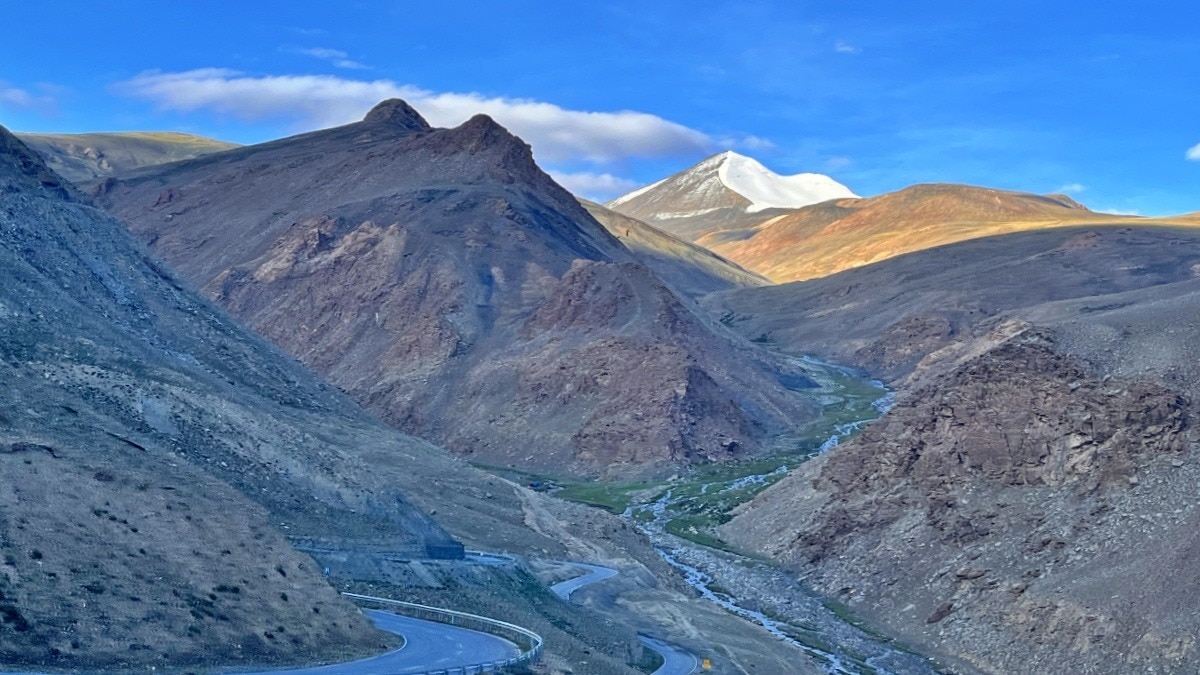
Ladakh has found a way to use water from melting glaciers and snow.
Much of this water was flowing toward the Indus River instead of helping farms.
Officials dug two trenches to move some of the water into the Igoo-Phey Canal.
The canal should now receive much more water than before.
This may give farmers in 12 villages water every day instead of on a roster.
More than 1,000 acres of dry farmland could benefit.
Officials expect better harvests, farm incomes, and rural employment.
Vinai Kumar Saxena said similar projects could be used in other parts of Ladakh.

About 90 million litres of glacier and snowmelt water flow daily through Stok Nallah toward the Indus River.
Two trenches diverted approximately 26 of the channel’s 36.60 cusecs into the Igoo-Phey Canal.
The canal’s water supply is expected to increase from about 50 cusecs to nearly 80 cusecs.
More than 1,000 acres across 12 villages could receive improved irrigation and daily water access.
Ladakh plans to explore similar low-cost water-diversion projects elsewhere in the Union Territory.
- Who
- The Ladakh administration, its Irrigation and Flood Control Department, Lieutenant Governor Vinai Kumar Saxena, and farmers in 12 villages.
- What
- Officials diverted approximately 26 cusecs of glacier and snowmelt water from Stok Nallah into the Igoo-Phey Canal.
- Where
- At Stok Nallah in the Leh area of Ladakh, with water directed toward the Igoo-Phey Canal serving Igoo and Phey villages.
- When
- The diversion trenches were created on August 14; the articles do not specify the year.
- Why
- To use water that had been flowing toward the Indus River, improve irrigation, strengthen water security, and support agriculture.
Key facts
- Daily water flow
- Stok Nallah was assessed at 36.60 cusecs, equivalent to nearly 90 million litres over 24 hours.
- Water diverted
- Approximately 26 cusecs was directed toward the canal: 19 cusecs for Igoo and seven cusecs for Phey.
- Remaining water
- Authorities are planning how to use the remaining 10 cusecs.
- Canal supply
- The Igoo-Phey Canal’s flow is expected to rise from around 50 cusecs to nearly 80 cusecs.
- Canal history
- The 43-kilometre Igoo-Phey Canal was constructed in phases between 1979 and 2005 and had suffered from inadequate supply.
- Expected beneficiaries
- The additional water could provide daily supplies to 12 villages and expand irrigation across more than 1,000 acres.
- Project cost and expansion
- The diversion used basic earthwork and a JCB without capital expenditure; the administration plans to examine similar projects elsewhere in Ladakh.
- Reported canal scope
- One statement describes the water as being diverted into the Igoo-Phey Canal, while another refers to the Igoo-Phey and Yokyur canals.
Quotes
Irrigation and Flood Control Department official
An official involved in Ladakh’s irrigation and flood-control work
“By intercepting and utilising this daily flow of 90 million litres, the administration has proven the feasibility of large-scale water diversion to bolster the region's cold desert agriculture. Crucially, this intervention will substantially augment the total water flow in the Igoo-Phey Canal, increasing it from the present 50 cusecs to nearly 80 cusecs.”
 businesstoday.in
 livemint.com
“On the directions of LG on August 14, the Irrigation and Flood Control Department successfully diverted excess glacier water from the main water channel of Nallah to the Igoo-Phey Canal by creating two trenches using a JCB.”
livemint.com

Vinai Kumar Saxena
Lieutenant Governor of Ladakh.
“This is a monumental step toward our vision of a Green, Water-Secure and Self-Sustaining Ladakh.”
businesstoday.in
Sources
Related news

Ladakh Diverts Glacier Water to Revive 1,000 Acres
Devadula Supplies Irrigation Water as Dry Spell Hits Crops
Jagadish Reddy Demands Immediate Nagarjuna Sagar Water Release for Farmers
Farmers stage noose protest demanding KC Canal water release

Don't Waste a Single Drop of Irrigation Water: Andhra Minister
Fadnavis Visits Hospitalized Anna Hazare, Shares Irrigation Approval

Delhi to develop Yamuna bank on Sabarmati Riverfront lines
Delhi Approves New Expressway Over Najafgarh Drain
