1 week ago
Young Indians Turn to 9-Carat Jewellery as Gold Prices Rise

Gold has become much more expensive in India.
Because of this, some young people are choosing jewellery made with less pure gold.
This jewellery is called 9-carat gold and contains 37.5% pure gold.
The lower gold content usually makes it cheaper to buy.
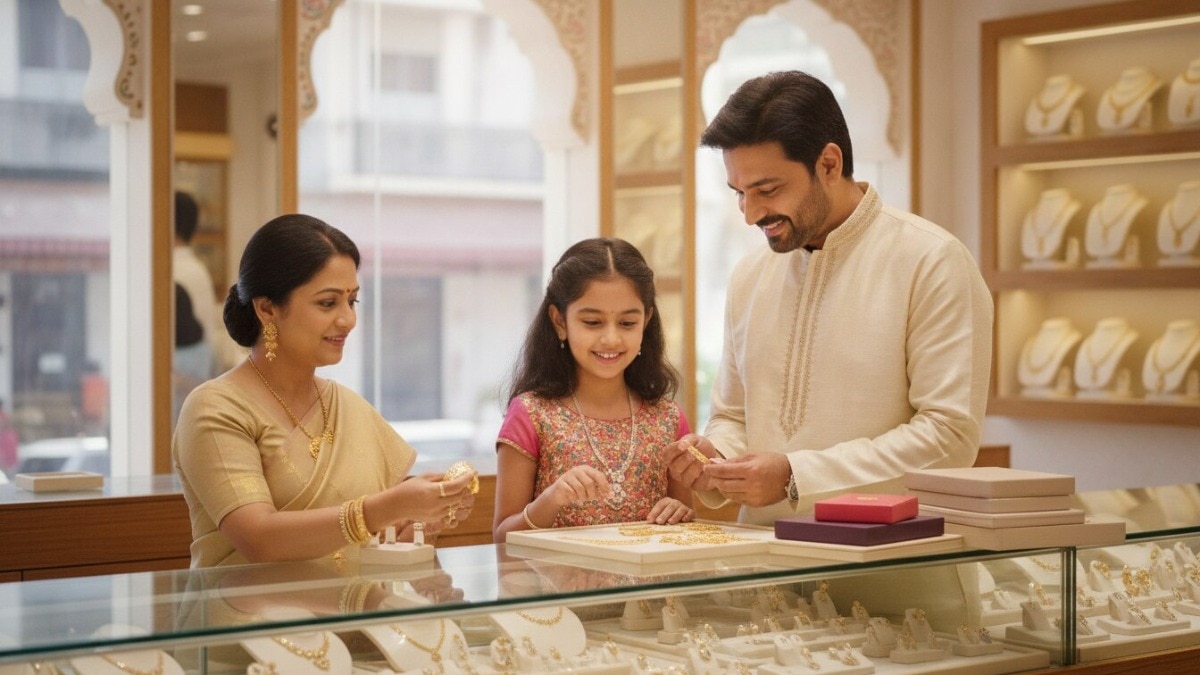
Jewellers say young workers, college students and first-time buyers are interested in it.
Some stores are already getting a meaningful share of their sales from 9-carat jewellery.
However, it is still a small part of the overall market.
People generally continue to prefer 22-carat jewellery for weddings, festivals and traditional purchases.
Experts expect 9-carat jewellery to become more popular as an affordable lifestyle product.

Gold prices rose 52% in FY26, while Indian gold consumption declined 21% and is projected to fall another 20% in FY27.
Jewellers say newly approved 9-carat hallmarking is creating a lower-cost market, though 9-carat jewellery remains a small share of overall sales.
CaratLane reports that 9-carat jewellery contributes about 5–10% of its jewellery sales across categories.
Kama Jewelry says 9-carat products account for more than 25% of its sales, ahead of 14-carat and 18-carat jewellery.
Young professionals, college students and first-time buyers are driving demand, while weddings and festivals remain dominated by 22-carat jewellery.
- Who
- Young working professionals, college students, first-time jewellery buyers and Indian jewellers are central to the trend.
- What
- Demand for 9-carat jewellery is growing as buyers seek lower-cost alternatives to higher-carat gold.
- Where
- India, particularly urban and semi-urban markets.
- When
- The trend is reported during FY26, with further growth expected in FY27 and the following years.
- Why
- Gold prices rose sharply, making lower-carat jewellery more affordable, while 9-carat hallmarking enabled a newly recognized market category.
Affordable Access
Purity and Tradition
Why buyers are choosing 9-carat jewellery
Affordable Access
Jewellers say 9-carat jewellery offers significantly lower entry prices and appeals to young professionals, college students and first-time buyers seeking certified products.
Purity and Tradition
The lower gold content means 9-carat jewellery contains far less pure gold than 22-carat jewellery, which remains preferred for its perceived investment value.
Where the category fits
Affordable Access
Industry representatives describe 9-carat jewellery as an accessible lifestyle and casual-wear category with room for continued growth.
Purity and Tradition
Weddings, festivals and auspicious purchases remain strongly associated with 22-carat jewellery because of cultural preferences and its perceived investment value.
Key facts
- Gold price increase
- Gold prices rose 52% in FY26.
- Consumption trend
- Indian gold consumption declined 21% in FY26 and is projected to decline another 20% in FY27.
- 9-carat purity
- 9-carat gold contains 37.5% pure gold.
- 22-carat purity
- 22-carat gold contains approximately 91.6% pure gold.
- CaratLane sales share
- 9-carat jewellery contributes approximately 5–10% of CaratLane's overall jewellery sales.
- Kama Jewelry sales share
- 9-carat jewellery accounts for more than 25% of Kama Jewelry's sales, according to its sales executive.
- Traditional purchases
- Weddings and major festive purchases account for more than 60% of gold consumption in India and remain dominated by 22-carat jewellery.
Quotes
Prithviraj Kothari
Managing director, RiddiSiddhi Bullions and president, India Bullion and Jewellers Association (IBJA)
“"Sales growth of 9 carat vs 14/18 carat's been steady rather than explosive. It is still a small slice of overall volumes, but it's growing faster than 14 carat did in its early years."”
 livemint.com
“"…this product category is driving over 25% of sales, followed by 14 carat comfortably at 20% and about 12-15% for 18 carat jewellery."”
livemint.com
Sources
Related news
Indian Gold Nears ₹1.5 Lakh, Silver Slips Below ₹2.4 Lakh
Gold and Silver Rates Fall Across Indian Cities
Gold Nears ₹1.65 Lakh as Silver Approaches ₹2.60 Lakh
Gold and Silver Rates in Indian Cities on August 20
Gold and Silver Rates Fall Across Indian Cities

Rising Sugar, Crude Oil and Copra Reshape Consumer Company Margins

Augmont Enterprises Rises Despite Gold-Buying Appeal and Market Risks

Bernstein Adds Adani Ports, Eternal, Paytm to India Portfolio

Suparna Mitra brings Titan experience to TeamLease’s staffing future

GST Cut Drives Sharp Recovery in India’s Consumer Staples