5 days ago
GST Cut Drives Sharp Recovery in India’s Consumer Staples
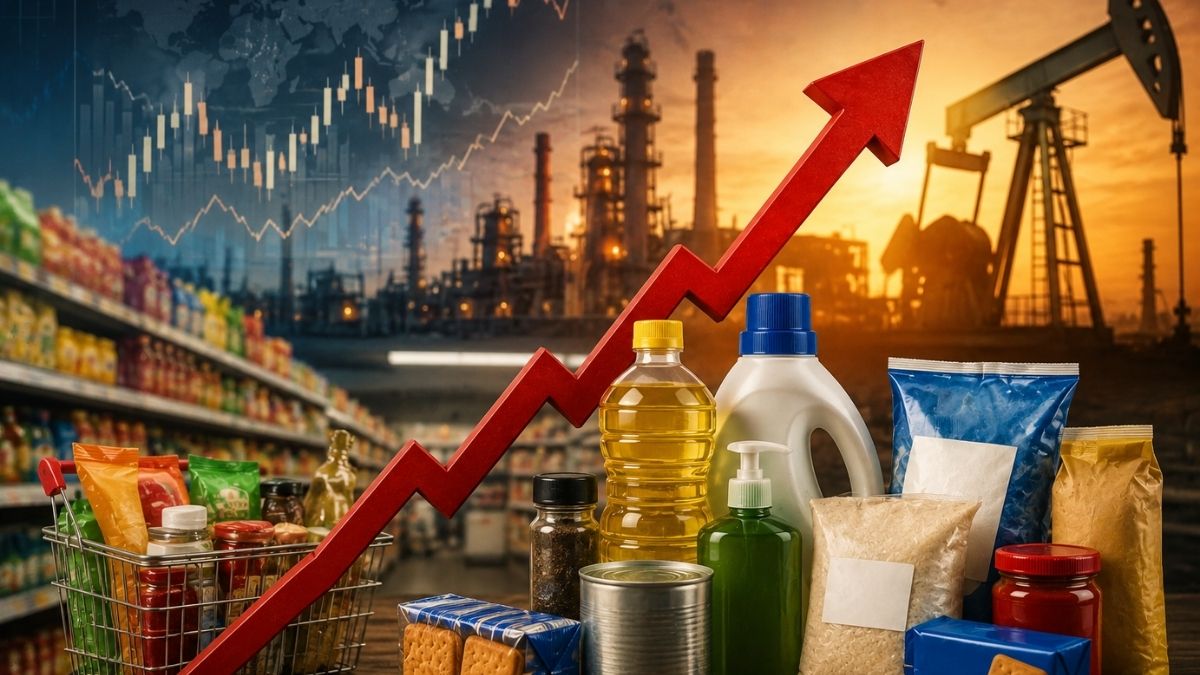

FMCG revenue growth reached 14% year-on-year in the June quarter, while EBITDA growth rose to about 15%.
BNP Paribas attributed the recovery mainly to the GST rate cut, which improved volume growth across staples companies.
Higher crude-linked input costs, including palm oil derivatives and linear alkyl benzene, pressured margins and prompted price increases.
Mass-market demand is improving, while affluent consumers continue shifting toward premium and direct-to-consumer products.
Slower quick-commerce discounting and decade-low sector valuations are supporting the outlook, although BNP Paribas sees mixed prospects across individual stocks.
- Who
- India’s consumer staples and FMCG companies, distributors, retailers, consumers, quick-commerce platforms, and BNP Paribas analysts.
- What
- The consumer staples sector is recovering sharply, with stronger FMCG volumes, revenue, and EBITDA growth after a GST rate cut.
- Where
- India, including Delhi, Haryana, Uttar Pradesh, and the Sadar Bazar wholesale market.
- When
- The reported improvement was recorded in the June quarter; BNP Paribas conducted field visits in October and issued an outlook covering fiscal years 2026 to 2028.
- Why
- The recovery was mainly linked to the GST rate cut, while low inflation and other demand tailwinds supported mass consumption; higher crude-linked input costs continued to pressure margins.
Recovery and investment case
Risks and reservations
GST cut and consumer demand
Recovery and investment case
BNP Paribas said the GST reduction has lifted volumes across staples companies and could provide benefits beyond the current financial year.
Risks and reservations
Distributors and retailers expressed doubt that companies would pass the full tax benefit to consumers; some rural retailers were still selling goods at printed prices.
Margins and commodity costs
Recovery and investment case
Price increases, combined with a possible easing in raw-material costs, could support margin recovery in coming quarters.
Risks and reservations
Higher crude oil prices have already raised costs for inputs such as palm oil derivatives and linear alkyl benzene, and another crude spike could weaken margins again.
Growth and stock prospects
Recovery and investment case
The sector offers prospects for double-digit earnings growth between fiscal years 2026 and 2028, while slower quick-commerce discounting may create a more sustainable market.
Risks and reservations
Affluent consumers have more direct-to-consumer choices, spending is becoming fragmented, and BNP Paribas identified execution, valuation, and margin-dilution concerns for several companies.
Key facts
- FMCG revenue growth
- 14% year-on-year in the June quarter
- FMCG EBITDA growth
- About 15% in the June quarter
- Main demand catalyst
- A cut in goods and services tax rates
- Key margin pressure
- Higher crude oil prices and related input costs
- Affluent consumer group
- Households with annual incomes above $10,000; estimated at 40 million to 50 million
- Quick-commerce footprint change
- BigBasket is narrowing its footprint from 76 cities to 40 higher-density cities
- Valuation trend
- Consumer staples stock multiples are at their lowest point in a decade, according to BNP Paribas
Sources
Related news

Marico CEO Says Indian Consumer Insulated Amid Emerging Market Woes

India Inc revenue growth accelerates to 22% in Q1

FMCG firms signal price hikes in Q2 as costs climb
Marico CMD says value-added hair oil investments pay rich dividends

Rising Sugar, Crude Oil and Copra Reshape Consumer Company Margins
Three FMCG Stocks Show Pricing Power Despite AI Investment Hype
India’s Consumer Demand Holds Up Despite Inflation and Conflict

Sugar Spike Threatens FMCG Margins Ahead of Festive Season