

4 days ago
AI Reskilling May Become Essential as White-Collar Work Changes
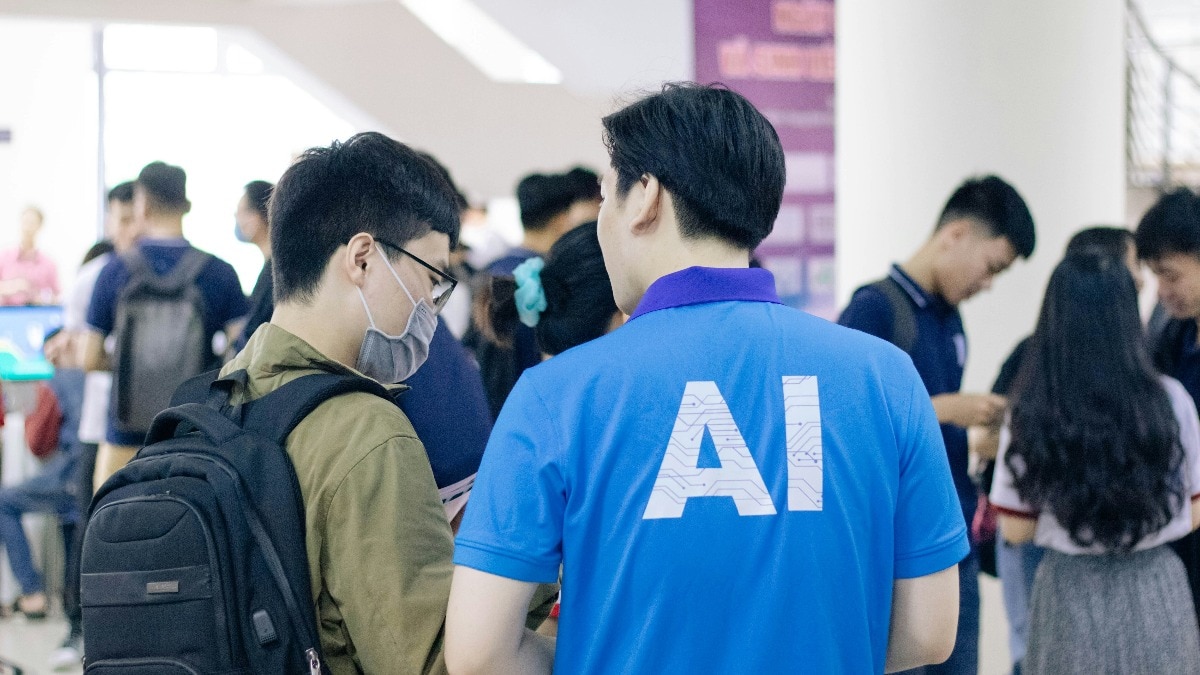
A report says AI could change many office jobs by 2030.
Some tasks that follow predictable rules may be done by software.
This could reduce the number of people needed for certain white-collar jobs.
Knowing how to work with AI may become almost necessary for many workers.
People will need more than the ability to use a chatbot.
They may also need critical thinking, cybersecurity knowledge and professional judgment.
Workers could be asked to check AI answers and guide AI systems.
Learning new skills may help people work alongside AI instead of having their tasks automated.

An IEEE workforce outlook warns that aggressive AI adoption could reduce white-collar headcounts by 2030.
Routine information handling, repetitive cognitive work and predictable knowledge tasks face the greatest automation pressure.
AI skills may become “nearly mandatory,” alongside domain expertise, critical thinking and human verification.
Employers may increasingly value hybrid workers who combine technical, analytical, creative and interpersonal abilities.
Workers may need to supervise AI, assess its outputs, manage risks and integrate it into business processes.
- Who
- The IEEE workforce outlook, employers and workers in white-collar and other knowledge-based roles.
- What
- The report forecasts major AI-driven changes to employment and says reskilling and AI-related skills may become essential by 2030.
- Where
- The report discusses workplaces and the broader labour market; no specific geographic location is identified.
- When
- The projected labour-market changes are focused on the period leading up to 2030.
- Why
- AI-driven technologies are advancing rapidly, increasing automation of predictable knowledge work and the need for workers who can complement AI.
Key facts
- Forecast horizon
- By 2030
- Most exposed work
- Routine information handling, repetitive cognitive work and predictable knowledge tasks
- Potential employment effect
- Aggressive AI adoption could reduce white-collar headcounts
- Expected skill shift
- AI skills could become “nearly mandatory” for employment
- Technical capabilities
- AI and domain expertise, AI agents, large language models and cybersecurity
- Human capabilities
- Critical thinking, verification, ethics, communication and change navigation
- Workplace role
- Workers may supervise AI, evaluate outputs, manage risks and integrate systems into business processes
Sources
Related news

Top skills to survive the AI boom and stay employable
The AI Job Revolution: Roles That Survive, Roles at Risk

World Bank Says India’s AI Risk Centers on White-Collar Jobs

Interdisciplinary Education Prepares Leaders for an AI-Shaped Future

AI Pushes Companies Toward Polymath Engineers and Skills-Based Hiring

AI Could Fuel a New Space Race by 2030

IEEE Report Highlights Technology Winners Racing Toward 2030

IEEE Honors Mohan Babu University

MITS Hosts IEEE ComSoc International Workshop
