

1 week ago
H1N1 Spreads Through Delhi Households: How Families Can Break Chain
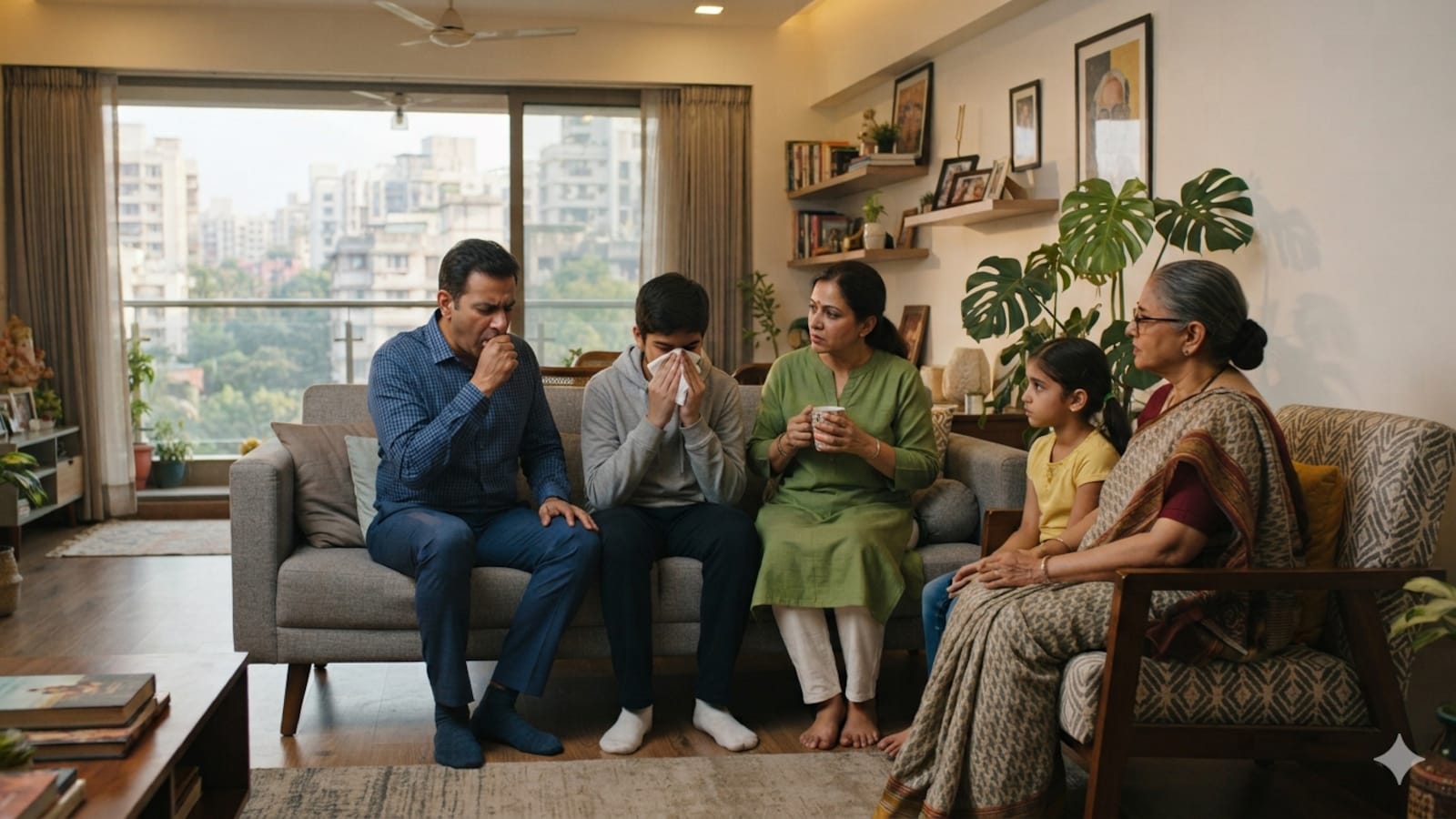
H1N1, also called swine flu, is spreading among some families in Delhi.
It can move from one person to another through coughs, sneezes, talking, and shared air.
Germs can also stay on hard surfaces such as doorknobs and remote controls.
This is why family members may become sick one after another.
A sick person should stay in a separate room from others.
One healthy adult should provide care while wearing a well-fitted mask.
Families should clean shared surfaces, wash hands often, and keep the sick person’s dishes and laundry separate.
People who develop symptoms should seek medical advice, especially if they are vulnerable.
Healthy family members can ask a doctor whether a flu shot is appropriate.

Delhi recorded 1,777 H1N1 cases in 2026, including 114 new cases on August 20.
Seasonal influenza cases in Delhi reached 2,602 in 2026, covering Influenza A and B.
Household spread is linked to close contact, shared air, respiratory droplets, and contaminated surfaces.
Experts recommend isolating sick family members, using masks, and disinfecting frequently touched surfaces.
Symptoms may appear one to four days after exposure and can be more serious for vulnerable people.
- Who
- People in Delhi households, particularly children and other family members, are being affected by H1N1 influenza.
- What
- H1N1 cases are increasing, with the infection spreading from one household member to another.
- Where
- Delhi and the wider Delhi-NCR region, especially enclosed household spaces.
- When
- In 2026; Delhi recorded 114 new H1N1 cases on August 20.
- Why
- The virus spreads through close contact, respiratory droplets, shared air, and contaminated surfaces.
Key facts
- H1N1 cases in Delhi
- 1,777 cumulative cases reported in 2026.
- New cases
- 114 H1N1 cases were recorded on August 20.
- Seasonal influenza cases
- Delhi reported 2,602 cumulative seasonal influenza cases in 2026, including Influenza A and B.
- Main transmission routes
- Respiratory droplets, airborne aerosols, and contaminated surfaces.
- Symptom onset
- Symptoms usually appear one to four days after exposure.
- Common symptoms
- Fever, chills, cough, runny nose, body ache, fatigue, headache, and sore throat.
- Higher-risk groups
- Children, older adults, pregnant women, and other vulnerable people may face more serious infection.
Sources
Related news

Why H1N1 Can Spread Through Families One by One

Delhi records nearly six-fold rise in H1N1 cases in 2026

Delhi H1N1 Cases Rise as Government Urges Mask Use
Delhi Reports Six-Fold Spike In H1N1 Cases Among Children

H1N1 Cases Rise in India; Simple Ways to Protect Yourself
Delhi-NCR H1N1 Cases Rise, Prompting Calls For Flexible Office Work
Delhi SIR Draws Over Five Lakh Claims Before Draft Roll

Mirzapur: The Movie Sells Over One Lakh Advance Tickets

AICC to decide action against Telangana minister over daughter’s remarks
Delhi Simplifies Nursing Home Registration, Issues Renewals Within Two Days

Delhi Draft Electoral Roll Triggers Rush to File Claims
