8 hrs ago
J&K High Court Rejects Government Jobs in Exchange for Land
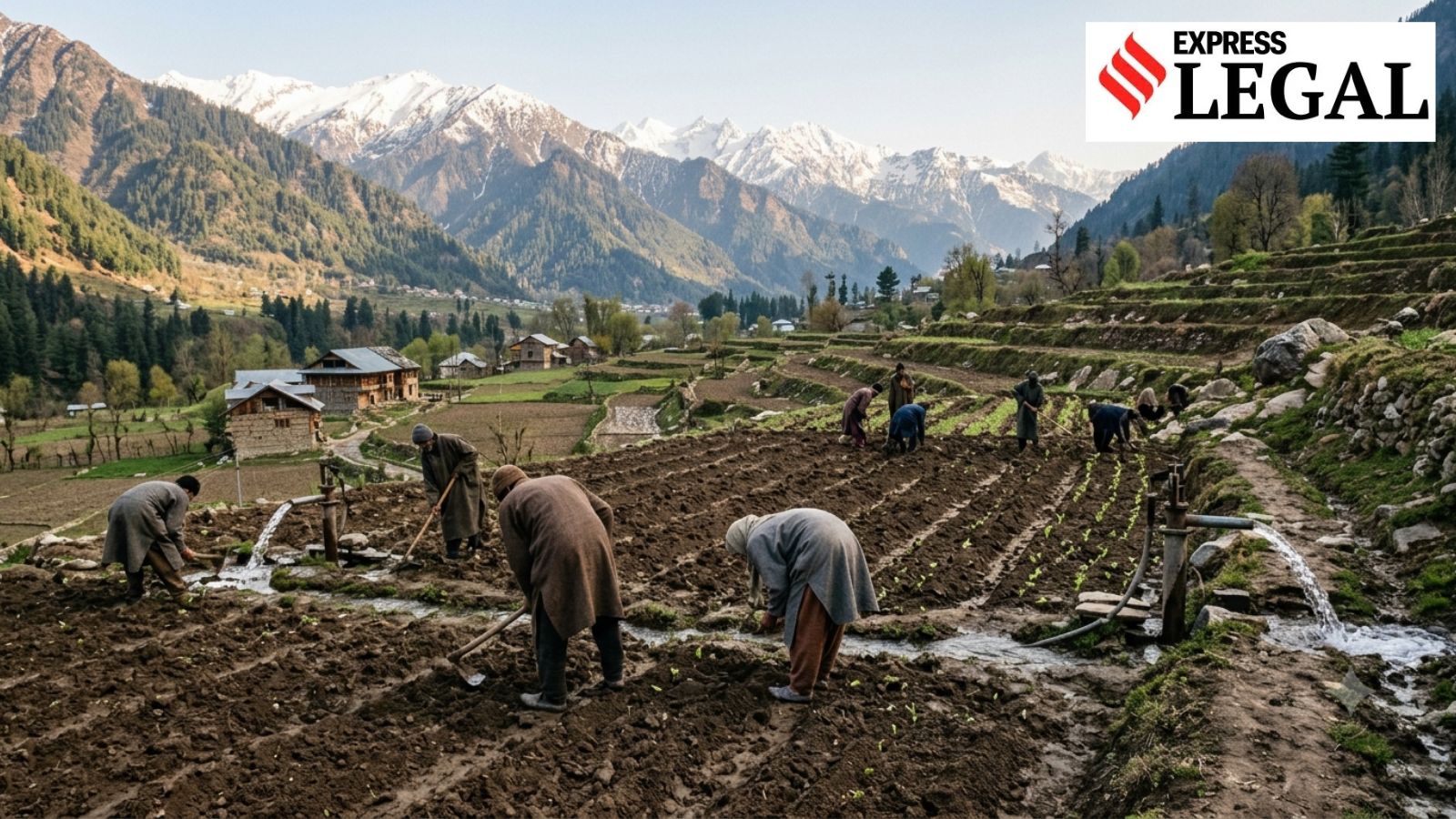
Some people gave land to the government for building tube wells.
Their gift deeds said they would get government jobs, but they were hired as casual workers instead.
The High Court said land cannot be traded for a permanent government job.
Government jobs must be given through fair rules and selection.
But the workers had spent more than 10 years working casually.
The court said they could qualify for regular engagement under the 2017 rules.
They must still meet the rules’ requirements.
Their cases should be considered from the date they completed 10 years of continuous service.

The Jammu and Kashmir and Ladakh High Court ruled that land donations cannot secure permanent government jobs.
The court said public employment must follow recruitment rules and fair selection consistent with Articles 14 and 16.
The dispute involved people who donated one kanal each in 2014 for tube-well construction and were engaged as casual workers.
The bench modified a Central Administrative Tribunal order directing outright regular appointments.
Workers with 10 years of continuous service may receive regular engagement under the 2017 rules, subject to prescribed conditions.
- Who
- The Jammu and Kashmir and Ladakh High Court, hearing a challenge by the Union territory of Jammu and Kashmir and three others, and workers who had donated land.
- What
- The court rejected permanent government jobs in exchange for land but upheld the workers’ possible entitlement to regular engagement under the 2017 rules.
- Where
- Jammu and Kashmir; the land was donated for tube-well construction and the workers were engaged in the Department of Irrigation and Flood Control.
- When
- The High Court order was dated October 5; the land was donated in 2014, and the workers sought regularisation in 2019.
- Why
- Permanent government employment must follow recruitment rules and fair selection; the workers’ regular engagement was considered separately under rules for eligible casual workers.
Workers’ position
Government and court’s limits
What the land donation promised
Workers’ position
The respondents argued that their gift deeds stipulated a permanent government job in return for the donated land.
Government and court’s limits
The government said the promised work was not necessarily permanent and that any regularisation could occur only under applicable rules or executive orders. The High Court held that land donation cannot create an entitlement to a permanent government job.
Basis for regular engagement
Workers’ position
The workers relied on their more than 10 years of continuous casual service and the 2017 rules to support regularisation.
Government and court’s limits
The government said their cases were governed by the 2017 rules and could be considered once they became eligible. The High Court said regular engagement was conditional on meeting those rules, not an automatic permanent appointment.
Key facts
- Court
- Jammu and Kashmir and Ladakh High Court
- Bench
- Justices Sanjeev Kumar and M A Chowdhary
- Land donated
- One kanal each for tube-well construction
- Donation year
- 2014
- Applicable rules
- Jammu and Kashmir rules for regular engagement of casual workers, notified December 21, 2017
- Service threshold
- 10 years of continuous service, subject to the prescribed requirements
- Constitutional provisions cited
- Articles 14 and 16
Quotes

Jammu and Kashmir and Ladakh High Court
The High Court ruling on government employment and land donated for public purposes.
“The Government does not have any authority to promise or to give permanent Government job to any person in lieu of the land donated by such person for public purpose. The permanent job in the Government department would be in accordance with the recruitment rules in vogue and pursuant to a selection process, which is in consonance with Article 14 and 16 of the Constitution of India.”
 indianexpress.com
“Making such promises would be tantamount to putting the Government jobs on sale, which is not in conformity with the rule of law, which is essence of our political democracy governed by the Constitution of India.”
indianexpress.com
Sources
Related news
High Court Orders Haryana Board to Regularise Daily-Wage Worker

Himachal High Court Rejects Compromise in Fake Job Case

J-K Government Delays Timeline For Regularising Contractual Workers

CGHS Workers’ Case Challenges Government Outsourcing and Contractor Practices
Sajad Lone Challenges NC Over Jobs and Reservation Promises
Bombay High Court Orders VVMC To Regularise Long-Serving Contract Staff

‘Broke’ Sanjeev Kumar’s Struggles, Generosity and Unmarried Life

How Silsila’s Casting Joined Amitabh, Jaya And Rekha
Lok Adalat Settles Over 23,000 Cases Across Jammu and Kashmir

Rajnath Singh Urges DPSUs to Deliver Faster, Lead Globally