2 hrs ago
High Court Orders Haryana Board to Regularise Daily-Wage Worker
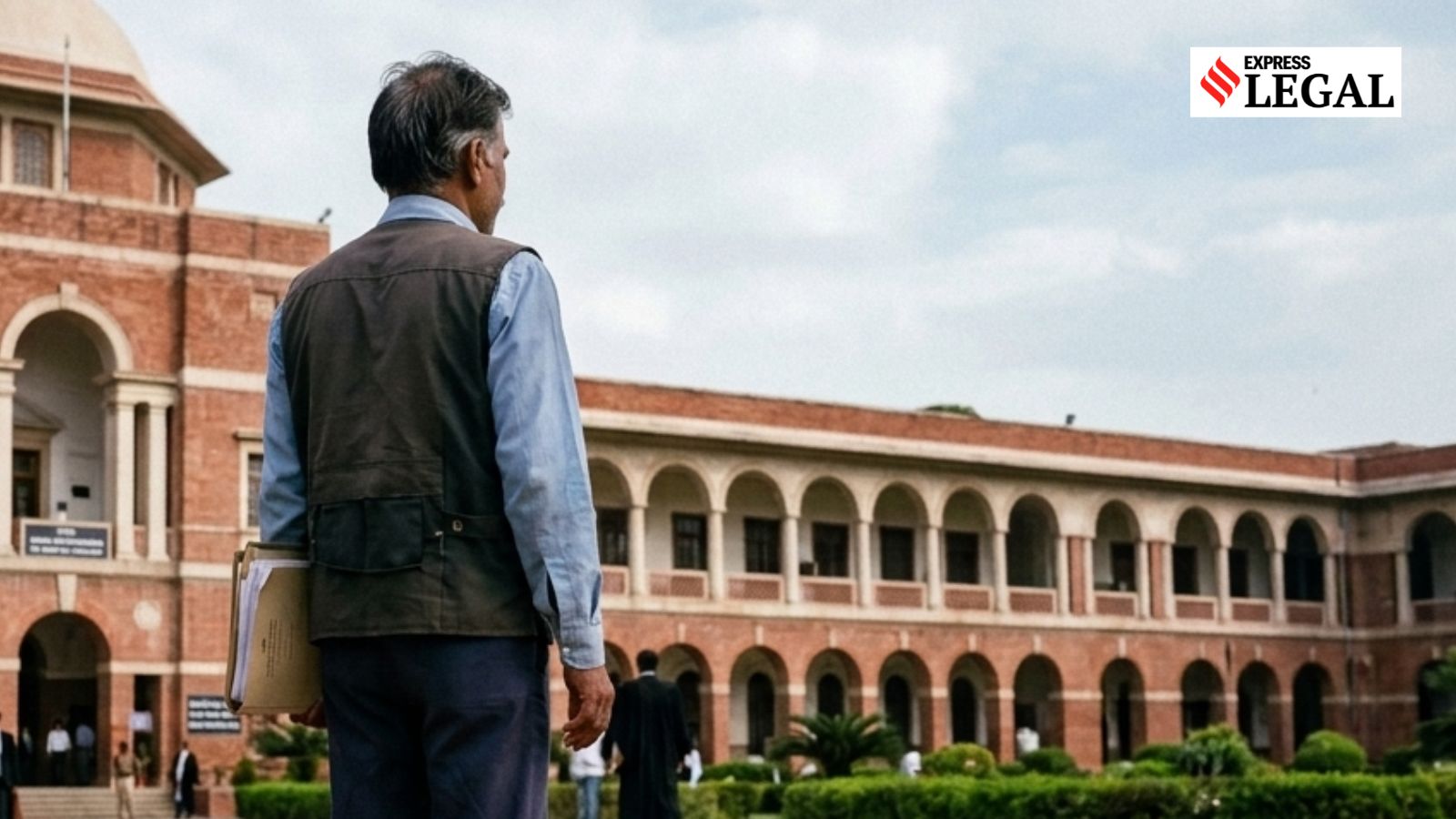
Baljit Singh worked for the Haryana State Agricultural Marketing Board on daily wages.
He first worked as a road roller driver and later worked as a peon.
A government policy in 2003 allowed some eligible daily-wage workers to become regular employees.
Singh said he met the policy’s conditions, but officials did not consider his case.
Some workers who were junior to him were regularised.
The Board argued that Singh had worked through a contractual agency and was not eligible.
The High Court said officials could not use their own delay as a reason to deny him a right he had already earned.
It ordered regularisation from October 1, 2003, along with related benefits and 12 per cent interest.

The Punjab and Haryana High Court ordered regularisation of Baljit Singh’s services from October 1, 2003.
Singh joined the Haryana State Agricultural Marketing Board in 2000 as a daily-wage road roller driver and was later retained as a peon.
The court held that administrative inaction could not deprive him of rights accrued under the 2003 regularisation policy.
It granted related benefits and 12 per cent interest from the date those benefits accrued.
The court said denying Singh the benefit given to similarly situated juniors violated equality principles under Article 14.
- Who
- Baljit Singh and the Haryana State Agricultural Marketing Board.
- What
- The Punjab and Haryana High Court ordered Singh’s regularisation from October 1, 2003, with related benefits and 12 per cent interest.
- Where
- The case involved the Haryana State Agricultural Marketing Board, Bhiwani, and was decided by the Punjab and Haryana High Court.
- When
- The order concerned regularisation from October 1, 2003; Singh joined the Board on January 1, 2000.
- Why
- The court found that Singh had fulfilled the applicable conditions and that administrative delay could not deprive him of an accrued right or justify unequal treatment.
Employee’s case
Board’s position
Eligibility for regularisation
Employee’s case
Singh argued that he had rendered satisfactory service, met the conditions of the 2003 policy, and should receive the same benefit as similarly situated juniors.
Board’s position
The Board argued that Singh was not appointed against a regular post and had been engaged through a contractual agency, making him ineligible.
Effect of administrative delay
Employee’s case
Singh argued that officials’ failure to consider his case could not remove a right that had accrued while the 2003 policy was in force.
Board’s position
The lower courts relied partly on the fact that the 2003 policy was no longer in existence when Singh filed his suit in 2015.
Applicable policy
Employee’s case
Singh sought regularisation from October 1, 2003, or alternatively under the June 18, 2014 policy.
Board’s position
The trial court granted regularisation from June 18, 2014, while rejecting the earlier effective date; the High Court later found the reasons for denying the 2003 date legally unsustainable.
Key facts
- Employee
- Baljit Singh
- Employer
- Haryana State Agricultural Marketing Board
- Initial appointment
- January 1, 2000, as a daily-wage road roller driver
- Requested status
- Regularisation as a peon
- Relevant policy
- Haryana Government regularisation policy dated October 1, 2003
- Court-ordered effective date
- October 1, 2003
- Interest
- 12 per cent from the date of accrual
Quotes

Punjab and Haryana High Court
Court issuing the regularisation order
“Denying the appellant regularisation w.e.f. October 2003, when the very same benefit was extended to his similarly situated juniors from that date, would render the promise of equality illusory and would legitimise a course of conduct that is arbitrary, discriminatory, and constitutionally impermissible.”
 indianexpress.com
“Administrative inaction of this kind cannot be converted into a tool to deprive a workman of his accrued rights, for that would allow the State to take advantage of its own wrong, an outcome wholly impermissible in constitutional jurisprudence.”
indianexpress.com
Sources
Related news
High Court Grants Posthumous Regularisation to Punjab Jail Warder

High Court Rejects SRO 520 Benefit for 179 J&K Wagers

High Court Quashes Haryana’s Blanket Foreign Travel Ban

Supreme Court Weighs Fundamental Right To Work And Minimum Wages

Haryana Sanitation Workers Extend Strike Over Regularisation Demand

Delhi Rain Surplus Defies Regional Deficit Amid El Niño Concerns
Noida Sanitation Workers Strike Over Pay, Jobs and Insurance
ED Raids Gopal Kanda Premises in Rs 248-Crore Fraud Case
Government Disburses Rs 2.9 Crore Soil Carbon Payments