1 week ago
Clear Water Can Hide Contaminants Beyond TDS and pH
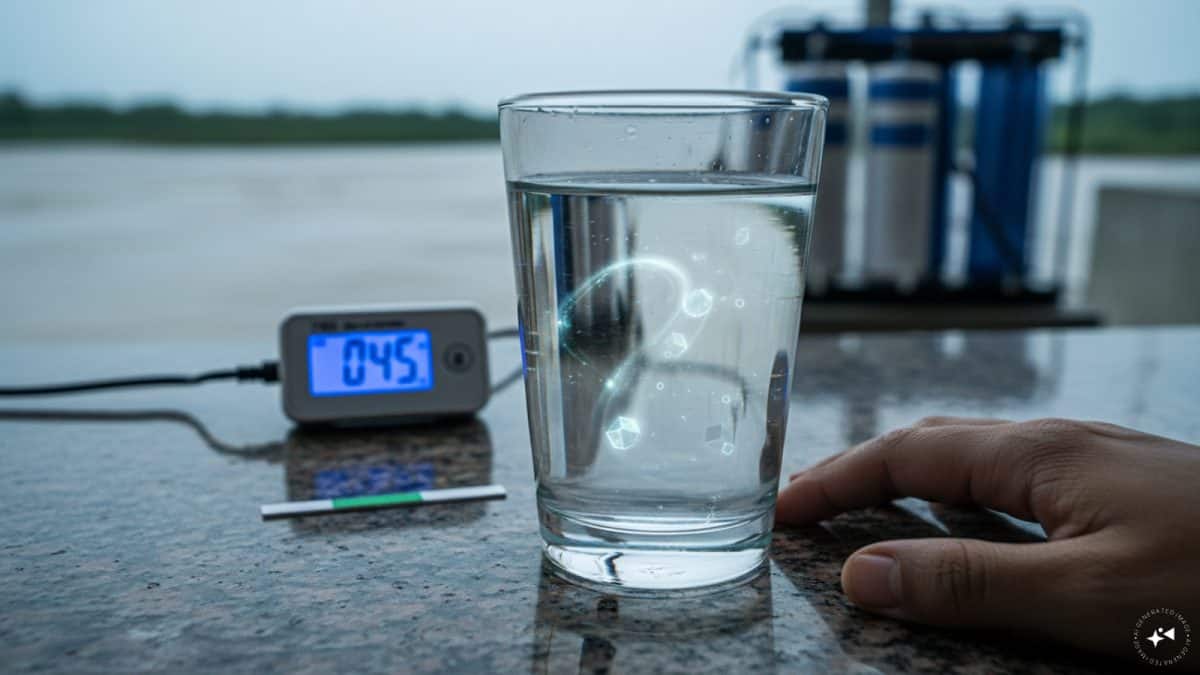
Water can look clean but still contain germs or harmful chemicals.
You cannot always find these dangers by looking, smelling or tasting the water.
A TDS meter measures some dissolved substances, but it does not test for every germ or contaminant.
pH tells us whether water is acidic, neutral or alkaline, but it is not a complete safety test either.
Rain, floods and old pipes can change water quality during the year.
Different homes may need different kinds of water treatment depending on their water source.
Purifiers also need their filters and other parts replaced on time.
The safest approach is to understand the water source, test relevant qualities and maintain the purifier properly.

Clear, odourless water may still contain microorganisms, heavy metals, pesticides or other invisible contaminants.
TDS measures dissolved minerals and salts but does not prove that water is microbiologically or chemically safe.
pH is an important quality parameter, yet acceptable pH does not rule out harmful contaminants.
Monsoons, flooding, groundwater changes, repairs and ageing pipelines can alter household water quality.
Purifiers should match the water source and be regularly serviced to maintain their effectiveness.
- Who
- Households, the World Health Organization, and Dr Anil Kumar, Chief Water Scientist at Eureka Forbes Limited, are discussed.
- What
- The article explains why TDS and pH readings, clear appearance and a purifier alone cannot fully establish drinking-water safety.
- Where
- The guidance concerns household drinking water, particularly water from groundwater, municipal supplies and distribution systems in India.
- When
- Water quality can change seasonally, especially during monsoons, flooding, repairs and other supply changes.
- Why
- Invisible microbial and chemical contaminants may be present, so households need source-appropriate treatment and regular purifier maintenance.
Key facts
- TDS meaning
- Total Dissolved Solids measures dissolved minerals, salts and other inorganic substances.
- pH meaning
- pH indicates whether water is acidic, neutral or alkaline.
- Indian standard
- India's IS 10500:2012 covers pH, turbidity, TDS, metals, fluoride, nitrate, residual chlorine and microbiological requirements.
- Invisible risks
- Water that looks clear may still contain bacteria, viruses, heavy metals, pesticides or industrial pollutants.
- Seasonal changes
- Rainfall, flooding, source changes, infrastructure repairs, construction and ageing pipelines can affect water quality.
- Purifier selection
- The appropriate technology depends on the water source, TDS, microbial contamination and other dissolved impurities.
- Maintenance
- Filters, membranes and other purification components require servicing and replacement at appropriate intervals.
Sources
Related news
Seven Water Purifiers Under Rs 15,000 Compared For Indian Homes

MLA Assures Guntur Residents Over Safety Of Drinking Water

CPCB: Manasbal Lake critically polluted, drinking water fouled by sewage

Acharya Balkrishna: copper vessels purified water long before filters

Vectus Highlights Hygiene, Engineering and Quality in Water Tanks

New Hangout Sitcoms Turn Friendship FOMO Into Streaming Appeal

Chinese Workers Fight Office Ageing With Parasols And Sunscreen

India Sends Fifth Relief Tranche to Flood-Hit Nepal

Dyson Launches $499 CameraJet AI Toothbrush With Jet Flossing

PlatinumRx remotely helps families save on recurring medicines