

1 week ago
IMF Says AI Boom Cushions Oil Shock, But Risks Persist
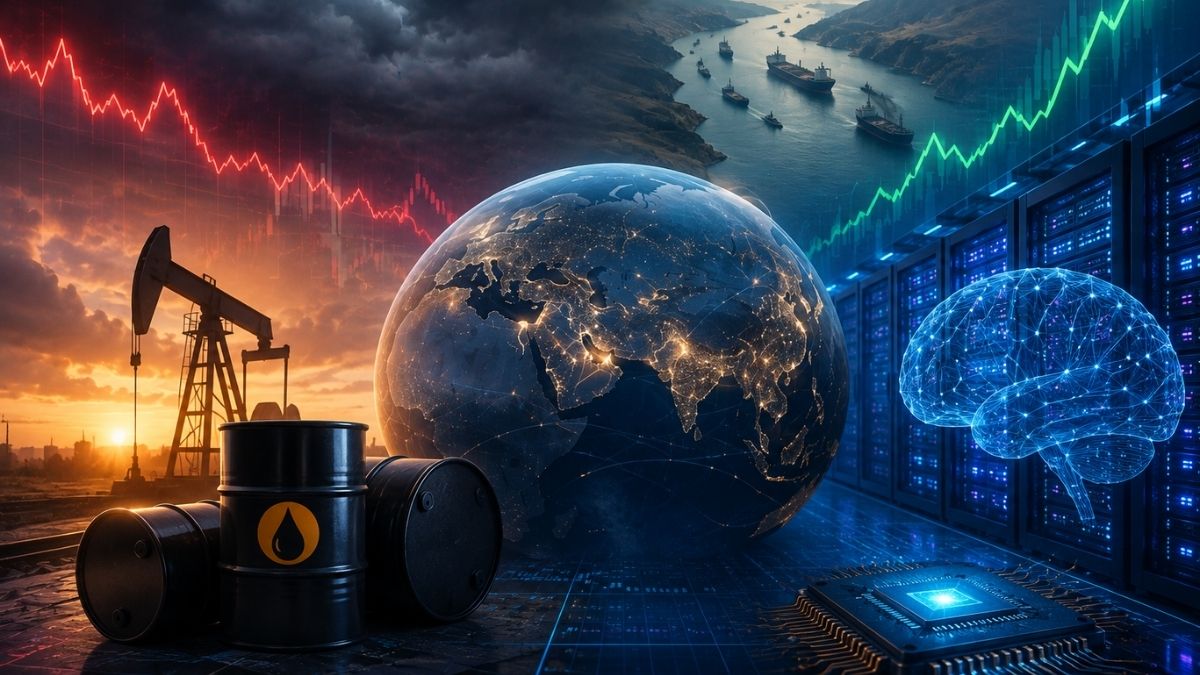
The world economy is facing two big forces at once.
Problems around the Strait of Hormuz have made energy supplies less certain.
So far, stored oil and gas and supplies from outside the Gulf have helped limit the damage.
Investment in artificial intelligence is also helping businesses and consumers spend money.
This investment began mainly in the United States but is spreading to other countries.
However, energy reserves are shrinking, and winter could increase demand for fuel.
If oil prices rise again, inflation could stay high and central banks may keep interest rates high.
Poorer countries that import fuel and fertiliser could face food shortages.
The IMF expects the world economy to grow by 3% in 2026, but says the outlook remains uncertain.

IMF chief Kristalina Georgieva said the global economy has handled the Strait of Hormuz energy shock better than feared.
Oil and gas reserve drawdowns, non-Gulf supplies and other energy measures have reduced the disruption’s immediate impact.
AI investment, especially in the United States, is supporting corporate earnings, consumer demand and construction of data centres.
Shrinking reserves and the approaching Northern Hemisphere winter could send oil prices higher and prolong inflation.
The IMF forecasts 3% global growth in 2026 but warns of debt, food-security and AI-related risks, particularly for poorer countries.
- Who
- IMF Managing Director Kristalina Georgieva and the International Monetary Fund.
- What
- The global economy is balancing an energy shock linked to the Strait of Hormuz against growth from an artificial-intelligence investment boom.
- Where
- Georgieva spoke in Washington; the G-20 meeting is scheduled for Asheville, North Carolina, and the IMF-World Bank annual meetings for Bangkok.
- When
- Georgieva spoke on Tuesday ahead of the G-20 finance ministers’ meeting the following week; the IMF’s next outlook update is due in mid-October.
- Why
- Energy-market disruption is threatening supply and inflation, while AI investment is supporting demand and economic activity.
Energy Shock Risks
AI Growth Support
Effect on growth
Energy Shock Risks
A renewed oil-price increase could raise inflation, debt-servicing costs and production expenses while weakening economic activity through prolonged restrictive monetary policy.
AI Growth Support
AI investment is supporting corporate earnings, consumer demand and construction of data centres and other infrastructure, providing a positive demand shock.
How long the cushion can last
Energy Shock Risks
Oil and gas reserves are shrinking, and approaching Northern Hemisphere winter could increase pressure on energy markets; the articles say the energy shock is not over.
AI Growth Support
Reserve drawdowns, non-Gulf supplies and other energy measures have allowed the global economy to absorb the disruption better than initially feared.
Distribution of benefits and risks
Energy Shock Risks
Low-income countries dependent on imported fuel, oil, gas and fertiliser could face food insecurity and weaker growth, especially if extreme weather adds pressure.
AI Growth Support
Countries participating in the AI investment cycle and supply chain may gain economic support, although the IMF also warns that developing economies risk falling behind.
Extent of current disruption
Energy Shock Risks
Traffic through the Strait of Hormuz has remained far below normal according to one account, and continued restrictions could trigger another oil shock.
AI Growth Support
Oil prices recently declined after renewed Iran-Oman talks, while conflicting estimates of actual flows indicate that the precise level of disruption remains uncertain.
Key facts
- 2026 global growth forecast
- 3%, according to the IMF’s July forecast.
- Energy disruption
- The articles attribute the shock to the closure or sharply reduced traffic through the Strait of Hormuz.
- Immediate buffers
- Oil and gas reserve drawdowns, increased non-Gulf supply, diversified energy sources and renewable capacity helped cushion the shock.
- AI investment
- Investment is strongest in the United States but is spreading as countries build data centres and related infrastructure.
- Inflation risk
- A renewed rise in oil prices could keep inflation elevated and force central banks to maintain restrictive policies.
- Vulnerable countries
- Low-income fuel-importing countries face risks from higher energy and fertiliser costs, food insecurity and falling behind in AI.
- Next IMF outlook
- The IMF plans to update its growth outlook in mid-October during the IMF and World Bank annual meetings in Bangkok.
Quotes

Kristalina Georgieva
Managing director of the International Monetary Fund
“This means the energy shock is not over: a renewed rise in oil prices could fuel inflation, forcing central banks to retain a restrictive policy stance, with knock-on implications for debt service and economic activity.”
 businesstoday.in
 freepressjournal.in
“What started out as a US phenomenon with AI is now becoming a growth engine for the global economy, with other countries ramping up construction of data centres and other infrastructure.”
businesstoday.in
freepressjournal.in
Sources


Related news

IMF Chief Sees Energy Resilience but Warns Fiscal Risks
Global Economy Weathers Six Months of US-Israel War
Markets Juggle Hormuz Risk, Hawkish Fed and AI Boom
Bank of England Warns AI Boom Could Trigger Market Shock
US-Iran truce expires as oil rises, bond yields climb

Oil Rises as US Threatens Unprecedented Economic Pressure on Iran

Iran Seizes Fuel-Smuggling Vessel in Gulf, Arrests 11 Crew
Trump Floats Renaming Strait of Hormuz as “Trump Strait”

Chevron Plans $7 Billion Venezuela Expansion Amid U.S. Oil Push
Saudi Tanker Hit in Hormuz, Killing Two Filipino Sailors
Indian Stocks Extend Three-Day Losing Streak as Oil Rises
